


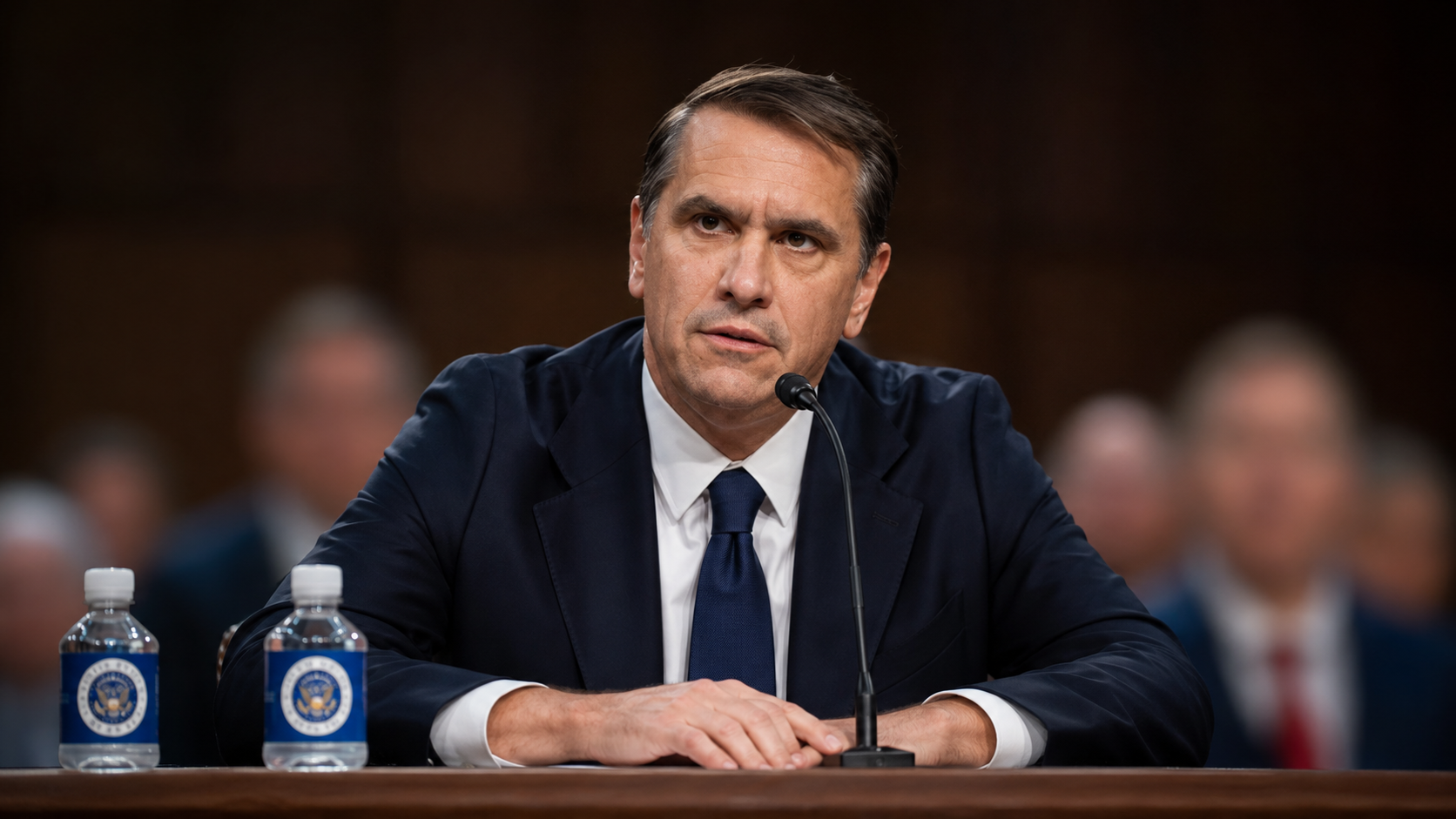
Todd Blanche moved one step closer to becoming the next Attorney General of the United States on Tuesday after the Senate Judiciary Committee voted to advance his nomination to the full Senate. The committee approved the nomination by a 12 to 10 vote along party lines, with all Republican members supporting the nomination and all Democratic members voting in opposition.
The committee’s decision followed several days of negotiations surrounding a proposed $1.8 billion Justice Department initiative known as the Anti Weaponization Fund, which had become one of the most significant issues facing Blanche’s confirmation. The proposal originated from a legal settlement involving litigation between President Donald Trump and the Internal Revenue Service and quickly drew bipartisan attention over questions involving federal authority, financial oversight, and the administration of taxpayer funds.
While Democrats consistently opposed the proposal, concerns also emerged among several Republican senators who questioned both the legal framework and the structure of the proposed fund. Those lawmakers sought assurances that the Department of Justice would not move forward with establishing or administering the program without additional congressional oversight. Their concerns centered on whether the executive branch possessed the authority to oversee a fund of that size outside the traditional appropriations process established by Congress.
As the confirmation process continued, Blanche provided written commitments confirming that the proposed Anti Weaponization Fund would be rescinded and that the Department of Justice would not implement the program. The written assurances addressed the concerns raised by key Republican members of the Senate Judiciary Committee and removed a major obstacle that had threatened to delay advancement of the nomination.
Although the withdrawal of the fund resolved one of the committee’s most immediate concerns, the nomination continued to generate broader debate regarding the future leadership of the Department of Justice. Democratic senators maintained their opposition throughout the committee proceedings, citing concerns over Blanche’s previous service as President Donald Trump’s personal criminal defense attorney and questioning whether the department could maintain the level of independence traditionally expected of the nation’s chief law enforcement agency.
Republican members of the committee argued that Blanche’s legal background and experience within both private practice and the Department of Justice qualified him to lead one of the federal government’s most significant institutions. Supporters also pointed to his decision to withdraw the proposed fund as evidence that concerns raised during the confirmation process had been addressed through formal action rather than political rhetoric.
The debate surrounding Blanche’s nomination reflects larger questions currently facing the federal government regarding the balance between executive authority and congressional oversight. The controversy surrounding the proposed fund focused not only on its size but also on the legal authority under which such a program could have operated. Legal observers have noted that significant federal expenditures have historically been subject to congressional appropriations, making the proposed settlement fund an unusual point of discussion during a cabinet level confirmation process.
Although the proposed compensation fund has now been withdrawn, legal questions surrounding portions of the underlying IRS settlement continue to receive attention. Some legal experts have observed that once settlement agreements are finalized, modifying certain provisions may require additional legal review or agreement among the parties involved. Those issues remain separate from Blanche’s nomination but have continued to attract interest because of their connection to the broader settlement.
If confirmed by the full Senate, Blanche would assume responsibility for leading the United States Department of Justice and serving as the nation’s chief law enforcement officer. The position oversees a wide range of federal agencies, including the Federal Bureau of Investigation, the Drug Enforcement Administration, the Bureau of Alcohol, Tobacco, Firearms and Explosives, the United States Marshals Service, and the nation’s network of United States Attorneys’ Offices. The attorney general also serves as the federal government’s chief legal adviser and is responsible for enforcing federal law while overseeing some of the nation’s most significant criminal, civil, and constitutional matters.
With committee approval now complete, Blanche’s nomination advances to the full Senate for final consideration. Senators will determine whether he will become the next Attorney General, concluding a confirmation process that has drawn national attention not only because of Blanche’s legal background but also because of the broader policy debates surrounding executive authority, congressional oversight, and the future direction of the Department of Justice. The committee vote marks an important procedural step, but the final decision now rests with the full Senate as lawmakers prepare for one of the administration’s most closely watched cabinet confirmation votes.