


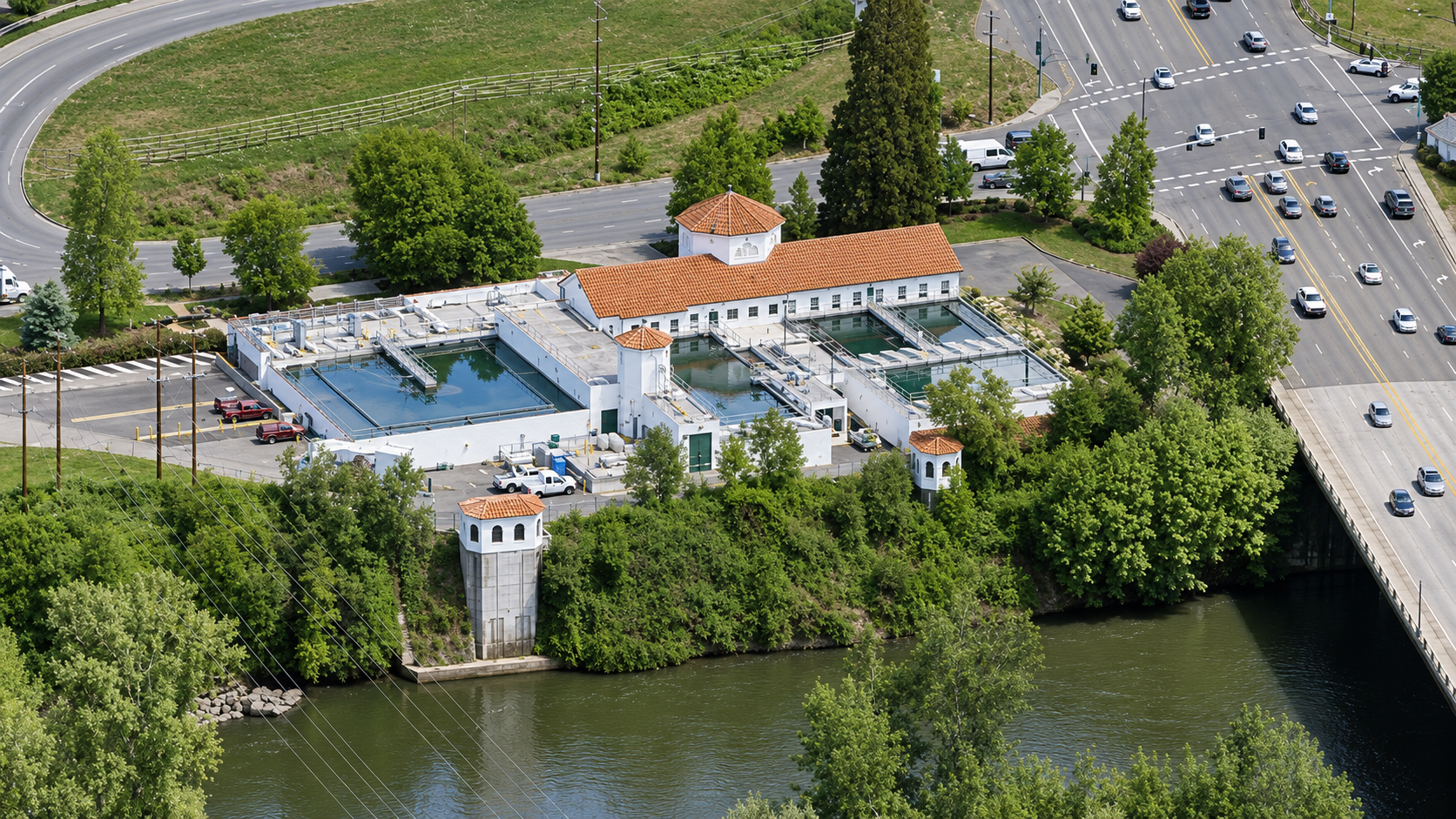
Grants Pass will appeal a federal decision denying $50 million for its new drinking water plant, a sum that would cover roughly a third of the city’s estimated $145.6 million project cost. City councilors voted 6–2 on November 18 to challenge the denial after Public Works Director Jason Canady brought the decision before them. Water customers already pay a monthly charge to replace the city’s 95-year-old plant. How much more the utility may have to borrow now depends in part on whether the city can recover the federal money.
The dispute turns on events that unfolded between the selection of Grants Pass for federal funding in 2023 and the start of construction in July 2025. The Federal Emergency Management Agency had chosen the plant for its Building Resilient Infrastructure and Communities program. By late 2024, after meeting with FEMA, the city expected the agency to formally commit the money by the following summer. Instead, FEMA announced on April 4, 2025, that it was ending the program. Grants Pass had yet to receive any of the $50 million.
That left the city with a construction decision years in the making. Its only drinking water treatment plant, built in 1931, still drew water from the Rogue River and treated it in a facility vulnerable to both flooding and earthquakes. A structural failure discovered in 2011 in the basin that stores treated water had helped set the replacement project in motion. The council chose to build a new plant in 2014. By the time FEMA halted the grant program, more than a decade had passed since that vote.
Grants Pass broke ground on July 17, 2025, at 755 SE J Street. When a federal court later blocked FEMA from terminating the program, the city gained another chance at the money. By then, however, construction had begun without a final award. To collect the $50 million, Grants Pass would need a federal waiver.
Mayor Clint Scherf and Canady took the city’s case to Washington. On May 6, 2026, U.S. Sen. Jeff Merkley and Rep. Suzanne Bonamici led members of Oregon’s congressional delegation in asking FEMA and the Department of Homeland Security to approve the waiver. The plant was already about 20 percent complete. The delegation argued that waiting longer would have driven up costs and put the project at risk. Rep. Cliff Bentz’s office also contacted FEMA on the city’s behalf.
The November denial brought the matter back to the City Council. Wednesday’s vote authorized an appeal. A filing date and FEMA’s written grounds for the denial could not be confirmed by November 21. Starting construction before the award was final prompted the waiver request, but the precise basis for FEMA’s decision remains unconfirmed.
For Grants Pass households, the financing question already occupies a line on the water bill. A residential customer with a three-quarter-inch meter pays $14.30 a month toward plant replacement, up from $13.50 in 2025. That increase took effect in January, more than ten months before the denial reached the council. The November 18 vote authorized the city to contest FEMA’s decision and carried no new rate increase.
Oregon has helped finance construction, although much of that money must be repaid. In September 2025, the state Infrastructure Finance Authority approved $10 million for the plant, including a $7 million loan at 1 percent interest over 30 years and a $3 million forgivable loan. The U.S. Environmental Protection Agency also invited Grants Pass to apply for a $57 million infrastructure loan. That invitation carries no commitment to disburse the money, and any amount borrowed would add to the utility’s repayment obligations.
Grants Pass had sought the largest share of nearly $105 million in Oregon projects that advanced through FEMA’s 2023 selection process. When Oregon joined other states in federal court over the program’s cancellation, its complaint singled out the Grants Pass plant and the city’s expectation that funding would come through in 2025. A December court ruling blocked FEMA from ending the program, and the agency announced in March that it would resume reviewing pending projects as federal appropriations allowed. Individual communities still had to secure final approval. A September federal audit found that about 700 applications representing $2.2 billion had been awaiting decisions when FEMA halted the program.
At the J Street site, the city’s construction schedule for the first week of November called for roofing the treatment building, installing underground electrical equipment and building the walls of the new treated-water storage basin. The replacement plant will receive Rogue River water through a new pipeline from the existing intake and use membrane filtration to treat up to 22.5 million gallons a day outside the river’s flood hazard area.
The city’s published schedule calls for equipment testing in 2027 and substantial completion in 2028. The appeal will determine whether Grants Pass can put $50 million in federal grant money toward that work. The city has yet to put a dollar figure on what an unsuccessful appeal would mean for the monthly bills of the customers who rely on the plant.