


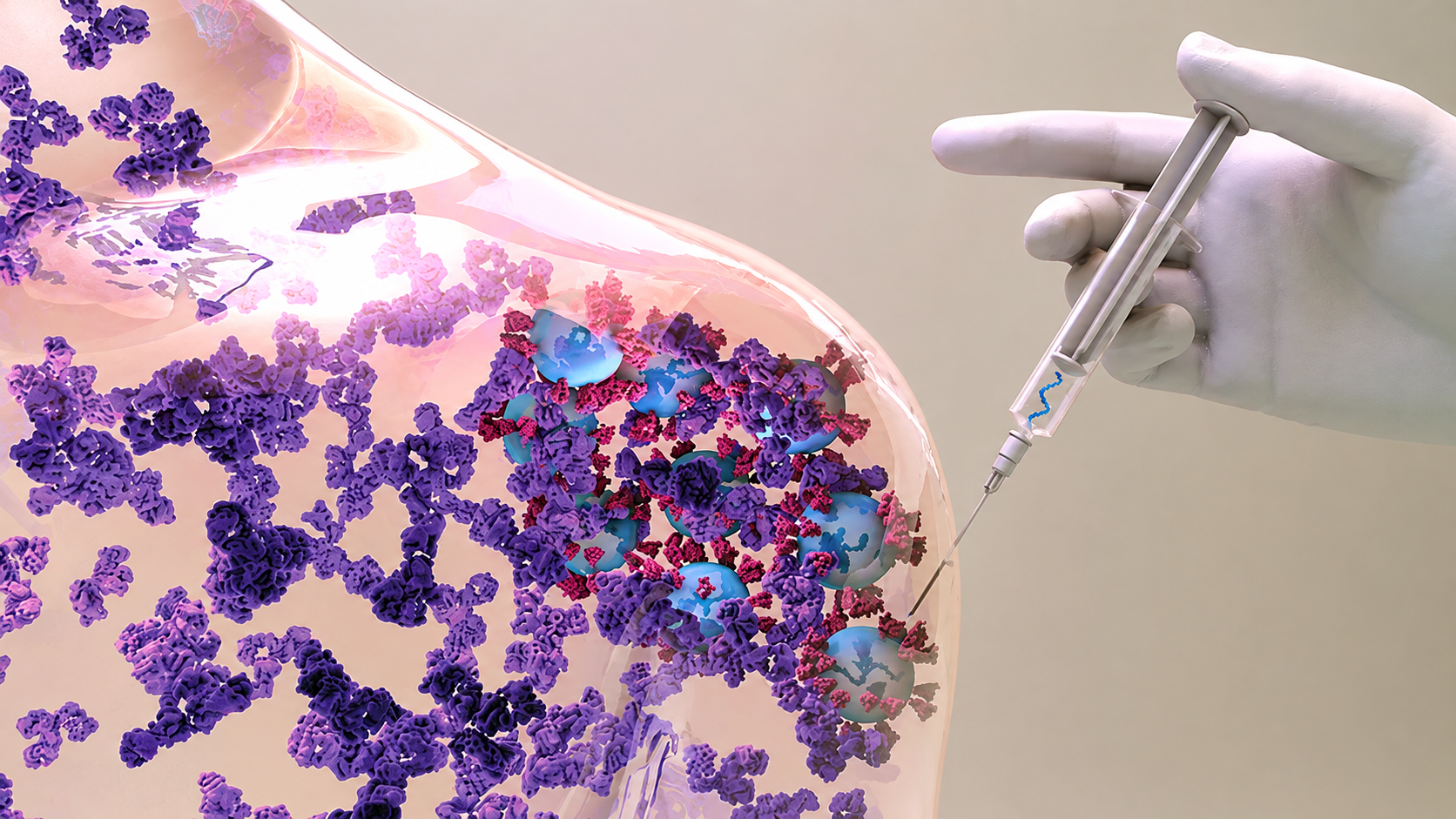
Vaccines are known primarily for their intended effect: stimulating an immune response that can provide protection against disease. This process involves activation of the immune system, production of antibodies and other immune responses, and the development of immunological memory. Far less familiar to the general public is the microscopic environment in which vaccines and their individual components interact with biological systems, including proteins, membranes, mitochondria, DNA, and RNA.
Questions surrounding these cellular interactions deserve careful scientific examination. The presence of a chemical in a vaccine, however, does not by itself establish that it produces cellular damage at the concentration administered. Toxicological effects depend heavily on dose, route of exposure, duration, metabolism, and the body’s ability to eliminate or neutralize a substance. These distinctions are particularly important when evaluating compounds that may be harmful at high concentrations but are present at substantially lower levels in pharmaceutical products.
Compounds such as formaldehyde, phenol, polysorbate 80, and thimerosal, which contains ethylmercury, have been used for different purposes in certain vaccine formulations or during vaccine manufacturing. They do not create immunity themselves. Depending on the compound, they may serve roles such as preservation, stabilization, or manufacturing and purification.
At sufficiently high exposures, some of these substances are known to interact with cellular stress pathways. Those pathways can involve oxidative stress, protein folding, membrane function, mitochondrial activity, RNA regulation, and mechanisms controlling gene expression. Cells routinely encounter and respond to chemical and metabolic stress, adjusting DNA repair, protein production, energy generation, and other functions in response.
Formaldehyde is a highly reactive compound that is also produced naturally during normal human metabolism. At sufficiently high concentrations, formaldehyde can form DNA-protein crosslinks, in which DNA becomes chemically linked to proteins. Such crosslinks can interfere with transcription and DNA repair when exposure is substantial enough to overwhelm normal cellular defenses. Formaldehyde exposure can also contribute to oxidative stress under certain experimental conditions.
Those toxicological properties, however, cannot automatically be extrapolated to the small residual quantities that may remain in some vaccines after manufacturing. The biological significance of an exposure depends on concentration and dose, making it important to distinguish between what a chemical is capable of doing under experimental or high-exposure conditions and what occurs following a particular pharmaceutical exposure.
Phenol also has concentration-dependent biological effects. At sufficiently high levels, it can damage proteins and cellular membranes and interfere with normal enzyme activity. Severe phenol exposure can affect numerous biological systems, including mitochondrial function. Again, demonstrating that a substance has toxic properties at one concentration does not establish that the same effects occur at the substantially smaller concentrations used in pharmaceutical formulations.
Polysorbate 80 is a surfactant and emulsifying agent used in a variety of pharmaceutical, cosmetic, and food products. Surfactants interact with interfaces between substances and, depending on concentration and experimental conditions, can influence biological membranes. Laboratory research has examined the effects of polysorbate 80 on membrane permeability and cellular signaling. Claims that vaccine-level exposure produces persistent mitochondrial or systemic cellular dysfunction, however, require direct evidence rather than extrapolation from experiments involving different concentrations or exposure conditions.
Thimerosal is an ethylmercury-containing preservative historically used in some multidose vaccines. Ethylmercury and methylmercury have different pharmacokinetic properties, and ethylmercury is eliminated from the body more rapidly. Mercury compounds can interact with thiol-containing proteins, and sufficiently high mercury exposure can produce oxidative stress and interfere with cellular processes.
Research involving mercury compounds has also examined DNA repair, mitochondrial function, oxidative stress, microRNA regulation, and epigenetic mechanisms. Such findings are relevant to toxicology, but they should not automatically be interpreted as evidence that the small quantities of ethylmercury historically or currently present in particular vaccines produce persistent cellular damage in vaccinated people. Exposure level remains central to determining biological risk.
Cellular stress itself is a normal component of biology. Oxidative activity, protein unfolding, temporary inflammation, DNA repair, and changes in mitochondrial activity occur continuously as cells respond to infection, exercise, environmental exposures, metabolism, aging, and countless other influences.
The scientific question is therefore not simply whether a substance can activate a particular cellular pathway. The more meaningful questions are how strongly that pathway is activated at a particular dose, how long the response lasts, whether the change exceeds normal physiological variation, and whether it produces measurable biological or clinical consequences.
Epigenetics adds another layer to the discussion. Cells regulate gene activity partly through chemical modifications to DNA and histone proteins. MicroRNAs also influence how genetic instructions are translated into proteins. These systems are dynamic and can change in response to infection, nutrition, stress, environmental exposures, medications, aging, and other biological influences.
An epigenetic change is not inherently harmful or permanent. Demonstrating that an exposure changes an epigenetic marker is therefore different from demonstrating that it causes lasting disease. Establishing such a relationship requires carefully controlled studies capable of distinguishing temporary biological adaptation from persistent dysfunction.
Age can also influence how the body responds to environmental and biological stress. Infants undergo rapid growth and development, while metabolic and physiological processes continue to mature during early life. Older adults experience a different biological landscape characterized by accumulated cellular damage, changes in immune function, and age-related alterations in mitochondrial activity and DNA repair.
These differences are among the reasons vaccines, medications, and other medical interventions are studied according to age and population. Vulnerability cannot be determined solely by identifying a theoretical cellular mechanism. Actual risk must be evaluated through toxicology, pharmacology, clinical research, epidemiology, and post-market safety surveillance.
Toxicological research has established that sufficiently high or chronic exposure to substances such as formaldehyde, phenol, and mercury can affect biological pathways also implicated in disease. Oxidative stress is involved in cardiovascular, neurological, and metabolic disorders. Mitochondrial dysfunction occurs in numerous diseases and during aging. Epigenetic dysregulation has been studied in cancer, inflammatory diseases, developmental disorders, and other conditions. Impaired DNA repair is likewise associated with genomic instability and aging.
These overlaps do not establish that vaccination causes those conditions. Biological pathways are rarely unique to a single disease or exposure. Oxidative stress, for example, can accompany infection, intense exercise, air pollution, smoking, inflammation, aging, and normal metabolism. Identifying a shared pathway is therefore a starting point for investigation rather than proof of causation.
Some researchers have also explored the electrical and electromagnetic properties of cells. Cells maintain membrane potentials through the movement of ions, and mitochondria depend on electrochemical gradients to generate ATP. These are well-established principles of cellular biophysics. When membranes or mitochondria are severely damaged, those electrical properties can change.
More speculative concepts involving persistent “biofield signatures,” “organ resonance,” or biophoton patterns should be distinguished from established cellular electrophysiology. Although cells can emit extremely weak photons and biological tissues exhibit measurable electrical activity, evidence that vaccination produces a persistent pathological electromagnetic signature has not been established by mainstream biomedical research.
The broader scientific question is therefore more nuanced than whether vaccination affects cells. Virtually every biological exposure capable of stimulating an immune response affects cellular activity in some way. The critical issue is whether those changes are temporary and physiologically normal or whether particular exposures produce persistent, harmful alterations at the doses people actually receive.
Continued research into the cellular effects of vaccines remains valuable, just as continued research is important for every widely used medical intervention. Scientists can examine mitochondrial activity, oxidative stress, gene regulation, epigenetic markers, inflammatory signaling, pharmacokinetics, and other cellular processes alongside traditional measurements of immunity and clinical safety.
A complete understanding of vaccination requires careful examination of both intended immune responses and other measurable biological effects. That investigation is strongest when laboratory findings are evaluated alongside real-world exposure levels, dose-response relationships, clinical evidence, and long-term population data. Separating demonstrated biological effects from plausible mechanisms and unproven hypotheses allows legitimate scientific questions to be investigated without presenting possibilities as established conclusions.