


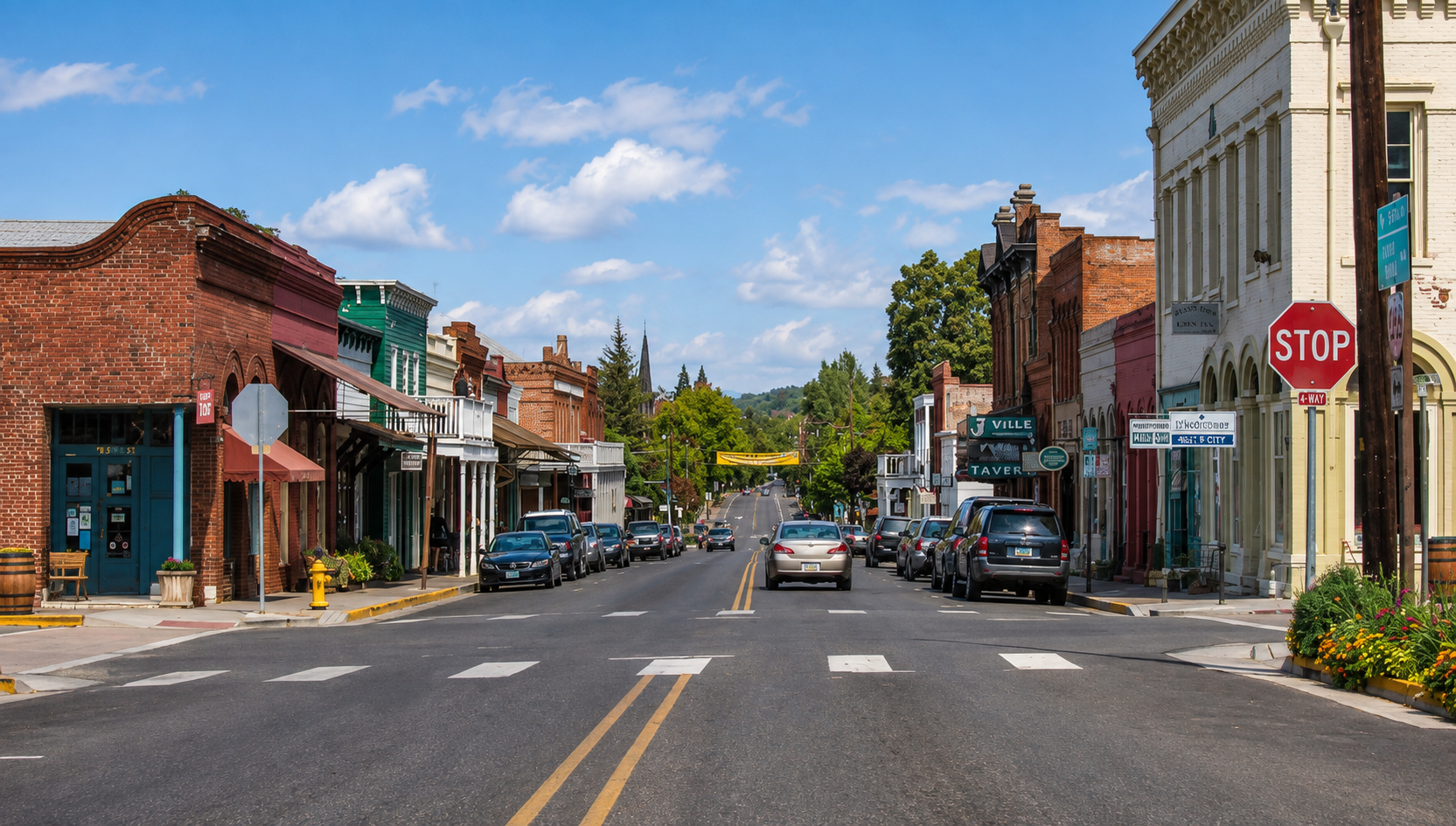
One of Southern Oregon’s most historically significant communities is preparing to tell its story on a scale considerably larger than a traditional museum building.
Historic Jacksonville, Inc., working alongside the City of Jacksonville and community partners, is developing a Citywide Museum that will use Jacksonville’s historic streets, buildings, landmarks and public spaces as part of an interconnected historical experience. At the center of the project is the community’s 1881 Old City Hall, which is being transformed into a Jacksonville History Center designed to serve as the starting point for exploring the town’s past.
Rather than gathering Jacksonville’s history exclusively behind museum doors, the project treats the city’s National Historic Landmark District as the museum itself. Visitors will begin with exhibits inside the History Center and then continue through Jacksonville, where surviving buildings and historic locations provide a physical connection to events that shaped the community and Southern Oregon.
The approach is particularly suited to Jacksonville, where much of the historic core remains recognizable more than a century after the city emerged as an important commercial and governmental center in the Rogue Valley.
Gold discovered in the region during the early 1850s helped transform Jacksonville into a growing settlement that attracted miners, merchants, settlers and entrepreneurs. Over subsequent decades, the community developed into a center of commerce and government while becoming home to people from a variety of cultural and economic backgrounds.
The new History Center is expected to place those layers of Jacksonville’s development into a broader narrative.
Approximately 800 square feet of exhibit space is planned inside Old City Hall. The exhibits will be organized around five major historical themes and will examine subjects including Indigenous history, the regional gold rush, Donation Land Claims, miners and settlers, merchants and tradespeople, Chinese residents and Oregon’s first Chinatown, the arrival of the railroad, economic decline, the Great Depression and Jacksonville’s eventual preservation and revitalization.
Interactive elements are being incorporated alongside photographs and written historical information. Plans include videos, touchable educational materials and digital features that allow visitors to obtain additional information through QR codes and online resources.
The History Center will also connect visitors with Jacksonville beyond Old City Hall.
GPS-based self-guided tours are planned to allow residents and tourists to explore historic locations using smartphones or tablets. The digital system is expected to provide information associated with individual properties and sites, including photographs, historical descriptions, audio material and additional resources. Visitors will be able to move through the community while learning about the people, businesses and events connected to the locations directly in front of them.
That system will complement historical programs already operating throughout Jacksonville, including walking tours and programming associated with historic properties such as the Beekman House and Beekman Bank.
Old City Hall carries its own place in the community’s history. Constructed in 1881, the building remained part of Jacksonville’s municipal government operations for generations and was Oregon’s oldest government facility in continuous use before city headquarters moved in 2020. Its conversion into the History Center allows the historic structure itself to become part of the material being interpreted.
Renovation work has included replacement of the roof, installation of a new heating and cooling system and accessibility improvements. Internal and external ramps are among the improvements intended to make the building accessible to a wider range of visitors.
The undertaking represents a significant combination of public and private investment in Jacksonville’s historic resources.
More than $538,000 in commitments have been assembled for the History Center project, including a $150,000 Cultural Resource Economic Fund award through Business Oregon. State funding has been combined with City resources, donations, sponsorships and support from community organizations. Historic Jacksonville also sought $15,000 in local Transient Lodging Tax funding to assist with shipping and installation of the exhibits.
The project is being undertaken through cooperation involving Historic Jacksonville, the City of Jacksonville, the Jacksonville Boosters and other community partners. The Jacksonville Chamber of Commerce and Visitor Information Center already serves as a gateway for visitors exploring the historic community and promotes many of Jacksonville’s tourism, cultural and historical attractions.
The Citywide Museum adds another dimension to a tourism economy already connected to historic architecture, restaurants, shops, wineries, outdoor recreation, community events and the Britt Music and Arts Festival.
The project also restores a centralized place for interpreting Jacksonville history after the community’s former conventional historical museum closed in 2010 following the loss of county funding. In the years since, historic properties, nonprofit organizations, tours and community programs have continued preserving and presenting portions of Jacksonville’s past.
The new model brings many of those pieces together without attempting to confine the community’s history to a single collection.
The History Center was initially targeted for completion around the nation’s 250th anniversary celebrations in 2026. Project information subsequently shifted the expected opening to fall 2026 as work on the building, exhibits and installation continued.
Once operating, the center is planned as a year-round destination rather than exclusively a seasonal attraction. That schedule could provide residents and visitors with a central historical resource throughout the year while directing people outward into Jacksonville’s historic district.
For Southern Oregon, the project also preserves a regional story extending well beyond Jacksonville’s city limits. The community’s early development was closely connected with the growth of the Rogue Valley, regional commerce, mining, agriculture, transportation and government. Many of the people who passed through Jacksonville contributed to communities that later developed across Jackson and Josephine counties.
The Citywide Museum is designed around that surviving landscape.
Old City Hall will provide the introduction, exhibits will supply historical context and technology will help guide visitors from one location to another. Beyond its doors, Jacksonville’s streets, homes, commercial buildings and landmarks will complete the experience.
Instead of constructing a museum to contain Jacksonville’s history, the developing project uses the historic community that remains standing as the museum itself.