


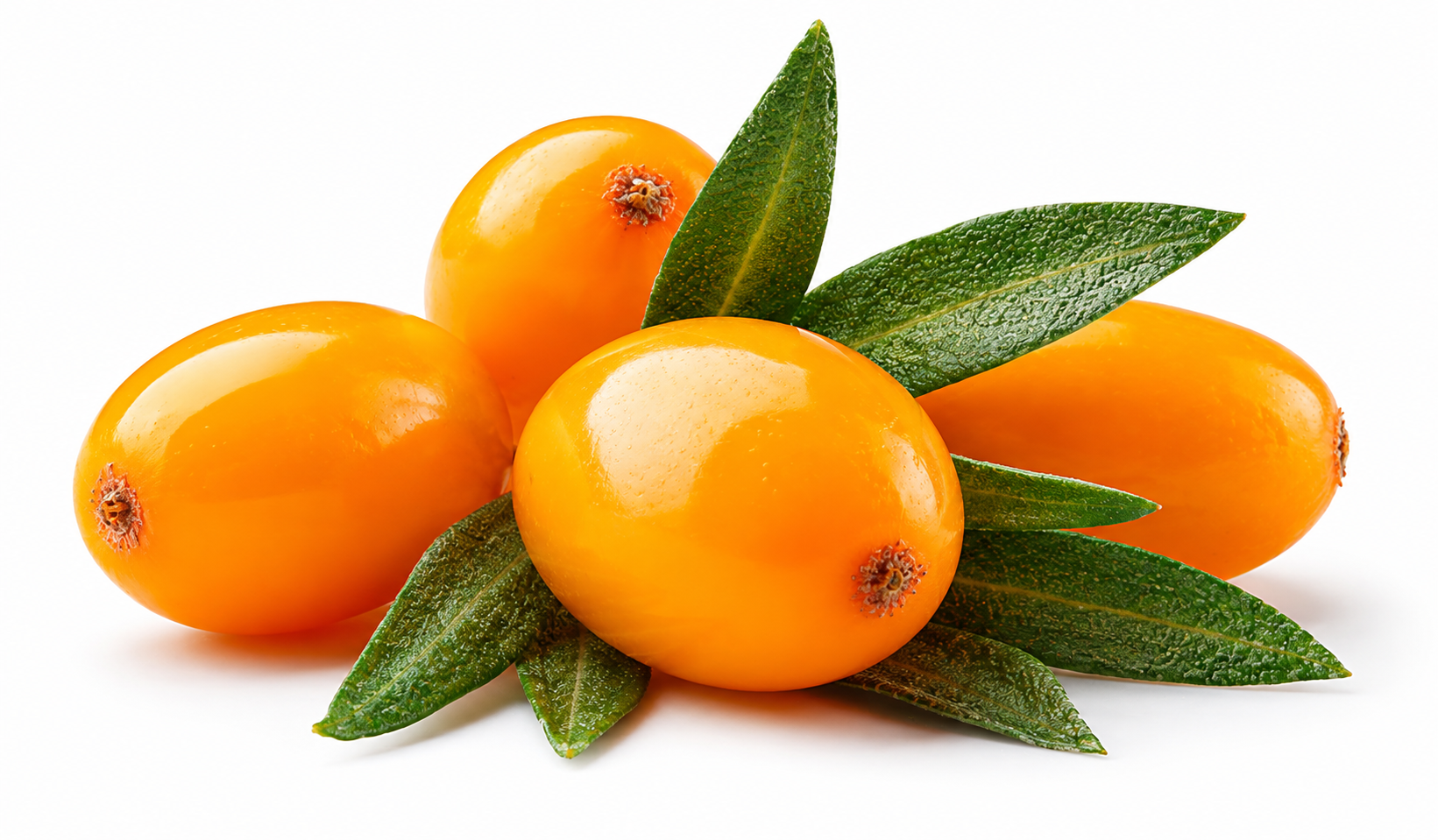
Sea buckthorn’s story begins on the edges of ancient battlefields, long before medicine understood fatty acids, carotenoids, or mucosal repair. In the windswept regions of Central Asia, soldiers noticed that wounded horses that grazed on the bright orange berries recovered faster, their coats turning glossy and their stamina returning with unusual speed. This observation traveled quickly through the ranks, eventually reaching the physicians who served Alexander the Great. In medical accounts associated with his campaigns, sea buckthorn appears not as a simple berry but as a strategic resource—a plant used to strengthen cavalry, accelerate healing, and maintain resilience during long marches. Its botanical name, Hippophae, meaning “shining horse,” reflects exactly what soldiers witnessed: animals injured in battle regained vitality so visibly that commanders began feeding the berries intentionally to restore their war horses.
As Alexander’s armies moved across Persia, India, and the Himalayan foothills, sea buckthorn followed them. It became part of the military pharmacopeia, used for wounds, digestive weakness, and exhaustion—conditions that modern science now recognizes as deeply connected to cellular repair and inflammation. Tibetan physicians later adopted sea buckthorn into their own medical system, recording it in the RGyud Bzi, the foundational pharmacopoeia of Tibetan medicine. They described it as a plant that “restores the inner lining,” a phrase that closely matches its modern role in mucosal repair. Mongolian healers used the berries and leaves for respiratory strength, digestive protection, and recovery from illness, while Chinese physicians documented sea buckthorn during the Tang dynasty as a remedy for lung weakness, digestive imbalance, and fatigue.
In Russia, where sea buckthorn grows wild across vast landscapes, the plant became a cornerstone of traditional medicine. By the early 20th century, Russian scientists were studying it for wound healing, radiation protection, and metabolic resilience, research that later spread across Europe and Asia. Modern reviews now describe sea buckthorn as one of the most pharmacologically diverse plants ever documented, containing more than 200 bioactive compounds across its berries, seeds, leaves, and oils.
The cellular mechanisms behind these ancient observations are remarkably clear. Sea buckthorn is one of the richest natural sources of omega-7, or palmitoleic acid, a fatty acid important to epithelial and mucosal tissues. The gut lining, respiratory tract, skin barrier, and reproductive mucosa all rely on fatty acids to help maintain hydration, elasticity, and cellular turnover. When soldiers, monks, or travelers consumed sea buckthorn, they were unknowingly feeding the very tissues most vulnerable to stress, injury, and environmental exposure.
Its bright orange color comes from a dense concentration of carotenoids, including beta-carotene, lycopene, zeaxanthin, and lutein, compounds that help protect cells from oxidative damage and support cellular function. These carotenoids act like shields, helping neutralize reactive oxygen species before they can damage DNA, membranes, or cellular components. Ancient physicians did not know the term “oxidative stress,” but they recognized its associated effects: slow healing, inflammation, fatigue, and vulnerability to illness. Sea buckthorn’s carotenoids provided cellular protection that may have contributed to recovery and endurance.
The plant’s oils contain vitamin E, phytosterols, polyphenols, and flavonols such as isorhamnetin, compounds associated with inflammation regulation, cell membrane stability, and immune function. Modern studies suggest that sea buckthorn may influence the activity of antioxidant enzymes such as superoxide dismutase, catalase, and glutathione peroxidase, potentially strengthening the body’s internal defense systems and reducing oxidative stress at the cellular level. This may help explain why ancient healers used it for wounds, burns, and skin damage: sea buckthorn does not simply soothe the surface; its compounds may also support cellular turnover and the underlying tissue.
Even the digestive system may respond to sea buckthorn’s chemistry. Omega-7 and carotenoids may support the mucosal lining, while polyphenols may help regulate inflammation and flavonoids may support microbial balance. Tibetan physicians described sea buckthorn as a plant that “protects the stomach from heat,” a poetic way of describing what could today be interpreted as reducing inflammation and supporting the gut barrier. These concepts can now be examined through modern gastroenterology.
Across civilizations, sea buckthorn was never treated as a simple berry. It was a medicinal system—a whole-plant pharmacology that touched numerous pathways of human repair. Soldiers used it for endurance. Monks used it for resilience. Physicians used it for wounds, digestion, lungs, and recovery. Modern biochemistry provides possible explanations for many of these traditional uses, particularly sea buckthorn’s potential to support mucosal tissues, stabilize cell membranes, protect against oxidative stress, and support immune balance.
As we move into the next chapter of this five-day series, sea buckthorn stands exactly where it should: as the third pillar, the military medicine that traveled through empires, the whole-plant system used for horses, soldiers, monks, and travelers alike, and a plant that continues to attract scientific interest for its potential role in supporting the human body today.