


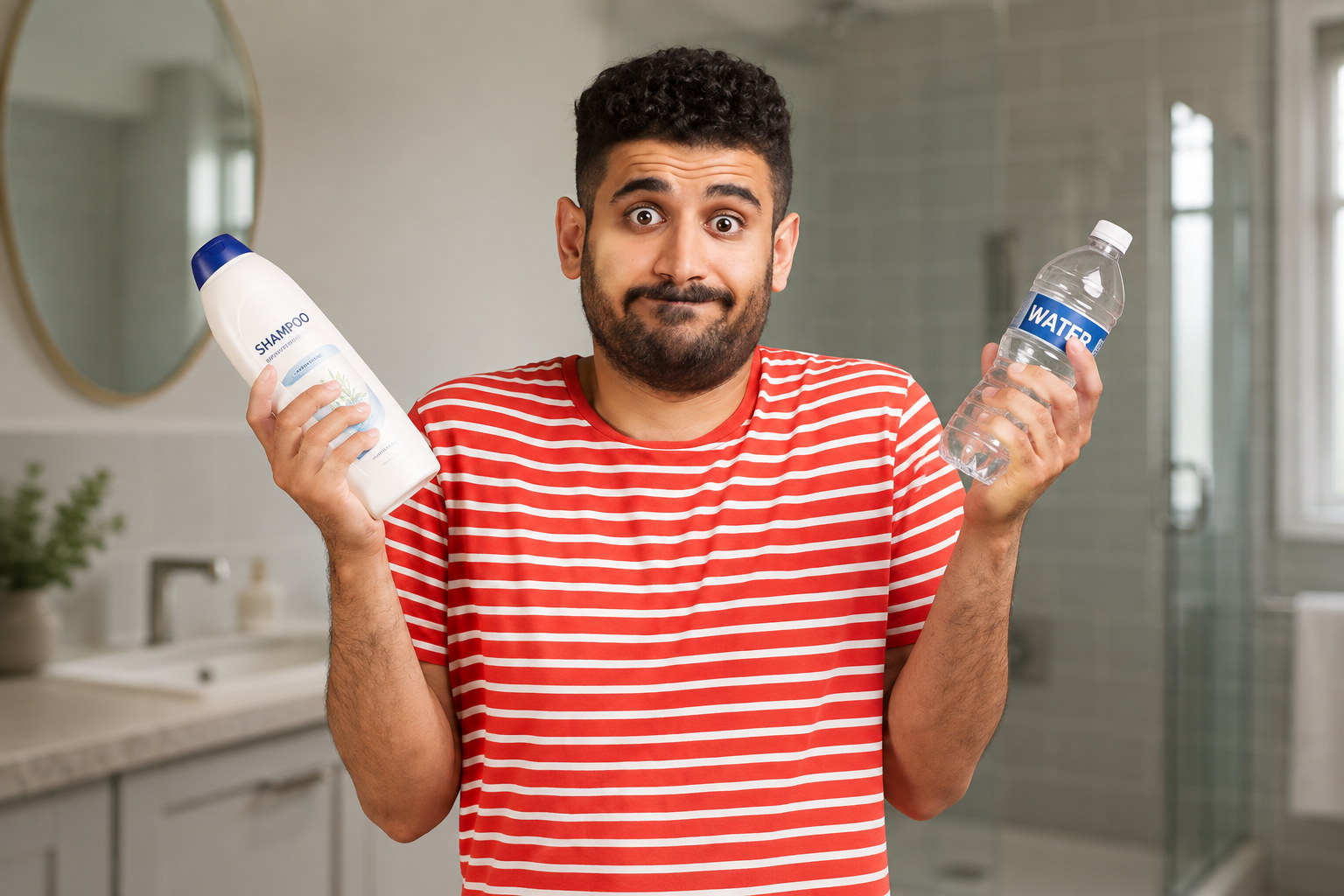
Every day across Oregon, consumers toss empty containers into two very different economic systems without giving the difference much thought. Finish a bottle of water, soda or another qualifying beverage and that empty container may still be worth 10 cents. Finish a bottle of shampoo, hand soap, body wash or household cleaner and the bottle may go into the recycling bin, but there is no dime waiting to be collected. To many consumers, that seems peculiar. Plastic is plastic, after all, so why does Oregon attach money to one bottle while placing no refundable value on another?
The answer reaches back more than half a century and begins with an important fact about Oregon’s Bottle Bill: it was never intended to put a price on recyclable plastic. It was designed as a beverage container deposit system, originally created to combat the enormous number of disposable beverage bottles and cans being discarded along highways, roadsides, parks and other public spaces. Oregon became the first state in the nation to adopt such a law in 1971, establishing a financial incentive that encouraged people to return beverage containers rather than throw them away.
That original purpose still explains much of what Oregonians encounter today. When someone buys an eligible beverage, the additional 10 cents associated with the container is a deposit. Returning the empty container allows the consumer to recover that money. In simple financial terms, Oregon is not buying the bottle from the consumer for a dime. The consumer is reclaiming the dime that was attached to the container when it entered the retail transaction.
That helps explain why an empty shampoo bottle does not suddenly become worth 10 cents simply because it can potentially be recycled. No deposit was collected when the shampoo was purchased. The same generally applies to bottles containing hand soap, dishwashing liquid, body wash, laundry products and many household cleaners. Without a deposit collected at the beginning of the transaction, there is no deposit to refund at the end.
Many shampoo, soap and household-product bottles are made from high-density polyethylene, commonly identified as HDPE or number 2 plastic, a material widely used in recyclable packaging. Many beverage bottles are manufactured from polyethylene terephthalate, commonly known as PET or number 1 plastic. A bottle’s lack of redemption value therefore does not necessarily mean that its material is worthless or incapable of being recycled. The dime follows the legal classification of the container, not simply the type or quantity of plastic used to manufacture it.
Beverage containers also provide lawmakers with a relatively manageable category for a deposit program. They contain products intended for consumption, are generally emptied relatively quickly and can move through a specialized collection system built specifically around eligible bottles and cans. Oregon can establish which beverages and containers qualify, collect deposits through retail transactions and provide a network through which consumers recover those deposits.
Expanding that concept to virtually everything sold in a bottle would be considerably more complicated. The bathroom alone demonstrates the problem. Shampoo, conditioner, body wash, lotion, mouthwash and cleaning products can all be sold in plastic containers, but they contain very different substances and leave different residues behind. Move into the garage or utility room and bottles may contain automotive fluids, chemicals, pesticides and other products requiring completely different handling. A universal bottle deposit would therefore require decisions about what qualifies, what must be excluded, how containers are sorted, where they are returned and who pays for the additional collection and processing infrastructure.
Those costs matter because recycling does not end when a consumer drops a container into a machine or recycling cart. Material has to be collected, transported, sorted and processed before it can become useful raw material again. Adding thousands of household products to a deposit program would create additional expenses throughout the supply chain, potentially affecting manufacturers, distributors, retailers, recycling operators and ultimately the people purchasing the products.
Oregon has nevertheless begun changing the economics surrounding packaging that falls outside the traditional Bottle Bill. The state’s Recycling Modernization Act established an extended producer responsibility system for covered packaging, paper products and food serviceware. Beginning in 2025, producers covered by the law assumed new responsibilities for helping finance Oregon’s recycling system through an approved producer responsibility organization. Instead of placing a refundable dime directly on every shampoo or soap bottle, the policy moves some of the financial responsibility for managing packaging toward companies placing covered products into the marketplace.
For consumers, that creates two recycling models operating alongside one another. The Bottle Bill uses an immediate and highly visible financial incentive: purchase an eligible beverage, pay the deposit, return the container and recover the money. The broader recycling system relies on collection programs and increasingly on producer responsibility to help finance what happens to packaging after consumers are finished with it. Both systems deal with discarded containers, but their economics and purposes are different.
The effectiveness of the deposit concept also explains why beverage containers are so recognizable within Oregon’s recycling culture. Ten cents may appear insignificant when attached to a single bottle or can, but the value changes quickly in volume. Ten qualifying containers equal $1 in redemption value, 100 equal $10 and 1,000 represent $100. The financial incentive gives discarded beverage containers something most empty household packaging does not have: an immediately recognizable cash value to the person holding it.
Oregon could someday extend deposits beyond beverages if lawmakers determined that doing so provided sufficient environmental and economic benefits. There is nothing inherent about a shampoo bottle that makes a deposit impossible. A broader program, however, would need to account for dramatically different products, residues, materials, collection requirements and processing costs before consumers could begin returning bathroom and household containers alongside beverage bottles and cans.
For Oregon households trying to make sense of what can sometimes feel like an inconsistent recycling system, the easiest way to understand the difference is to stop thinking about the dime as the value of the plastic. The 10 cents represents a refundable financial obligation created by Oregon law for certain beverage containers. A shampoo bottle may contain useful recyclable material, but unless lawmakers place that container into a deposit program, there is no consumer deposit attached to recover.
The next time an Oregon household empties a water bottle in the kitchen and a shampoo bottle in the shower, the two containers may look remarkably similar when they reach the end of their useful lives. What separates them is not necessarily their ability to be recycled, but more than half a century of public policy, economics and recycling infrastructure. One was sold with a dime attached to its return, while the other entered a different recycling system entirely.