


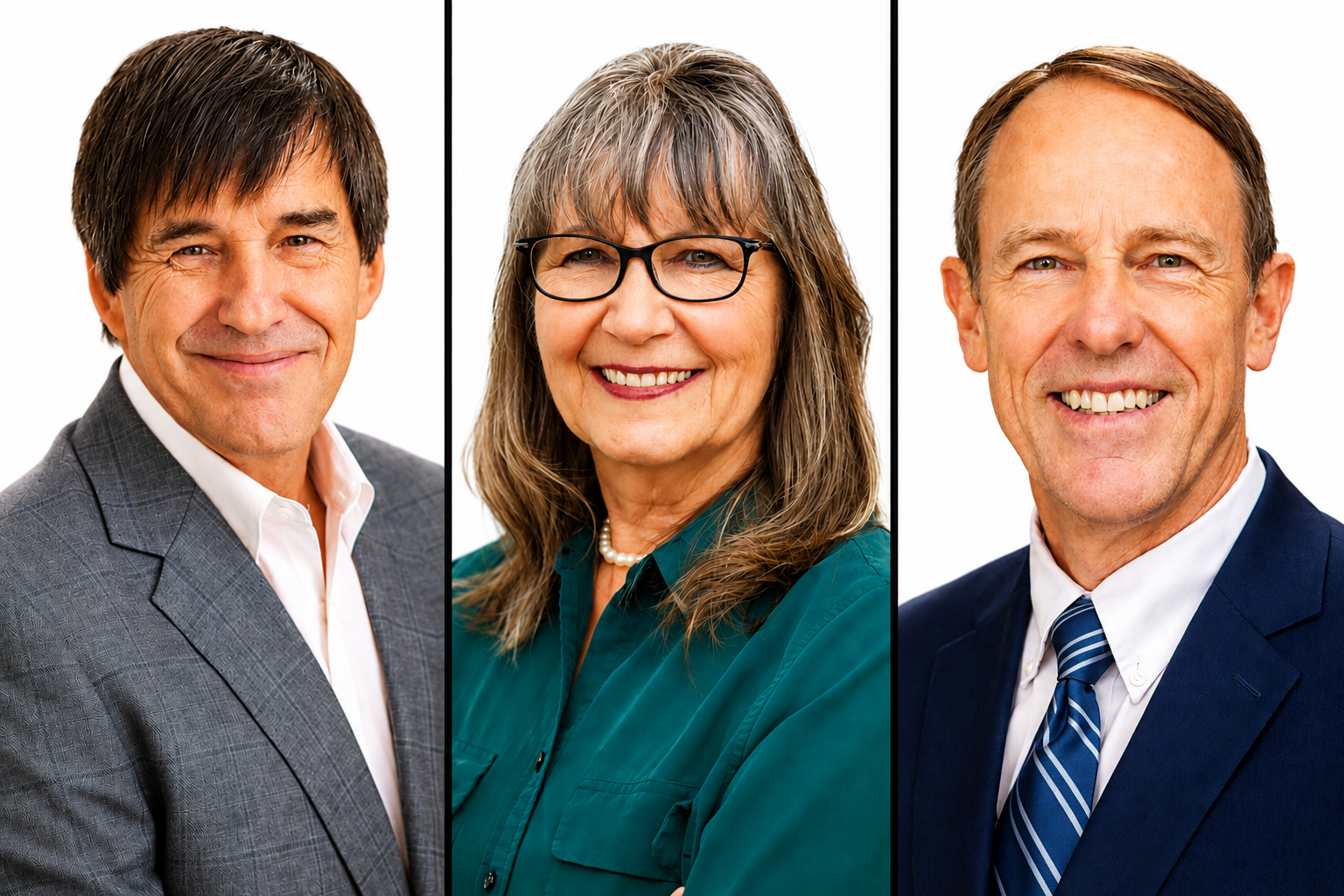
Josephine County’s three commissioners spent much of the past week confronting a familiar problem with increasingly expensive consequences: how to maintain the county’s public-safety system without creating another financial hole somewhere else in county government.
By Wednesday night, they had made their biggest decision. The existing 93-cent Adult Jail and Juvenile Detention levy will go back before voters Nov. 3, unchanged in its tax rate but carrying a clearer order of financial priorities. The Adult Jail comes first, while Juvenile Detention will receive a portion of the revenue that remains.
The unanimous 3-0 vote ended several days of discussion at the commissioners’ table, but it did not settle the larger financial question surrounding Josephine County’s public-safety system. Instead, it established what voters will be asked to finance for another five years while county officials continue searching for longer-term answers for Juvenile Justice and other public-safety expenses.
The levy was one of several issues that moved through the courthouse during a week that stretched from farmland along Lower River Road to an aging electric transit bus, a growing Community Corrections population, economic-development dollars, federal timber policy and even the possibility of using artificial intelligence inside county government.
On Monday, Aug. 10, Sheriff Dave Daniel and county finance staff joined commissioners for a detailed examination of jail expenses, staffing, vacancies, levy revenue and the money necessary to maintain jail operations. Among the possibilities was a significant change in direction: abandoning the existing structure in favor of a levy dedicated only to the Adult Jail. After reviewing those options, commissioners reached consensus to retain the existing structure and move forward with a renewal at the current rate.
The proposal heading to the ballot maintains the current rate of $0.93 per $1,000 of assessed property value. Revenue would first support Adult Jail operations, including capacity for as many as 185 adults in custody and the intake of people arrested in Josephine County. Remaining revenue would be available to partially fund Juvenile Detention operations and related administrative costs.
When the proposal reached Wednesday evening’s Weekly Business Session, residents brought their own concerns to the discussion, questioning everything from property-tax impacts and juvenile funding to the language voters will see on their ballots.
One piece of that language changed before the final vote. Commissioners removed the words “if any” from the section describing revenue remaining for Juvenile Detention, then unanimously approved Resolution No. 2026-031 and officially transferred the decision from the courthouse to the electorate.
While commissioners worked through the levy, another unresolved matter was moving through the county’s land-use process. A proposed non-farm dwelling on approximately 2.71 acres of Exclusive Farm-zoned property off Lower River Road returned to commissioners through a de novo appeal after the Planning Director denied the application.
The Aug. 10 hearing moved deeply into the details that often determine rural land-use disputes in Oregon: agricultural soil classifications, whether property is suitable for farming, development patterns on neighboring land and whether the application satisfies state and county approval standards.
New soil information submitted by the applicant complicated the record and generated questions about state requirements governing agricultural soil determinations. At the applicant’s request, commissioners unanimously continued the hearing for seven days, leaving the evidentiary record open and postponing a final decision until proceedings resume Aug. 17.
County staffing presented another issue Tuesday as Community Justice reported that approximately 820 people are now under community supervision, compared with roughly 750 at the beginning of the year. Commissioners approved replacing a Senior Department Specialist position with a Community Corrections Case Specialist, moving the position closer to the daily supervision workload.
The case specialist will assist with intake, lower-risk client contacts, compliance monitoring and mandatory data tracking, with funding coming through the Adult Community Corrections Fund.
The board also dealt with two expenses involving existing county services. An approximately $30,000 amendment will extend Josephine County’s contract with Synergy through the end of 2026 for qualified Women, Infants and Children nutrition services. Public Health needs the outside assistance while attempting to recruit an in-house dietitian, allowing required WIC nutrition services to continue during the hiring process.
Another $30,000 to $31,000 is headed toward the county’s remaining 2019 battery-electric transit bus, although an existing federal grant is expected to cover approximately 89.75 percent of the battery repairs, leaving an estimated local match of about $3,100. Transit officials recommended repairing part of the battery system instead of replacing the entire battery, citing longevity and range considerations while preserving the possibility of using remaining grant dollars toward a future replacement bus.
Economic development also remained on the commissioners’ agenda as Finance staff reported receiving approximately a dozen applications for the developing Economic Development Committee. The county, however, has not attracted enough applicants meeting all of the designated membership categories.
Commissioners indicated during Tuesday’s discussion that economic-development lottery money should produce tangible results inside Josephine County, particularly jobs and infrastructure capable of supporting economic activity. Recruitment will continue, although commissioners may eventually be asked to revise membership requirements or governing rules if the current structure prevents the committee from being filled.
Commissioners are also considering whether Josephine County should rejoin the Association of O&C Counties, which coordinates advocacy, policy work and legal efforts involving O&C lands and timber revenue. The board discussed whether membership could improve access to information and provide Josephine County with a collective voice on federal land policy, but membership dues were not included in the county’s adopted budget.
Before committing county funds, commissioners requested more information about the association’s finances and whether Josephine County could prorate the dues, phase them in or pay through installments. No formal membership action was taken.
Technology entered the week’s discussions through a proposal called the COCONUT – Automation Opportunity Sweep, which would examine county workflows for repetitive tasks that could potentially be automated or performed with assistance from artificial intelligence.
Commissioners expressed interest in possible operational efficiencies while raising questions involving confidential county information, cybersecurity, ownership of data, employee participation, procurement requirements and existing county technology projects. Legal Counsel and Information Technology were directed to examine the proposal and supporting materials before it returns for further consideration.
By the end of the week, several county matters remained in motion. The Lower River Road land-use appeal resumes Aug. 17, recruitment for the Economic Development Committee continues, the O&C membership question remains unsettled, county attorneys and technology staff still have to examine the automation proposal, and Community Corrections is adjusting to a supervision population that has grown by approximately 70 people since the beginning of the year.
The jail and juvenile levy has moved further. After considering whether to restructure the levy, reviewing staffing and financial information, debating how the money should be prioritized and hearing testimony from residents, all three commissioners agreed to retain the existing 93-cent rate and place the five-year renewal before voters. Josephine County residents will make the final decision Nov. 3.