


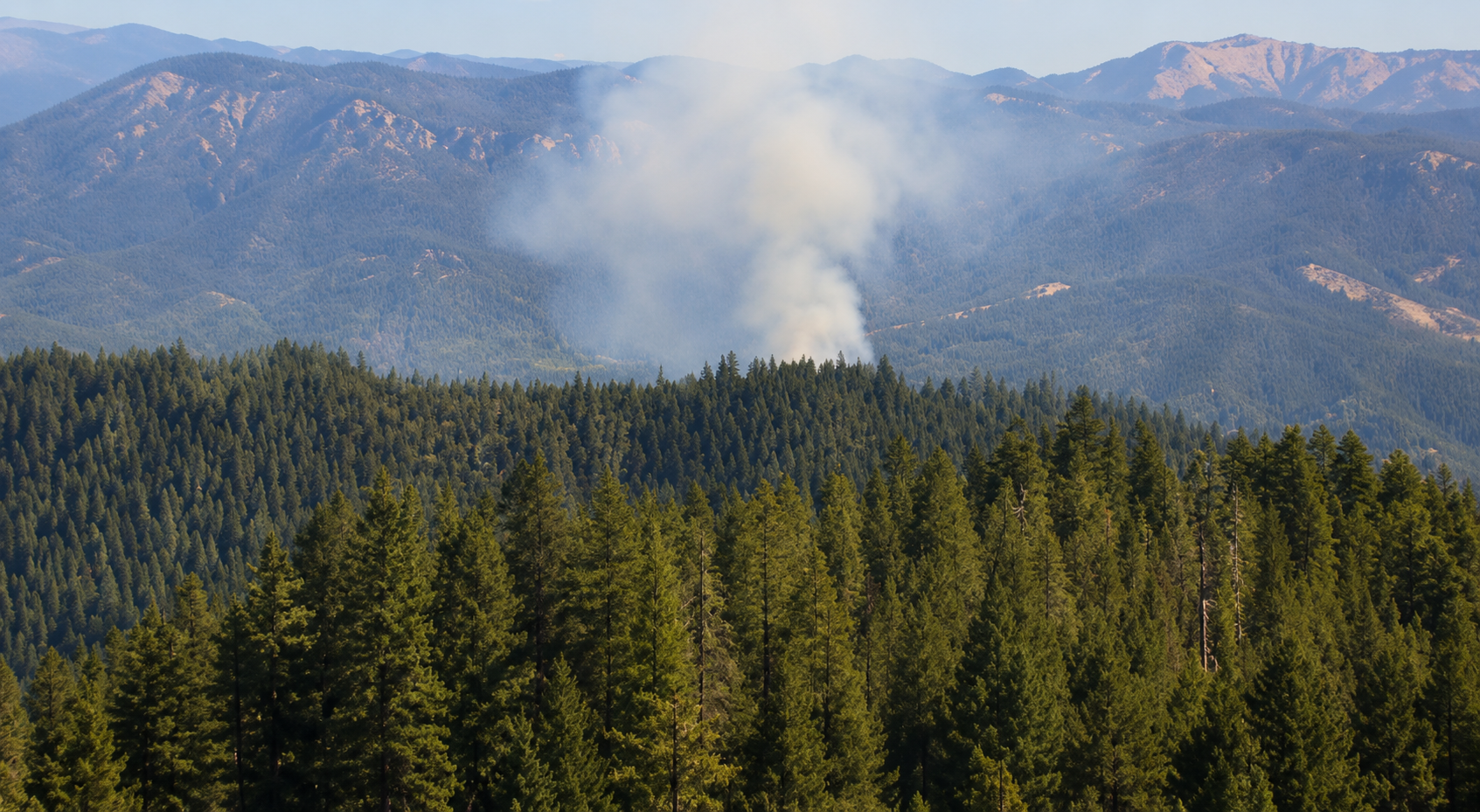
A grass fire that prompted a substantial ground and air response along East Evans Creek Road was stopped at approximately 1.5 acres Monday afternoon, with firefighters surrounding the fire despite critical fire weather conditions across portions of the Rogue Valley.
The fire broke out in the 5000 block of East Evans Creek Road, bringing multiple ground resources to the scene for an immediate initial attack. A Type 3 helicopter and Air Attack were dispatched as firefighters moved against the advancing edges of the fire, combining crews on the ground with aviation support while additional resources were placed on standby or ordered toward the incident.
By approximately 12:35 p.m., preliminary estimates placed the fire at three to four acres with a moderate rate of spread. Firefighters continued working the perimeter while two Type 1 helicopters were ordered to reinforce the aerial response. The combination of dry vegetation and critical fire weather increased the potential for additional growth, making the first stages of the suppression effort particularly significant.
Twenty minutes later, firefighters had established a wet line around the fire. Crews continued strengthening that line while smoke remained visible from the area, and additional aircraft were still traveling toward the incident. A wet line places water directly along a fire’s perimeter, creating a temporary suppression boundary that allows firefighters to slow advancing flames while working toward a more secure containment line.
The preliminary acreage estimate was later revised substantially downward. At approximately 1:30 p.m., fire officials reported that the incident had been held to 1.5 acres. Hose had been laid around the entire perimeter, allowing commanders to release several aircraft that were no longer needed for the initial attack, including Type 2 and Type 3 helicopters.
The speed of the response came during a period when the Rogue Valley was already facing heightened wildfire potential. A Red Flag Warning was in effect across multiple areas Monday as weather and vegetation conditions combined to create the possibility of rapid fire growth and more active fire behavior. Red Flag Warnings identify periods when dry fuels and atmospheric conditions can allow an ignition to spread more quickly and become increasingly difficult for firefighters to contain.
Late-summer landscapes throughout Josephine County and the surrounding Rogue Valley contain extensive areas of cured grass, brush and other vegetation capable of carrying fire rapidly once ignited. Grass fires can move across open ground quickly, particularly when wind, low humidity and dry fuels occur together. The East Evans Creek Road fire developed under conditions serious enough to warrant an immediate aviation response in addition to the firefighters and equipment already operating on the ground.
The number and variety of resources dispatched also reflected the emphasis placed on stopping the fire during its earliest stage. Type 1 helicopters represent the largest helicopter classification used in wildland firefighting and can provide substantial water or retardant delivery capability, while smaller Type 2 and Type 3 helicopters can perform a range of suppression and support assignments. Air Attack provides aerial coordination above an incident, helping organize aircraft operating around the fire and assisting with the broader suppression strategy.
Once firefighters stopped the fire’s forward movement and surrounded the perimeter with hose, the operation moved into mop-up. Crews remained on East Evans Creek Road searching the burned area for residual heat, extinguishing hot spots and strengthening sections of the perimeter where fire could potentially rekindle. Visible flames can disappear well before a fire is completely secure, leaving heat in burned vegetation, roots, stumps and other combustible material.
Mop-up is therefore a continuing part of the suppression operation rather than simply cleanup after the fire. Firefighters systematically examine the burned area and its perimeter for heat capable of producing another ignition, particularly when surrounding vegetation remains dry. Wind passing across inadequately extinguished material can expose embers or carry burning material into vegetation outside the original fire line.
No additional growth was reported in the final afternoon update, and the successful initial attack prevented the incident from developing beyond the relatively small area ultimately confirmed as burned. Officials said firefighters would remain at the scene until remaining heat had been addressed and the perimeter was further secured.
The cause of the fire had not been determined as of the final update and remained under investigation. No additional public updates were expected unless conditions at the incident changed significantly.
Monday’s response unfolded during one of the more demanding combinations of weather and fuel conditions encountered during Southern Oregon’s summer fire season. The progression from an active grass fire requiring multiple aircraft to a hose-lined 1.5-acre perimeter occurred in roughly an hour, leaving crews with the slower and more methodical work of eliminating residual heat while critical fire weather remained a concern elsewhere across the Rogue Valley.