


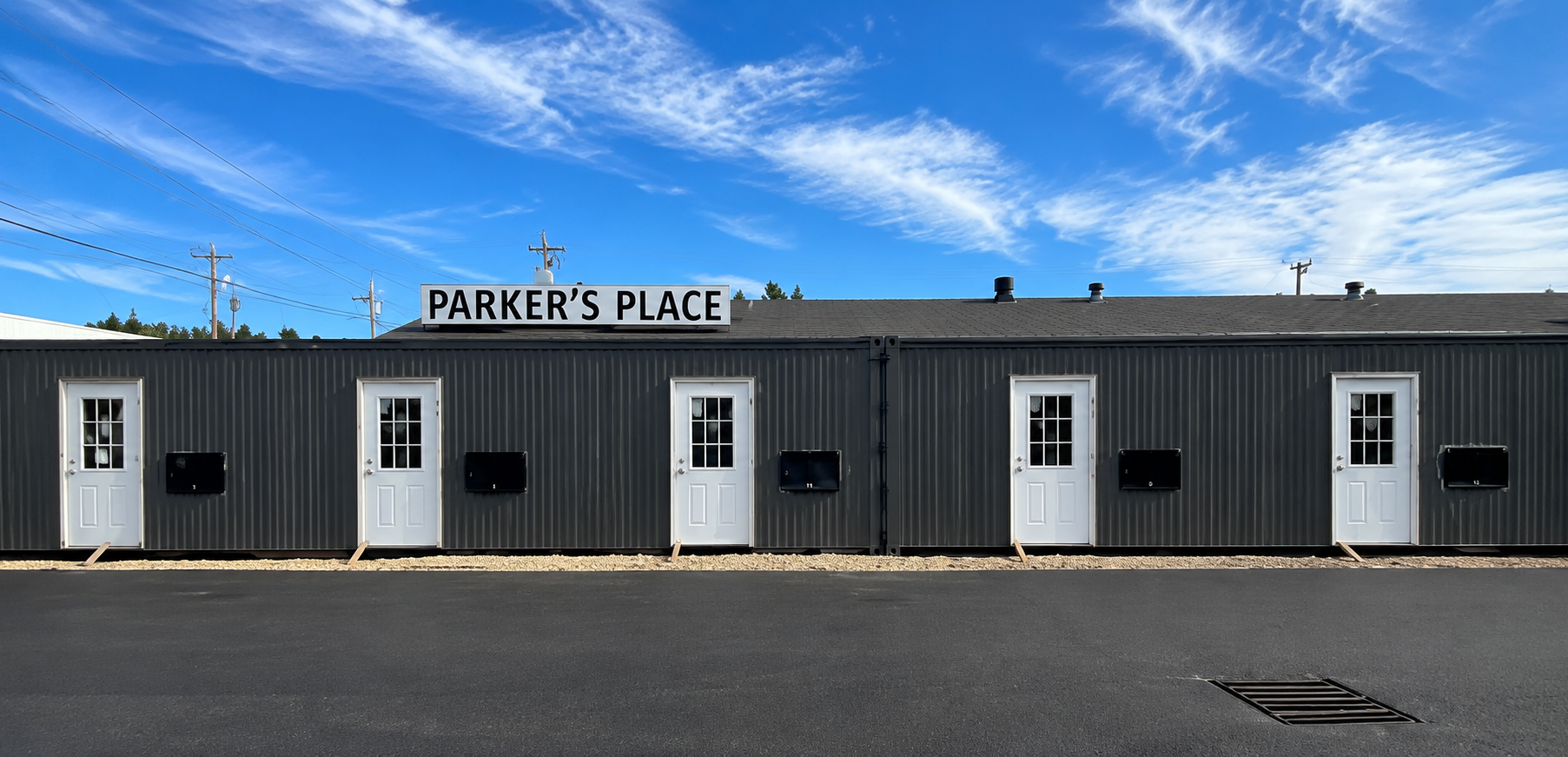
Nearly 150 people once spread among approximately 130 tents at three separate Grants Pass resting sites are now living within one managed shelter community, an undertaking that has spent its first ten weeks confronting the practical realities of bringing three different camping populations together under one set of rules, responsibilities and expectations.
Parker’s Place Village opened June 22 with its first 40 beds and expanded as people were relocated from the city’s resting sites. Last week, the village passed 70 days of operation, offering an opportunity to examine how the property and its residents have adjusted since one of the largest changes to Grants Pass’ homeless shelter system began earlier this summer.
The difference is increasingly visible throughout the property. Sleeping areas that initially absorbed belongings from people arriving out of outdoor camps have become more organized, bicycles and personal possessions are being kept more deliberately around the units, and common areas are being maintained for their intended purposes. Picnic spaces provide residents with areas to gather, while cooking and serving areas accommodate the community volunteers who regularly arrive with meals.
Even the laundry has found its place.
Many residents wash clothing by hand, creating an immediate need for somewhere to dry it. Wet clothing that had been hung along perimeter fencing is now directed to a designated clothesline area. It is a simple operational adjustment, but one that illustrates the daily work involved in converting a large collection of people accustomed to outdoor camping into residents of a shared shelter environment.
The population brought into Parker’s Place did not arrive from a single encampment with an established social structure. Residents came from three different city resting sites, where separate relationships, routines and conflicts had developed. Placing approximately 150 people together therefore required considerably more than providing sleeping accommodations. Residents had to begin sharing common areas while adhering to expectations involving cleanliness, personal belongings, safety, behavior and consideration for neighbors living only a short distance away.
Parker’s Place operator Bernie Woodard reported last week that most residents are following those rules and that the condition of the property is beginning to reflect their cooperation. “The rules are mostly being followed, and we are seeing the results,” Woodard said.
That cooperation is an essential part of the shelter’s operation because maintaining a property occupied by roughly 150 people cannot be accomplished solely through employees or volunteers. Residents are responsible for managing their belongings, respecting common spaces and adapting to routines considerably different from those associated with unmanaged outdoor camping. Staff and volunteers reinforce those expectations while addressing the conflicts and practical problems that accompany communal living on this scale.
Woodard has not portrayed the first ten weeks as trouble-free. Bringing together people with different backgrounds, circumstances and relationships inevitably produces disagreements and operational complications, and Parker’s Place continues adjusting its practices as those challenges emerge. The early condition of the village nevertheless provides a tangible comparison with the sprawling collection of nearly 130 tents that existed across three city locations before the consolidation.
The Safe Beds First model operating at Parker’s Place is built around establishing a secure sleeping environment and greater daily stability before expecting residents to address other circumstances in their lives. Rather than treating a bed as the final objective, the program presents shelter as the foundation from which residents may begin pursuing whatever assistance or opportunities are appropriate to their circumstances.
“This isn’t simply about giving someone a bed for the night,” Woodard said. “Safe Beds First is about creating a safe and organized environment where someone can get out of survival mode, establish some stability and hopefully begin taking the next steps forward.”
The village also continues to depend heavily upon participation from outside its gates. Grants Pass residents, volunteers and community organizations have provided meals, supplies, services and time throughout the shelter’s early operation. Organized food lines have become part of the property’s routine when meals are brought in, connecting community assistance directly with the daily management of the village rather than leaving the shelter to function independently from the surrounding city.
For the residents, however, the adjustment occurring inside Parker’s Place is ultimately theirs to make. Rules can be established and facilities can be provided, but maintaining sleeping areas, controlling personal belongings, respecting neighboring residents and preserving communal spaces require participation from the people occupying the village. Woodard credited residents alongside employees, volunteers and community supporters for the improvements observed during the shelter’s first ten weeks.
Parker’s Place remains in an early stage of operation, and its first 70 days cannot establish whether the program will achieve lasting housing or stability outcomes for its residents. Those measurements require considerably more than photographs of an orderly property or compliance with shelter rules. The first ten weeks instead provide evidence of how the facility itself is functioning after absorbing a population comparable to that of a small neighborhood.
The contrast between June and late August is substantial. Three outdoor resting sites containing nearly 130 tents have been replaced by one managed shelter environment serving approximately 150 people, while the daily disorder associated with moving that many residents into a single location has gradually given way to established routines for meals, laundry, belongings, sanitation and communal space.
Parker’s Place entered September no longer as a newly opened collection of beds, but as a functioning village carrying the responsibilities that accompany housing approximately 150 people every day. Its next measure will extend beyond whether bicycles remain organized or laundry stays off the fences. The larger measure will be whether the structure now visible throughout the property can help residents convert temporary shelter into greater personal stability, and whether the community support that helped establish the village remains strong enough to sustain that work.