


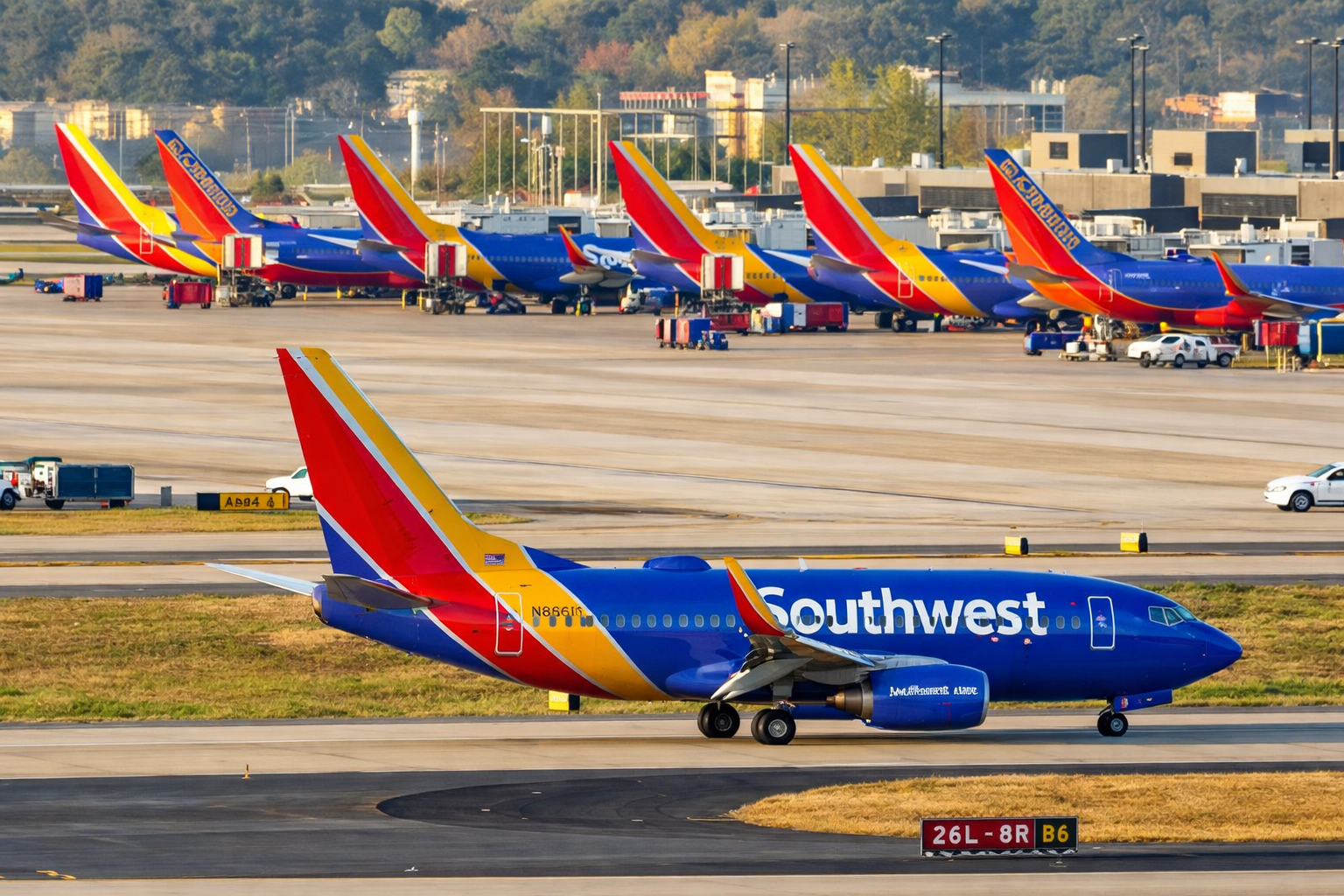
American Airlines, United Airlines and Southwest Airlines are cutting flights and tempering expansion plans as soaring jet fuel prices force U.S. carriers to reconsider routes that were already operating along the narrowest edges of profitability.
The reductions are moving through domestic schedules heading into the final months of 2026, with additional changes possible in early 2027. American has temporarily suspended routes, United has removed December flying and Southwest has scaled back anticipated capacity growth, extending a contraction that has also reached Delta Air Lines and carriers operating internationally.
Jet fuel recently climbed to approximately $4.71 per gallon, more than twice its price a year earlier and approaching levels not recorded in roughly two decades. International jet fuel prices, which had been running around $85 to $90 per barrel earlier this year, surged into a range of $150 to $200 as disruptions associated with the Iran war tightened petroleum supplies and increased costs throughout global aviation.
American is absorbing some of the largest increases. The carrier estimates that every one-cent movement in fuel prices changes its quarterly expenses by approximately $10 million. With fourth-quarter fuel running roughly $1 per gallon above the assumptions American was using in July, the increase represents approximately $1 billion in additional quarterly expense.
The carrier had already temporarily suspended six domestic routes during the summer. Los Angeles service to Cleveland, Columbus, Pittsburgh and Washington Dulles was affected, along with Charlotte flights to Ontario and Sacramento. American has not characterized those suspensions as permanent departures from the markets, but elevated fuel prices have placed additional pressure on routes generating the weakest returns.
United has begun making similar reductions. The airline removed some December flying as fuel expenses climbed and has left open the possibility of additional adjustments during the first quarter of 2027 and later in the year. Routes operating near the lower end of United’s profitability range are among those most exposed when fuel costs rise faster than the revenue generated by the flight.
Southwest entered 2026 expecting capacity growth of approximately 2% to 3%. Those plans have since been reduced, with the carrier making comparatively modest schedule adjustments while evaluating additional changes should fuel remain elevated. Southwest has not announced widespread withdrawals from airports or broad elimination of domestic service.
Delta has also reduced planned flying during a year in which carriers repeatedly revised schedules. Cirium scheduling data earlier showed Delta removing approximately 7,300 flights from its summer schedule, while United removed more than 21,000 and American approximately 6,400 during the period examined.
The retrenchment has crossed international borders. Air Canada has adjusted capacity as higher fuel expenses place greater emphasis on routes and passengers generating stronger revenue. Ryanair has confronted the same increase in Europe, where the carrier reported unhedged jet fuel reaching approximately $150 per barrel during its first fiscal quarter. Ryanair subsequently lowered its full-year passenger forecast from 216 million to 214 million.
Cirium reported earlier this year that airlines worldwide removed approximately 13,000 flights from May schedules as higher fuel prices spread through the industry. Nearly all of the world’s 20 largest carriers reduced at least portions of their planned flying during the period.
The reductions are arriving without a corresponding collapse in passenger traffic. United has continued reporting strong bookings across economy, corporate and premium travel, while other major carriers have also recorded resilient demand. Flights that previously generated acceptable returns can nevertheless fall below profitability targets when substantially higher fuel expenses are added to each departure.
Passengers are encountering the effects through schedules as well as fares. U.S. airfares in August stood 23.4% above their level a year earlier, while overall consumer prices increased 3.4% during the same period. Fewer scheduled seats in heavily traveled markets can provide carriers greater ability to raise fares, particularly when passenger demand remains strong.
The financial pressure is visible across airline balance sheets. United spent approximately $8.2 billion on fuel during the first six months of 2026, while American spent roughly $7.8 billion. Both figures were nearly 49% higher than during the comparable period a year earlier. Southwest spent approximately $3.6 billion, an increase of about 39%.
Fuel can account for as much as one-quarter of an airline’s operating expenses, magnifying the effect of sustained price increases across fleets that collectively operate tens of thousands of daily departures. Airlines have responded by reducing capacity, adjusting fares and fees, protecting stronger routes and reconsidering flights where passenger revenue no longer provides sufficient room to absorb the additional expense.
Smaller cities, seasonal destinations and lower-frequency routes could face greater exposure if reductions continue into 2027. Major hub routes carrying large passenger volumes generally provide airlines with stronger revenue opportunities, while thinner markets offer less room to absorb a sudden increase in the cost of operating an aircraft.
The industry’s winter schedules will provide the next indication of how long the contraction lasts. Lower fuel prices could improve the economics of suspended routes and allow carriers to restore some capacity. Continued high prices would keep pressure on flights already operating close to the profitability threshold and could produce another round of schedule revisions as airlines finalize their 2027 networks.
For passengers, the changes are increasingly visible at the booking screen: fewer flights on selected routes, higher fares across portions of the domestic network and less room for airlines to operate service producing marginal returns. The nation’s airplanes are still carrying strong passenger loads. The escalating cost of putting those airplanes into the air is now determining which flights remain on the schedule.