


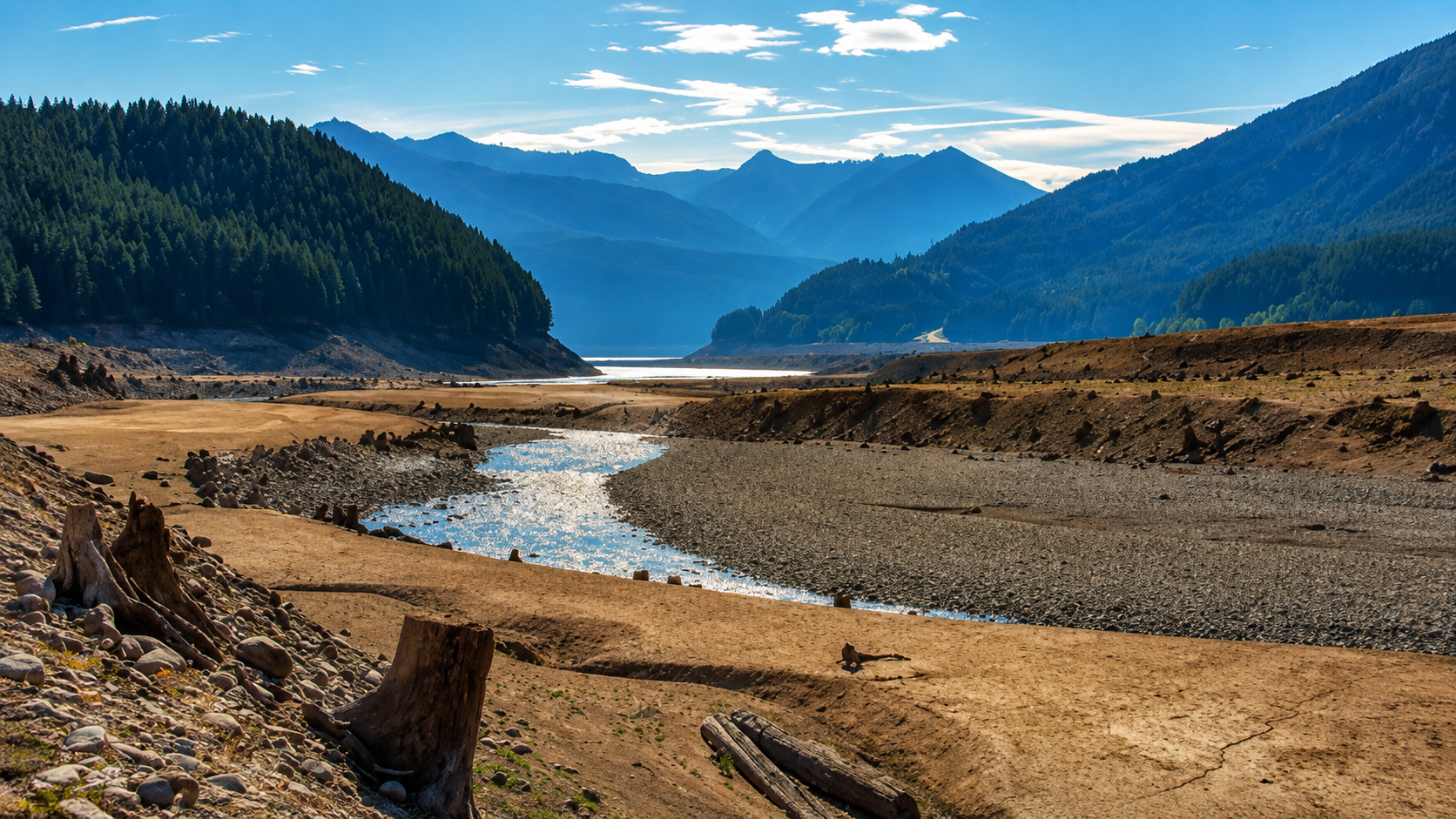
Drought covers nearly nine-tenths of Oregon as the state enters its autumn recharge season with a substantial precipitation deficit, active drought emergencies across Southern Oregon and firefighters still working to secure a late-season blaze in Jackson County.
Federal drought information available October 21 places 88.3% of Oregon in moderate drought or worse. Another 10.2% is classified as abnormally dry, leaving little of the state outside the drought and dryness categories after a year marked by historically low snowpack and unusually warm winter conditions.
The statewide assessment identifies 30.7% of Oregon in moderate drought, 37.4% in severe drought and 20.2% in extreme drought. No portion is currently classified in exceptional drought, the most intense category. The latest available weekly U.S. Drought Monitor was released October 15 and reflects conditions through October 13, with the next assessment scheduled for October 22.
Oregon’s precipitation deficit developed well before the dry October weather drawing attention in Portland. January through September ranked as the state’s 10th-driest such period since records began in 1895. Statewide precipitation averaged 15.02 inches during those nine months, falling 5.38 inches below normal.
September brought some improvement, finishing as Oregon’s 23rd-wettest September on record, with an average of 1.82 inches of precipitation, or 0.58 inches above normal. That rainfall did not erase the larger deficit accumulated earlier in the year. The statewide figures also encompass substantial geographic differences and do not represent the rainfall received by every community or watershed.
Across Southern Oregon, drought emergency declarations remain in effect for Jackson, Josephine, Klamath, Douglas and Lake counties. Jackson County’s declaration was issued April 21, followed by Klamath County on May 11, Douglas and Lake counties on June 9, and Josephine County on June 22. Each is scheduled to remain active through December 31.
The declarations provide an administrative response to water-supply concerns, including access to emergency tools and expedited review of certain water-use applications. They operate separately from the weekly federal drought classifications, which measure the location and intensity of drought as conditions change.
Oregon Water Resources Department has identified several water-supply concerns for 2026, including restrictions beginning earlier than usual and reaching water users with older priority dates than typically affected. The department also lists dry or underproducing wells and earlier reliance on stored water among the year’s potential consequences.
Those concerns place agricultural operations, rural households and other water-dependent users in different positions depending on their water sources, water rights and local conditions. A county drought declaration does not establish that every household faces a shortage or that every irrigation user has been required to stop diverting water.
The statewide drought assessment likewise does not establish a new municipal drinking-water shortage in Grants Pass or Medford. Such a determination requires current information from the individual water provider. The documented regional conditions support concern about water availability without establishing uniform shortages across Southern Oregon’s cities and rural communities.
The state’s water vulnerability follows a winter that produced historically low snowpack and ranked among Oregon’s warmest. Reduced mountain snow storage can alter the timing of runoff, leaving less water available later in the year when agricultural, household and environmental demands remain substantial.
Higher temperatures also increase moisture loss from soils and surface water. When precipitation deficits persist across multiple seasons, reservoirs and groundwater supplies may fail to replenish adequately, while streams enter periods of low flow earlier. Those effects can continue after rainfall returns.
For agriculture, reduced water availability can affect irrigation, crop production and grazing conditions. Lower streamflows can also reduce fish habitat and contribute to water-quality problems. The extent of those effects varies by watershed, making local measurements essential to assessing conditions beyond the statewide drought map.
Southern Oregon’s continuing wildfire activity provides a separate measure of the region’s late-season demands. The West Fork Evans Creek Fire remained an active suppression incident Tuesday evening, October 20, when Oregon Department of Forestry reported the fire at 283 acres and 55% containment.
Established firelines were holding while crews continued extensive mop-up operations to secure the burned area. The incident demonstrates that wildfire response needs have continued into October, although its acreage and containment figures alone do not establish the extent to which drought influenced its ignition or behavior.
Portland’s unusually warm, dry October adds another concern during a month that normally begins the transition toward wetter weather. Conditions in the Portland area, however, cannot be applied directly to the Rogue Valley, the Klamath Basin or other parts of Oregon, where rainfall, water storage and fire conditions differ.
The coming months will determine how much of the accumulated deficit Oregon can recover through rainfall, mountain snow and replenishment of streams, reservoirs and groundwater. For now, most of the state remains in drought, Southern Oregon’s emergency declarations continue through year’s end, and fire crews are still working on a Jackson County wildfire well into the autumn season.