


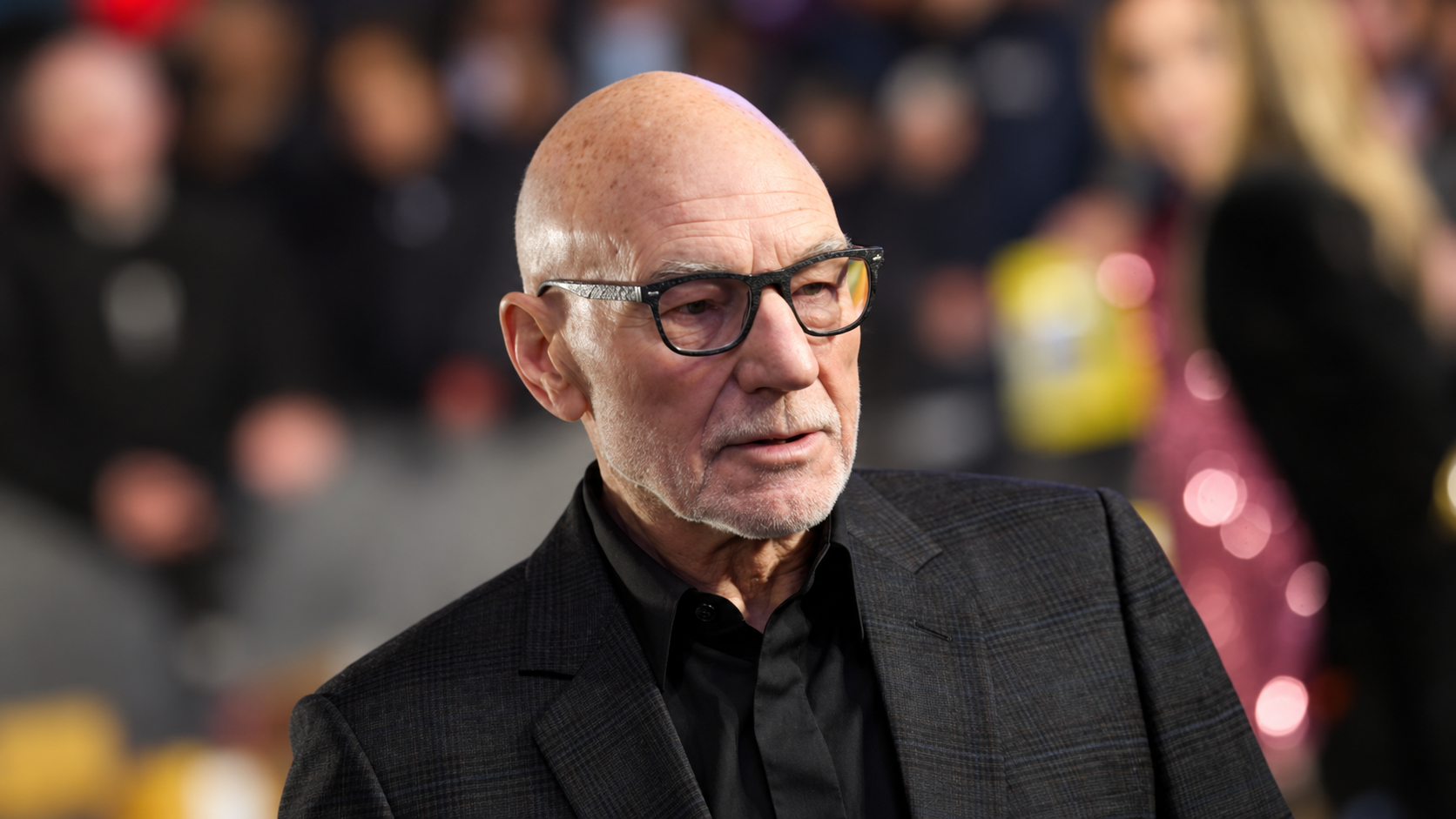
Sir Patrick Stewart, the Shakespearean actor who brought quiet authority to Captain Jean-Luc Picard and compassionate resolve to Professor Charles Xavier, died Wednesday at his home in Los Angeles. He was 86.
His death closes a career that connected the traditions of classical theater with two of the most recognizable franchises in modern entertainment. Across generations, audiences came to know his voice, his deliberate delivery and his ability to make a moment of stillness hold the screen.
Stewart’s death was announced Thursday, October 29, following a period with Alzheimer’s disease and Lewy body dementia. Neither diagnosis had previously been disclosed publicly. His wife, musician Sunny Ozell, was with him.
Long before he commanded the Starship Enterprise or welcomed young mutants into Xavier’s school, Stewart had built his life around the stage. His eventual screen fame grew from years spent performing demanding roles before live audiences, developing the precision and emotional depth that would become signatures of his work.
Born July 13, 1940, in Mirfield, Yorkshire, Stewart grew up in a working-class household affected by poverty and domestic violence. His father’s abuse of his mother left lasting memories, experiences Stewart later discussed publicly and carried into his advocacy for survivors.
At school, an introduction to Shakespeare opened a path toward acting. Stewart entered the profession as a young man, developed his reputation in the theater and joined the Royal Shakespeare Company. Classical drama became the foundation of a career whose greatest public recognition would arrive decades later.
He was 47 when Star Trek: The Next Generation premiered in 1987.
Taking command of a new Enterprise crew placed Stewart inside a franchise with an established following and considerable expectations. As Picard, he gave the series a captain whose measured manner could hold under extraordinary pressure. He listened closely, weighed consequences and approached command as a responsibility extending beyond the immediate crisis.
His performance gave audiences access to the person beneath the uniform. Picard could be reserved, burdened and uncertain, even as others depended on his judgment. Stewart made those qualities part of the captain’s authority.
The series ran for seven seasons, ending in 1994. Four feature films followed, and Stewart later returned to the role in Star Trek: Picard. Through those successive chapters, the character confronted loss, loyalty, responsibility and age, allowing a familiar screen presence to change alongside the audience that had followed him.
Another enduring role arrived in 2000 with X-Men.
As Professor Charles Xavier, Stewart portrayed a teacher whose extraordinary mental abilities served a deeply personal mission. His school offered shelter and direction to young people struggling to understand their powers and their place in the world.
Much of the films’ emotional tension developed through Xavier’s relationship with Magneto, played by Stewart’s longtime friend Ian McKellen. Their characters brought competing responses to fear and persecution into a relationship shaped by affection, disagreement and shared history.
Even as those films expanded his worldwide recognition, Stewart continued returning to the theater.
He performed a one-man adaptation of A Christmas Carol and appeared with McKellen in Waiting for Godot and No Man’s Land. His performance in Macbeth, in a production that reached Broadway in 2008, earned him a Tony Award nomination. The stage continued to demand and receive a substantial share of his working life.
Queen Elizabeth II knighted him in 2010 for his services to drama, recognizing a career that had carried him from English theater to international prominence.
His public commitments also reached beyond acting. Stewart supported Refuge, the domestic abuse charity, drawing on his understanding of violence within the home. He served as an ambassador for the International Rescue Committee, supporting people facing displacement and insecurity.
Following the announcement of his death, Hugh Jackman and William Shatner were among the fellow actors who paid tribute to him.
Stewart is survived by Ozell and his two children.
His performances remain across decades of theater, television and film, preserving the range of an actor equally attentive to a character’s strength and fragility. On the Enterprise bridge, in Xavier’s school and before a theater audience, Stewart gave weight to the act of listening. A pause, a glance or a few carefully spoken words could reveal the doubt beneath a decision, the affection behind a disagreement or the personal cost of carrying responsibility.