


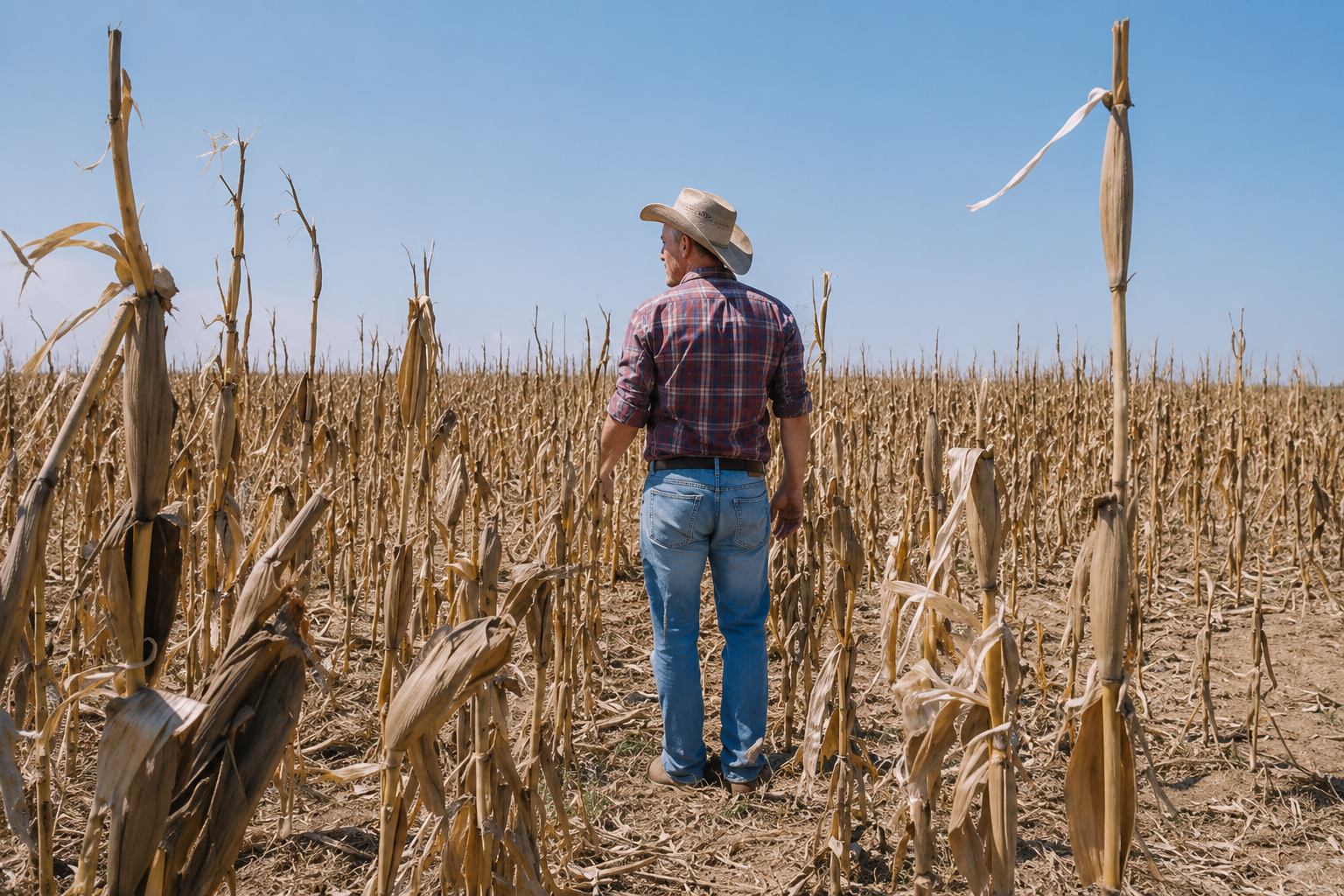
America has become a nation of food critics with very little dirt under its fingernails.
Every week, another argument erupts over food dyes, preservatives, additives, processed meals, corporate farming, grocery prices, restaurant quality, chemical ingredients, recalls, expiration dates, artificial coloring, and the long list of things Americans say they no longer trust. Some of those concerns are fair. Food companies should be held accountable when products are unsafe, mislabeled, contaminated, carelessly handled, or packed with ingredients that raise legitimate health questions. Nobody should have to gamble with their health at the dinner table.
But there is another question Americans rarely ask themselves before pointing at the grocery shelf in disgust: Could you feed yourself without it?
Not for a weekend. Not during a camping trip with a cooler, a propane stove, and a truck full of supplies. Could the average American family survive if the grocery stores closed, the restaurants disappeared, the delivery apps stopped working, and the responsibility for food returned entirely to the household? Could they grow it, harvest it, preserve it, hunt it, clean it, cook it, and make it last?
For many people, the honest answer is no.
That is not meant as an insult. It is a reflection of how far modern life has moved from the food chain that keeps it alive. Millions of Americans live in homes without gardens, kitchens without pantry depth, and schedules that leave little time to learn the difference between convenience and dependence. Many people can operate a smartphone better than they can plant a row of beans. Some can complain fluently about ingredients on a label but would not know how to identify edible plants, butcher an animal, can vegetables, store root crops, dry fruit, bake bread from scratch, or keep food safe without refrigeration.
The modern food system has made life easier, longer, faster, and in many ways safer. It has also made people soft in ways they do not like to admit. Food preservation exists because food spoils. Additives exist, in part, because mass production requires shelf life, stability, color, texture, and consistency. Refrigeration, packaging, sanitation standards, pasteurization, inspections, and preservatives all came from the same basic truth: nature is not sterile.
A berry on a bush may be natural, but that does not make it clean. It may have dirt, insects, bird droppings, mold, bacteria, or pesticide drift on it. A chicken raised in a backyard still has to be slaughtered and handled correctly. A deer taken from the woods still has to be field dressed, cooled, processed, and cooked properly. A tomato from the garden still needs clean hands, clean water, and common sense. Nature is beautiful, but it is not a grocery store display.
That is where the American food argument becomes complicated. People want natural food, but they also want spotless food. They want fewer preservatives, but they want food to last longer. They want less corporate control, but they often do not want to grow, cook, preserve, or sacrifice convenience. They want clean labels, low prices, perfect produce, year-round availability, and someone else to absorb the labor.
That math does not work forever.
The real issue is not whether Americans should question food companies. They should. The public has every right to demand safer products, clearer labels, stronger oversight, and fewer unnecessary chemicals in the food supply. But outrage without responsibility is just noise. If people truly want better food, they need to become more connected to the process that creates it.
That does not mean every family needs a farm. It means more households should know how to grow something. Tomatoes in a pot count. Herbs in a window count. A backyard garden counts. Learning how to cook from basic ingredients counts. So does understanding food storage, freezing, canning, drying, composting, shopping locally, buying seasonally, and supporting farmers who are actually doing the work most people no longer know how to do.
Americans have spent generations outsourcing their food knowledge. Now they are shocked by the system that replaced it.
The answer is not to stop questioning corporations. The answer is to stop pretending consumers had no role in creating the marketplace they now criticize. Every cheap meal, every drive-thru dinner, every ultra-processed snack, every demand for convenience, every refusal to learn basic food skills helped build the system now under suspicion.
There is nothing wrong with wanting cleaner food. There is something wrong with demanding purity while remaining helpless.
The healthier path forward begins with humility. Before condemning every company, every preservative, and every product on the shelf, Americans should ask a harder question: What would I do if this shelf was empty?
If the answer is panic, then the problem is bigger than food coloring.