


The release of tens of thousands of pages tied to Jeffrey Epstein has reignited debate in Washington, setting survivors, lawmakers, and the White House at odds over the scope of transparency and accountability. On Wednesday, the House Oversight Committee published more than 30,000 pages of material previously held by the Department of Justice, ranging from court filings and depositions to travel records and surveillance logs. While the disclosure was billed as a landmark moment, reactions reveal just how contested the issue remains.
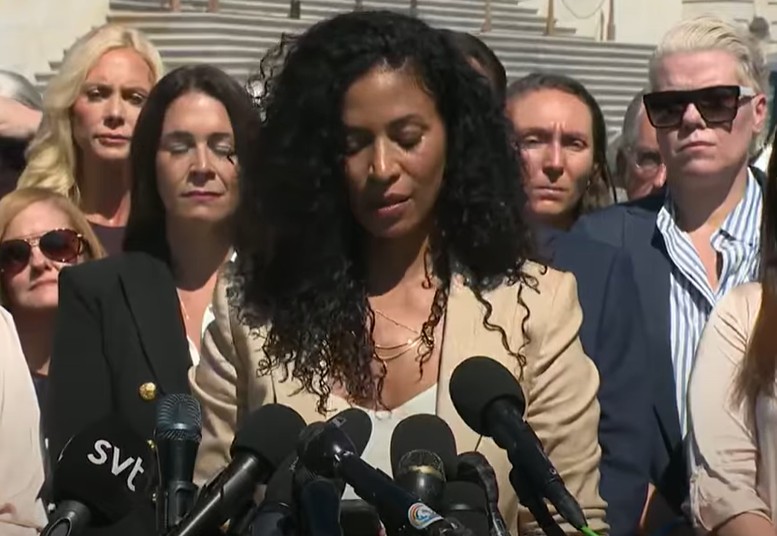
For survivors of Epstein’s abuse, the release represents only the beginning. A group of women who endured trafficking under Epstein’s network traveled to Capitol Hill to call for broader disclosure. They described the material as essential not only for public knowledge but also for advancing their pursuit of justice and closure. Their appearance was amplified by a bipartisan press conference convened by Representatives Thomas Massie of Kentucky and Ro Khanna of California, who underscored the importance of ensuring the public has access to all relevant information. The event turned emotional, highlighting the human cost at the center of a case that has long been mired in secrecy.
Yet the volume of material did not silence critics who argue that most of the content is already familiar. According to congressional staffers who reviewed the release, much of it consists of records already introduced through previous court cases, with only a small fraction offering new insights. That dynamic has fueled charges that the disclosure is being used more as a political tool than as a path toward meaningful reform.
In an effort to press for broader access, Massie and Khanna have launched a rare discharge petition to bring legislation directly to the House floor. The proposal would compel the Justice Department to release further classified or sealed Epstein files. More than two hundred Democrats and a small group of Republicans have already signed on, leaving the petition just shy of the threshold needed to bypass leadership. The unusual maneuver reflects how deeply the question of transparency has cut across party lines.
House leadership, however, appears to favor a narrower path. Speaker Mike Johnson has indicated support for a symbolic resolution backing the committee’s existing oversight efforts rather than endorsing sweeping document disclosure. That divide leaves the future of the transparency push uncertain, even as public interest intensifies.
At the White House, President Donald Trump dismissed the matter outright. Speaking to reporters, he characterized the controversy as yet another partisan distraction, calling it a hoax perpetuated by Democrats and insisting it obscures what he described as his administration’s successes. His response underscored the degree to which Epstein’s name, though tied to a criminal enterprise and tragic death, has become a political flashpoint in its own right.
The release also carried an unexpected twist. Among the files was surveillance footage filling a previously unexplained gap during the night of Epstein’s death. The recovered minute showed no suspicious movement, contradicting speculation that tampering had occurred. While the footage may settle one lingering question, it also illustrates the enduring fascination—and skepticism—that continue to surround the case.
Taken together, the events of the day capture a larger struggle. Survivors demand recognition and closure, lawmakers jockey over the meaning of transparency, and political leaders use the controversy to bolster their own narratives. More than six years after Epstein’s death, the newly unsealed documents make clear that the battle over truth and accountability is far from finished.