


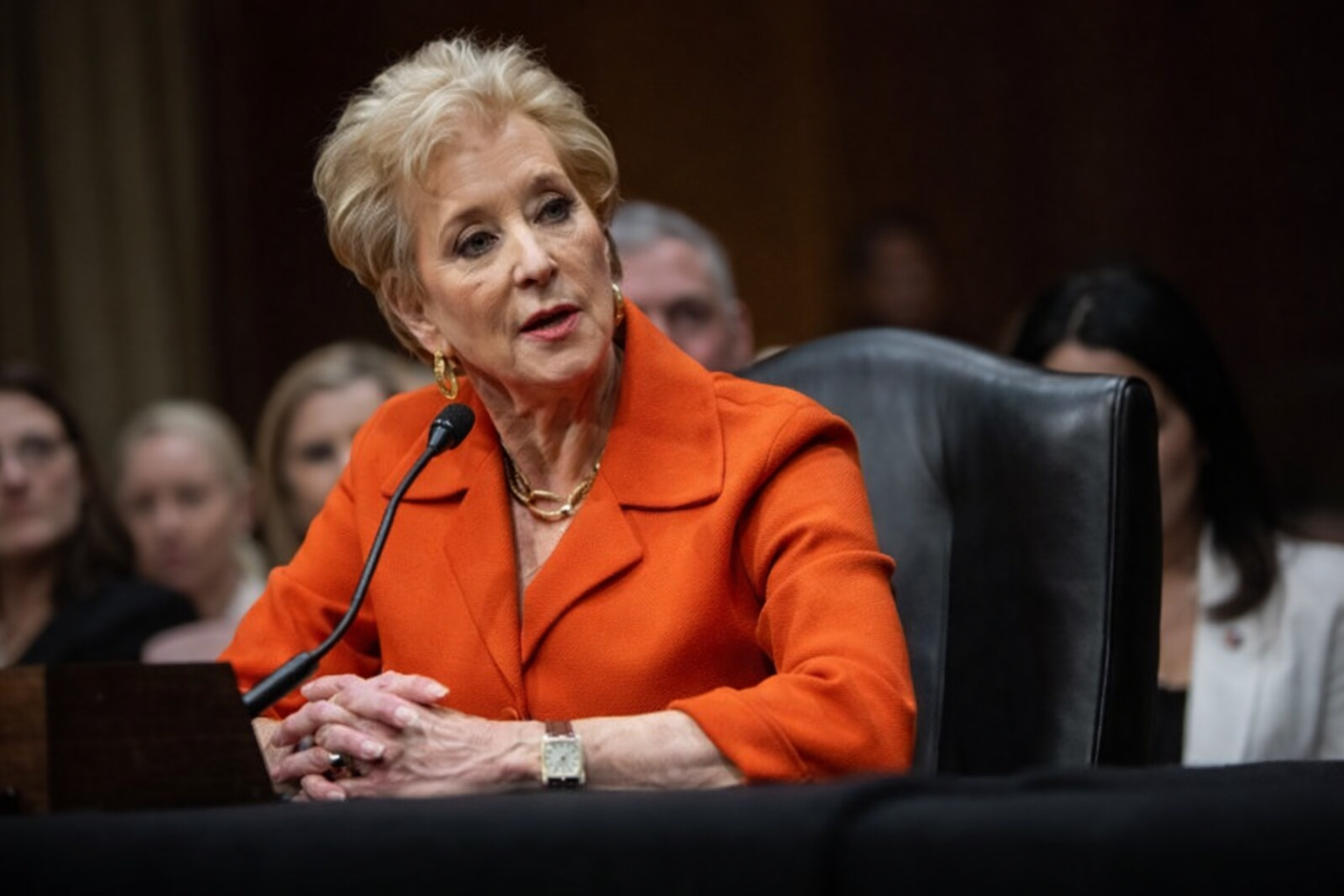
A recent visit by U.S. Secretary of Education Linda McMahon brought national attention to rural classrooms in Central Oregon, but the tour’s path left a noticeable gap on the map, stopping short of Southern Oregon communities that face many of the same educational challenges.
As part of a nationwide “Returning Education to the States” tour, McMahon visited Crook County High School and Crooked River Elementary in Prineville, offering a closer look at how one rural district is navigating the demands of modern education. The visit was coordinated by staff from Congressman Cliff Bentz’s office in partnership with Crook County officials, as the congressman remained in Washington due to House session obligations.
The purpose of the visit was direct and practical. Federal leadership stepped into classrooms, technical training spaces, and administrative offices to observe how education is being delivered on the ground. Educators and students shared both successes and ongoing challenges, providing insight that cannot be captured through reports or data alone.
At Crook County High School, attention centered on Career and Technical Education programs designed to prepare students for immediate entry into the workforce. Students are gaining experience in fields such as construction, healthcare, and business, with opportunities to earn certifications that carry value beyond graduation. These programs reflect a growing emphasis on equipping students with tangible skills alongside traditional academics.
The district has also expanded its academic offerings through Advanced Placement and dual-credit programs, creating pathways for students to earn college credits, and in some cases complete an associate degree, before finishing high school. For rural areas where access to higher education can be limited by distance or cost, these options are seen as a way to keep opportunity closer to home.
At the elementary level, the visit shifted focus toward early literacy and foundational learning. Discussions at Crooked River Elementary highlighted the importance of building strong reading and comprehension skills early, recognizing that long-term academic success often begins in the earliest years of schooling.
Throughout the visit, conversations emphasized collaboration between local districts and federal agencies. The goal, in theory, is to ensure that national education policy reflects the realities faced by communities on the ground. Rural districts, in particular, continue to balance limited resources with the need to provide competitive and comprehensive educational opportunities.
However, while Central Oregon classrooms received that direct federal attention, the tour did not extend further south. Districts in Southern Oregon, including those in Josephine and Jackson counties, were not part of the itinerary. That absence stands out in a region where schools are also navigating workforce development, funding pressures, and the need for expanded academic pathways.
The broader takeaway for Oregon residents is twofold. On one hand, the visit highlights the value of federal officials engaging directly with rural schools. On the other, it underscores the uneven reach of that engagement. While one district was able to showcase its programs and challenges firsthand, others with similar needs remain outside that immediate conversation.
For communities in Southern Oregon, the issues discussed in Prineville are not unfamiliar. The difference is that, this time, the national spotlight stopped short.