


The holiday season is a universal interruption to routine. Across cultures and countries, calendars fill quickly with travel, gift shopping, social obligations, family gatherings, late nights, rich food, and celebratory drinks. Normal schedules bend or disappear entirely, and the habits that support physical and mental health often fall to the bottom of the priority list. This disruption is not a personal failure or lack of motivation, it is a predictable consequence of a season designed around activity, indulgence, and connection rather than structure.
What separates people who maintain balance from those who feel completely derailed is not access to better gyms, special diets, or perfect schedules. The difference is discipline. Discipline is the ability to act in alignment with long term well being even when circumstances are inconvenient, unpredictable, or uncomfortable. During the holidays, discipline becomes the stabilizing force that replaces routine when routine is no longer reliable.
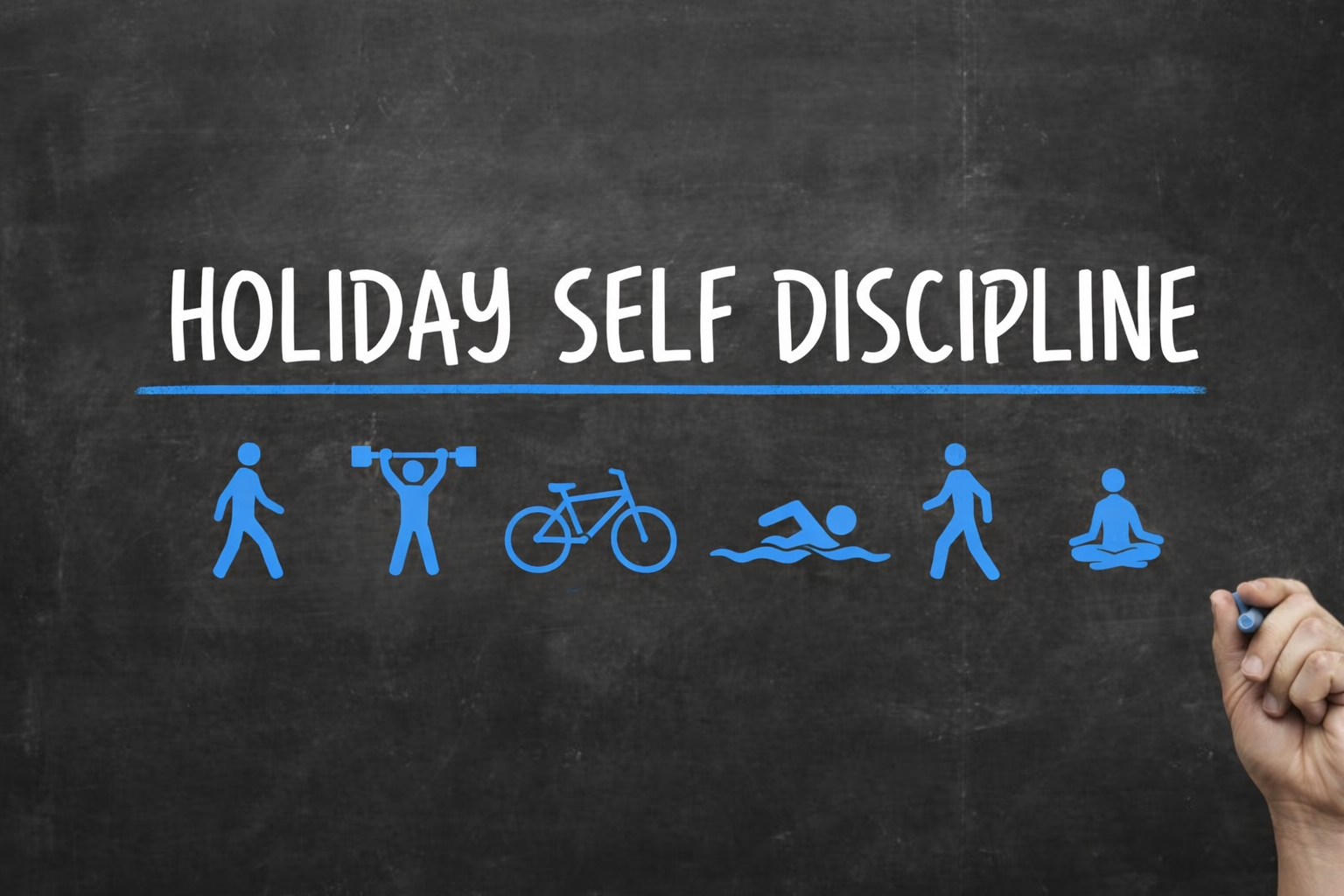
Travel is often the first obstacle. Airports, long drives, hotel rooms, and unfamiliar cities remove access to normal workout spaces and meal planning. Yet movement does not require a gym. Cardio can take the form of brisk walking through terminals, climbing stairs, short runs, or bodyweight circuits in limited spaces. Push ups, sit ups, planks, squats, and stretching routines can be done almost anywhere with no equipment. The purpose is not to chase peak performance during the holidays, but to keep the body active enough to prevent complete regression.
Nutrition presents a similar challenge. Holiday meals are typically higher in calories, salt, sugar, and fat than everyday food. While occasional indulgence is normal and culturally meaningful, balance requires awareness. Hydration becomes critical, particularly when alcohol consumption increases or travel dehydrates the body. Drinking adequate water supports digestion, reduces fatigue, and helps regulate appetite. Choosing smaller portions, slowing down while eating, and prioritizing protein and vegetables when available can significantly reduce the cumulative impact of holiday meals without eliminating enjoyment.
Mental health often receives even less attention during this period, despite elevated stress levels. Financial pressure, crowded schedules, family dynamics, and lack of sleep all compound emotional strain. When exercise is limited or schedules feel uncontrollable, meditation and intentional quiet time become powerful tools. Even short periods of focused breathing or mindful reflection can stabilize mood, improve sleep quality, and restore a sense of control.
The core truth of holiday wellness is simple and uncomfortable. No external system will maintain balance for you during chaos. Discipline is a personal responsibility. It is the decision to carve out time for movement, hydration, rest, and mental clarity even when distractions are constant and excuses are plentiful. Discipline does not demand perfection. It demands consistency.
The holidays will always disrupt normal life. That disruption does not have to derail health entirely. With disciplined choices, flexible expectations, and a focus on maintenance rather than optimization, it is possible to move through the season grounded, resilient, and ready to return to routine when the calendar turns.