


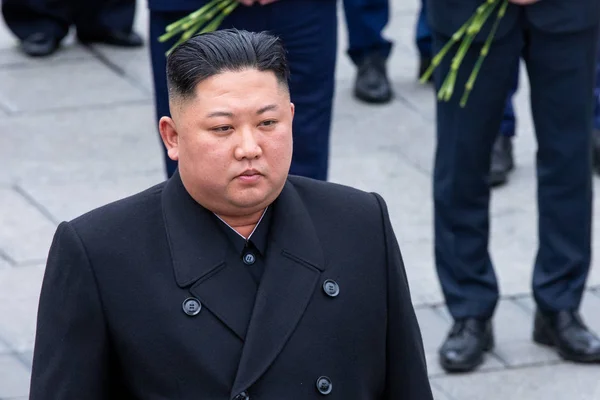
North Korean leader Kim Jong-un has reignited global concerns with a renewed nuclear threat, marking a sharp departure from the quieter profile he had maintained in recent months. The escalation comes as the Korean Peninsula once again becomes the focal point of heightened military activity, fueled by large-scale U.S.–South Korea joint exercises and a series of pointed responses from Pyongyang.
In recent days, Kim has ordered his military to accelerate the expansion of the country’s nuclear arsenal. The directive was issued as North Korea denounced the ongoing Ulchi Freedom Shield exercises conducted by U.S. and South Korean forces. The drills, which are routine in nature, have long been a source of tension, but this year they have prompted an especially forceful reaction. North Korean state media presented the exercises as evidence of hostile intent, while portraying the nation’s military expansion as both defensive and necessary.
Amid these pronouncements, North Korea unveiled new military hardware designed to reinforce its nuclear ambitions. The centerpiece of this display was the Choe Hyon-class destroyer, a 5,000-ton warship reportedly capable of carrying nuclear-capable cruise missiles. Its debut reflects Pyongyang’s push to modernize its naval fleet and extend its strategic reach, adding another layer to the regional security dilemma.
At the same time, tensions have been stoked along the land border between the two Koreas. North Korea recently accused the South of staging a “serious provocation” after warning shots were fired during patrols near the demilitarized zone. The incident coincided with the allied drills, underscoring the volatility of the situation and the potential for miscalculation.
Perhaps more alarming is the discovery of a new missile operating base known as Sinpung-dong near the border with China. Satellite imagery and intelligence assessments suggest the site may be equipped to host six to nine nuclear-capable intercontinental ballistic missiles. The facility, if fully operational, would significantly enhance North Korea’s ability to threaten targets not only in East Asia but potentially as far away as the continental United States. Analysts note that the construction of such a base signals a deliberate investment in long-range strike capacity, further complicating the global security picture.
This surge in activity comes after a period in which Kim Jong-un had maintained a comparatively low public profile. While his regime made headlines earlier this year for limited deployments of North Korean personnel to support Russia in Ukraine, direct nuclear threats had been less frequent. The sudden shift back to aggressive posturing appears designed to reassert North Korea’s relevance on the world stage at a time when conflicts in other regions have dominated international attention.
For regional stakeholders, the implications are sobering. South Korea and Japan face immediate security concerns, while the United States must balance its commitments on the peninsula with broader strategic priorities. Diplomatic channels remain fragile, and prospects for engagement appear slim as long as Pyongyang continues to showcase new weapons systems and expand its nuclear capabilities.
Kim Jong-un’s rhetoric and actions suggest a regime intent on maintaining the nuclear option at the center of its defense posture. With fresh threats, new military assets, and escalating tensions at the border, the Korean Peninsula is once again at the forefront of international concern, raising fears that the cycle of provocation and response may lead to a deeper crisis.