


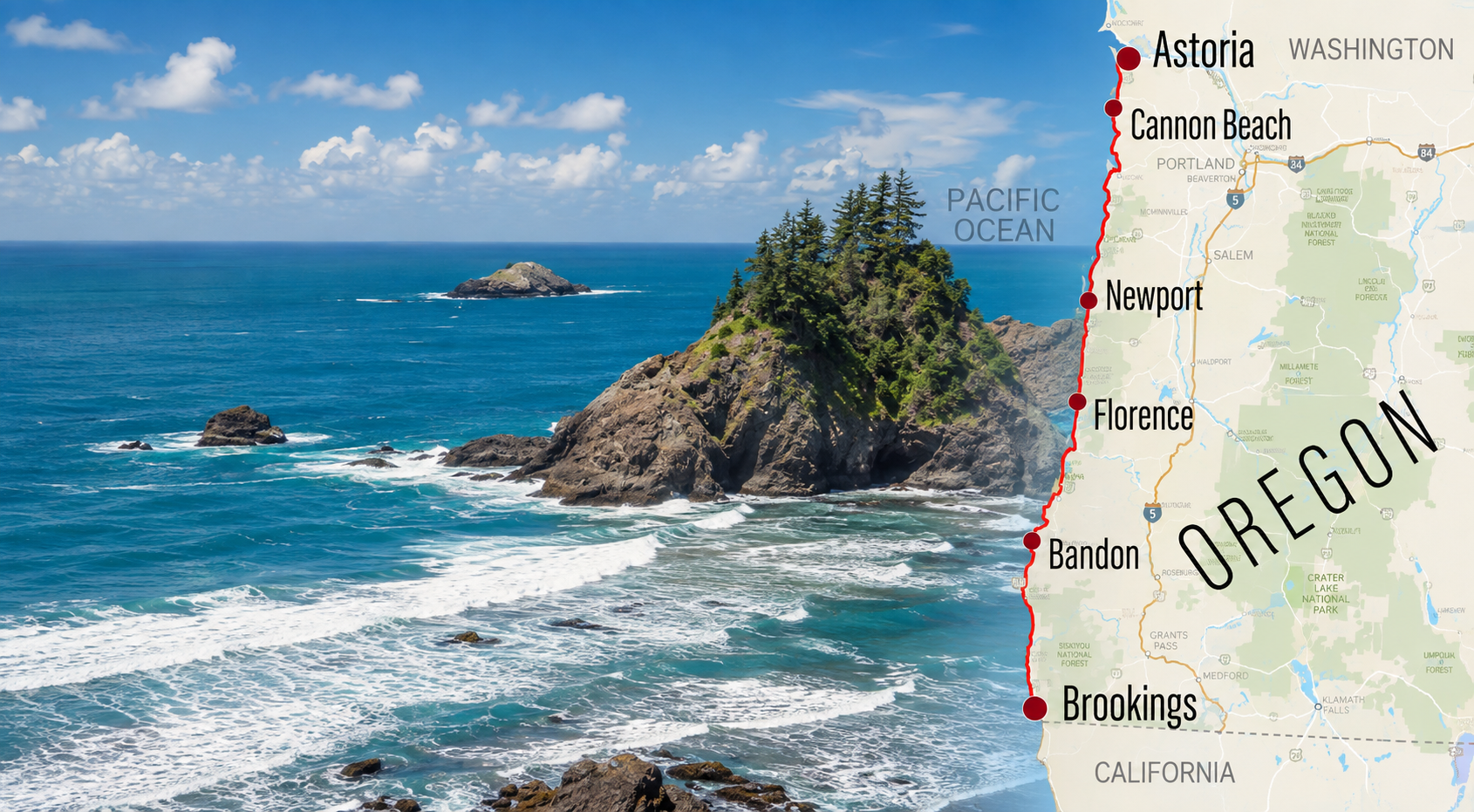
Oregon is beginning a broad examination of how the state can strengthen the economic potential of its coastline while maintaining the marine environments, natural resources and coastal ecosystems that support many of those same industries.
The newly established Blue Economy Task Force, created through Senate Bill 1525 during the 2026 legislative session, will bring lawmakers and community representatives together to examine the industries, infrastructure, workforce systems, research programs and regulatory structures connected to Oregon’s coastal economy. Sixteen community members have been appointed alongside two legislative members, giving the task force a mandate that extends beyond a review of individual industries and into the larger economic framework surrounding Oregon’s ocean and coastal resources.
The task force is scheduled to hold its first meeting Sept. 2 at 1 p.m., beginning a process that will continue into 2027. Its work will include an assessment of existing economic development strategies, public and private investment, workforce initiatives, infrastructure, scientific research, regulatory pathways and programs already operating within Oregon’s blue economy.
The term “blue economy” broadly describes economic activity associated with oceans and coastal resources, particularly when that activity is considered alongside the long-term sustainability of marine and coastal environments. In Oregon, that discussion encompasses an unusually diverse economic landscape. Commercial seafood production, fishing, ports, maritime activity, coastal tourism, habitat-related work, scientific research and emerging ocean industries all intersect with communities whose economies are closely connected to the Pacific Ocean.
Rather than establishing a single new economic program, Senate Bill 1525 creates a framework for examining how those different pieces currently function and where Oregon may have opportunities for additional development. The task force is expected to consider the effectiveness of existing programs and infrastructure while identifying obstacles, gaps and potential opportunities for investment or legislative action.
Representative David Gomberg, chair of the task force, said the work will examine economic development alongside the long-term condition of Oregon’s coastal resources.
“Oregon has an extraordinary opportunity to build a stronger coastal economy while remaining committed to the long-term health of our ocean and coastal ecosystems,” Gomberg said. “We’re discussing topics like Oregon seafood and coastal habitat, things that Oregonians from all over the state — and the world — appreciate.”
Gomberg said the objective is to identify practical strategies capable of expanding economic opportunities, supporting coastal communities and encouraging sustainable innovation.
The structure of the task force reflects the number of interests involved in decisions affecting Oregon’s coast. Economic development along the Pacific shoreline can involve commercial industries, local communities, state government, Tribal governments, research institutions and environmental interests, each operating within a region where economic activity and natural resources are closely connected.
Senator David Brock Smith, vice chair of the task force, described cooperation among those interests as an important component of the review.
“Successful blue economy development requires collaboration across industries, communities, government, Tribes, research institutions and environmental interests,” Brock Smith said. “The strength of this effort will come from bringing those perspectives together and focusing on solutions that can work for Oregon’s coastal communities.”
Although the task force is centered on the coast, the economic questions before it extend beyond communities directly bordering the Pacific. Oregon seafood moves through processing, transportation, wholesale and retail networks throughout the state. Coastal tourism generates travel and consumer activity involving businesses well beyond the shoreline, while ports and maritime infrastructure are connected to broader transportation and commercial systems. Research, workforce development and public investment associated with coastal industries can similarly involve universities, businesses, workers and government agencies throughout Oregon.
The task force will also examine infrastructure and workforce development, two areas that can influence whether established and emerging industries are capable of expanding. Coastal economic development can depend upon transportation connections, port facilities, processing capacity, trained workers, access to research and investment, and regulatory processes capable of addressing economic activity while protecting public resources.
Scientific research is another component specifically included within the task force’s responsibilities. Oregon’s coastline supports extensive marine and environmental research, and the Legislature has directed the group to consider how research fits within the state’s broader economic strategy. That examination will occur alongside consideration of investment opportunities and the regulatory pathways governing activities associated with coastal and ocean resources.
The task force does not have authority simply to enact the policies it develops. Its role is to study the existing economic landscape and prepare recommendations for consideration by state policymakers and the Ocean Policy Advisory Council. Any recommendations requiring changes to Oregon law would still have to proceed through the legislative process.
Under the legislation establishing the group, the Blue Economy Task Force must complete its work and submit a report by Sept. 15, 2027. The report will be delivered to the Oregon Legislative Assembly and the Ocean Policy Advisory Council and may include recommendations for future legislation.
That timeline gives the 18-member task force more than a year to evaluate how Oregon currently approaches coastal economic development and determine whether changes in policy, infrastructure, workforce preparation, investment or regulation could strengthen the sector without separating economic development from the condition of the resources upon which many coastal industries depend.
The Sept. 2 meeting will open that examination, beginning a statewide policy process focused on a substantial question for Oregon’s economic future: how the state can make greater use of the economic opportunities associated with its Pacific coastline while preserving the coastal and marine systems that make those opportunities possible.