


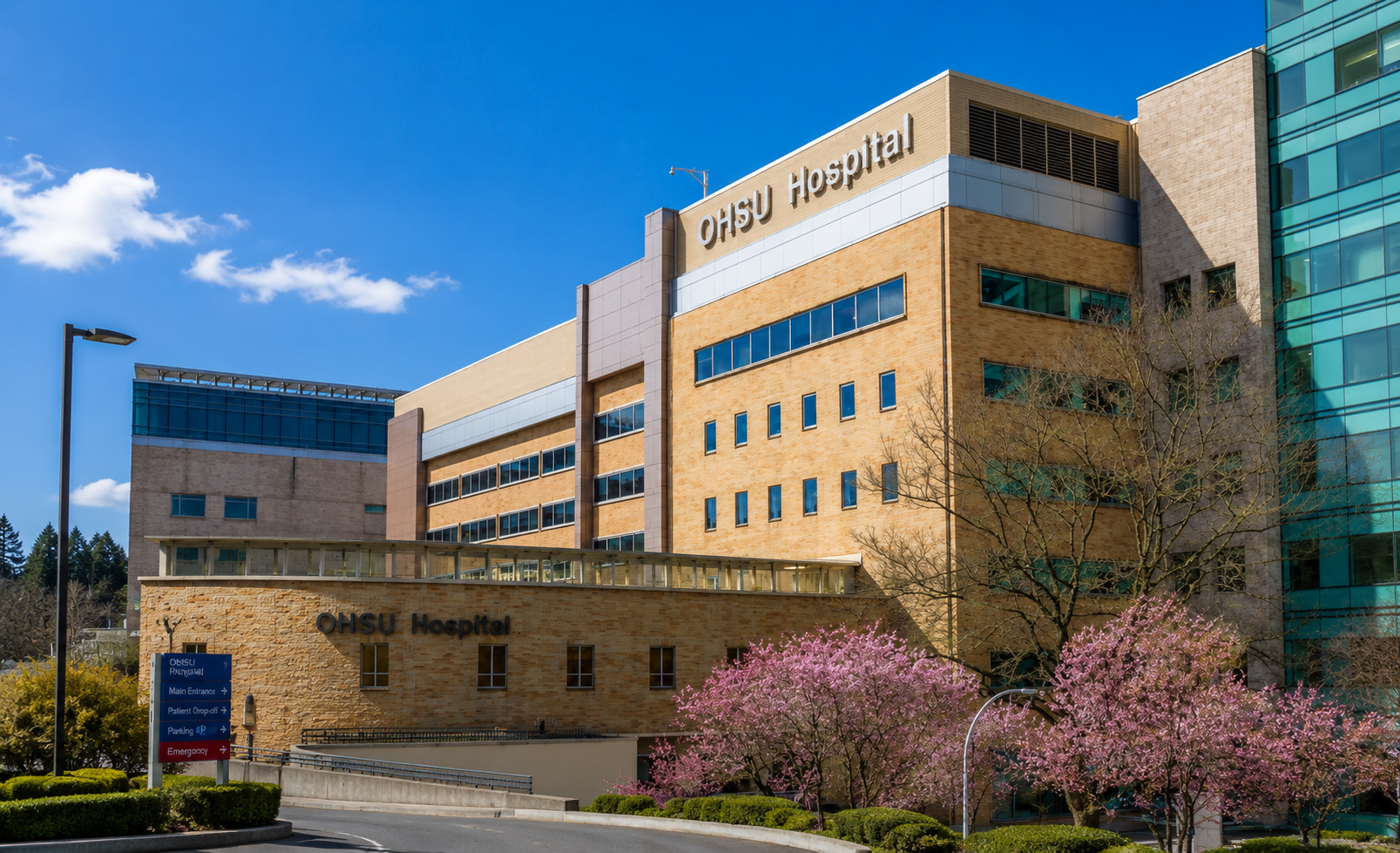
A baby born in Portland is not the only child who may one day depend on Oregon Health & Science University’s neonatal intensive care unit. Every year, newborns from hospitals throughout the state are transferred to OHSU after arriving prematurely or developing serious medical complications that require the highest level of specialized treatment available in Oregon. From the Rogue Valley and the South Coast to Central and Eastern Oregon, the hospital serves as the state’s final referral center for its most medically complex newborn patients.
As that responsibility continues to grow, OHSU has confirmed that expanding its neonatal intensive care capacity remains one of the institution’s highest priorities. Hospital leaders have acknowledged that demand for specialized newborn care has outpaced available space within the existing facility, although no timetable has been announced for construction of an expanded unit.
The issue reaches far beyond Portland because Oregon’s healthcare system was designed around a network of hospitals that provide different levels of neonatal care. Community hospitals and regional medical centers deliver thousands of healthy babies every year while also caring for many premature infants and newborns requiring additional medical attention. When complications become exceptionally complex, physicians coordinate transfers to facilities equipped with the highest level of neonatal services.
OHSU’s Level IV neonatal intensive care unit occupies the highest tier of that system. The designation reflects the hospital’s ability to provide advanced respiratory support, neonatal surgery, specialized imaging, pediatric subspecialty care and continuous treatment for newborns with the most critical medical conditions. The unit also serves as a teaching and research center, supporting physicians and healthcare professionals throughout Oregon while advancing neonatal medicine.
The number of infants requiring highly specialized care has gradually increased over the past several decades as medical technology has advanced and survival rates for extremely premature infants have continued to improve. Conditions that once carried limited treatment options can now often be managed through sophisticated neonatal medicine, allowing more infants to survive while also increasing demand for specialized hospital resources.
Hospital officials have publicly stated that existing neonatal intensive care facilities were designed for an earlier generation of patient volumes and medical practice. As Oregon’s population has grown and referral patterns have expanded, available treatment space has become increasingly limited during periods of high patient demand.
Recent reporting examining conditions within the unit has renewed public attention on the need for additional capacity. The reporting described concerns related to overcrowding and highlighted the challenges associated with providing modern neonatal care inside facilities originally constructed years ago. OHSU has responded by reaffirming that patient safety remains its highest priority while recognizing that expanding neonatal intensive care services continues to be an important institutional objective.
The discussion arrives as hospitals nationwide continue balancing growing healthcare demands with rising construction costs and financial pressures. Major hospital expansion projects require years of planning, regulatory review and significant capital investment before construction can begin.
OHSU recently completed its Vista Pavilion, a major expansion supporting cancer treatment and other specialized medical services. Hospital leadership has indicated that future development plans continue to include expansion of Doernbecher Children’s Hospital, including additional neonatal intensive care capacity and maternal-fetal services, but funding and project scheduling remain under development.
For Southern Oregon, the issue carries practical significance because hospitals throughout the region regularly participate in Oregon’s neonatal referral system. Medical centers such as Asante Rogue Regional Medical Center provide advanced care for many newborns requiring intensive treatment. However, infants diagnosed with the most complex conditions are frequently transferred to Portland when physicians determine that additional specialty resources are necessary.
The same referral process serves hospitals throughout the Willamette Valley, the Oregon Coast, Central Oregon and Eastern Oregon. Maintaining sufficient capacity at the state’s highest-level neonatal intensive care unit helps ensure hospitals across Oregon can continue transferring critically ill newborns when specialized treatment exceeds local capabilities.
At present, OHSU has not indicated that infants are being denied admission because of current capacity limitations. Hospital officials continue to emphasize that patient care remains safe while also acknowledging that expanding available space is necessary to meet future demand and support Oregon’s long-term healthcare needs.
Healthcare analysts note that neonatal intensive care represents one of the most resource-intensive areas of modern medicine. Each treatment space requires sophisticated monitoring equipment, specialized ventilators, dedicated nursing staff and physicians with advanced neonatal training. Expanding a Level IV neonatal intensive care unit therefore involves considerably more than increasing the number of hospital beds, requiring substantial investments in both facilities and highly specialized clinical personnel.
Although no construction timeline has been announced, OHSU continues to identify neonatal intensive care expansion as a strategic priority. As Oregon’s population continues to grow and advances in neonatal medicine allow more critically ill newborns to receive lifesaving treatment, the availability of specialized intensive care capacity will remain an important component of the state’s healthcare infrastructure. For families across Oregon, the discussion represents less about a single hospital building and more about preserving access to the highest level of newborn care wherever in the state that need may arise.