


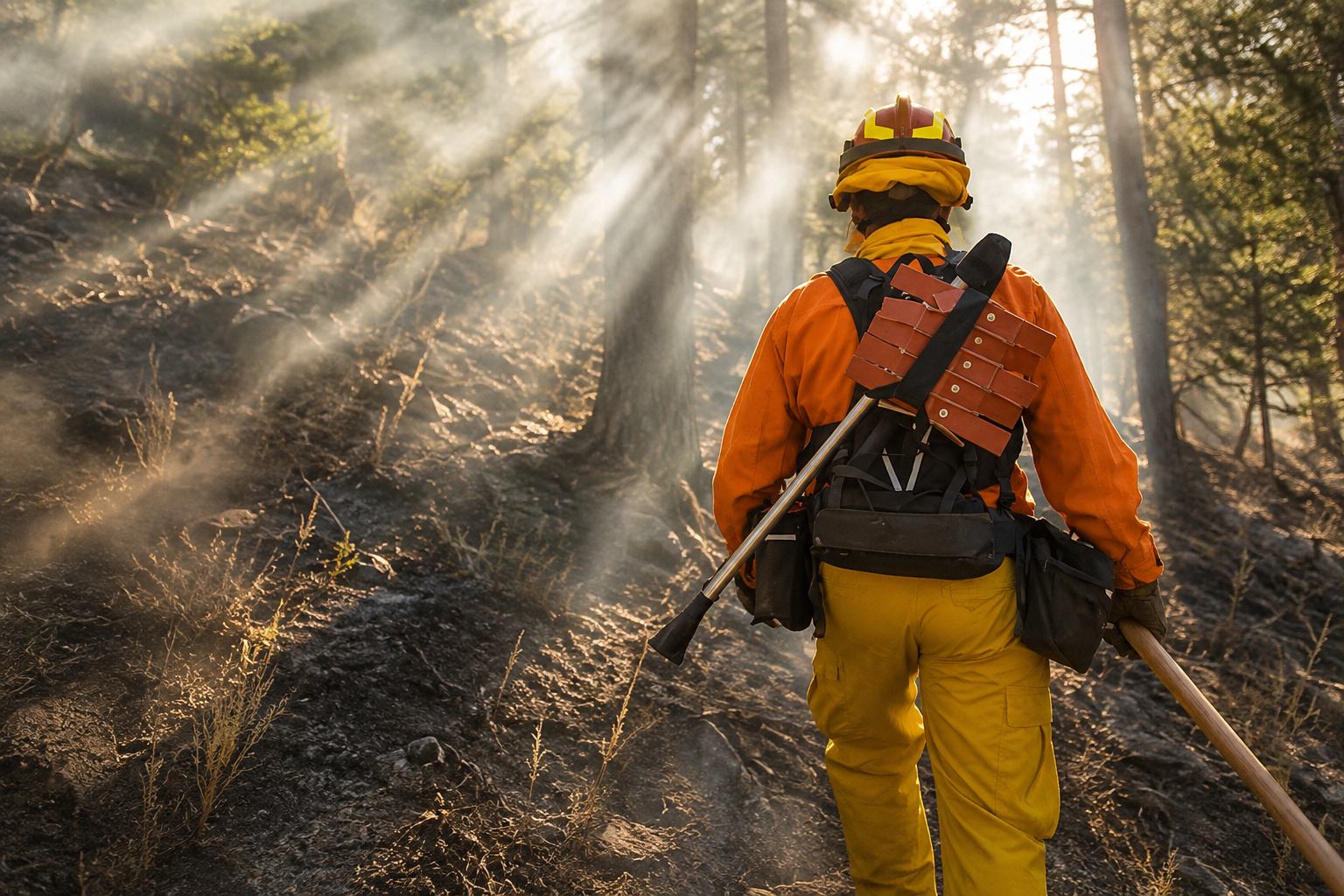
Oregon is fighting wildfire on a scale that has moved well beyond an ordinary difficult summer. More than 2.2 million acres have already burned across the state in 2026, surpassing Oregon’s previous annual wildfire acreage record while August is still underway. Behind those numbers is an increasingly complicated statewide operation involving thousands of firefighters, hundreds of engines, aircraft, bulldozers, contractors and incident management personnel who are being moved across Oregon as major fires compete for many of the same limited resources.
That growing competition has reached the center of Oregon’s congressional delegation. U.S. Sen. Ron Wyden raised concerns this week after receiving wildfire briefings in Central Oregon, where managers working the enormous Rowe Creek Complex reportedly told him they had approximately half of the personnel and equipment they believed were needed to adequately fight the incident. The figure does not represent an official determination that Oregon’s entire wildfire system is operating at 50 percent capacity. It does, however, provide a significant look at the resource demands confronting commanders responsible for one of the largest and most labor-intensive fires of the season.
The Rowe Creek Complex illustrates just how quickly a major wildfire can consume resources that might otherwise be available somewhere else. Started by lightning on July 15, the complex grew across hundreds of thousands of acres south of Fossil and required an immense firefighting organization. By early August, more than 1,600 personnel remained assigned to the incident, while staffing earlier in the fight had exceeded 2,300 people. The operation has required dozens of crews, nearly 180 engines, more than 20 bulldozers, aircraft and a large support network responsible for everything from communications and logistics to medical services and equipment maintenance.
Rowe Creek is only part of the equation. Other large fires have required similarly substantial commitments during a season in which Oregon has repeatedly faced simultaneous incidents across widely separated regions. The Grasshopper Fire alone expanded beyond 63,000 acres and required more than 1,650 personnel as firefighting resources continued arriving. Every major incident creates another demand for engines, hand crews, helicopters, heavy equipment, aviation support and experienced command personnel, turning wildfire response into a statewide balancing operation in which resources must constantly be reassigned as conditions change.
The contrast with the beginning of summer shows how rapidly Oregon’s fire season intensified. When Gov. Tina Kotek declared a statewide wildfire emergency on June 16, officials had recorded 414 fires totaling approximately 8,077 acres. The declaration came amid unusually dry conditions, low snowpack and widespread drought, allowing Oregon agencies to prepare for expanded coordination and the potential deployment of additional resources. In less than two months, the acreage burned climbed from thousands into the millions.
Oregon’s ability to respond depends on a firefighting system much larger than any single state agency. The Oregon Department of Forestry protects approximately 16 million acres of private and public forestland and operates alongside local fire districts, the Oregon State Fire Marshal, tribal governments, federal land agencies, private contractors and firefighting organizations from outside Oregon. The Bureau of Land Management and U.S. Forest Service carry major responsibilities on federal lands, while mutual-aid agreements allow personnel and equipment to move between jurisdictions when emergencies exceed local capabilities.
That system gives Oregon access to an enormous network, but it does not create an unlimited supply of firefighters or equipment. During widespread fire activity, Oregon can find itself requesting the same specialized crews, aircraft and incident management personnel being sought by other states. A helicopter operating on one large incident cannot simultaneously respond to another fire hundreds of miles away, and experienced crews committed to a prolonged campaign may remain unavailable for days or weeks before they can be reassigned.
The strain has also been visible through repeated use of Oregon’s Emergency Conflagration Act. The governor can invoke the law when wildfire threatens communities and local firefighting resources are no longer sufficient for the scale of the emergency. Oregon has used that authority repeatedly this summer, allowing the Oregon State Fire Marshal to mobilize additional structural firefighting resources from around the state.
Southern Oregon encountered that reality early. The East Evans Creek Road Fire in Jackson County became Oregon’s first conflagration declaration of 2026 on July 10 after officials determined the incident had exceeded locally available capabilities. Additional declarations followed elsewhere in Oregon as fires threatened homes, communities and infrastructure. Each mobilization allows more help to reach an affected area, but each also demonstrates how rapidly a developing wildfire can overwhelm the equipment and personnel positioned locally.
The pressure is not limited to firefighters and machinery. Oregon officials are also confronting the enormous financial demands created by a season of prolonged, large-scale incidents. Wyden and U.S. Sen. Jeff Merkley challenged federal decisions involving Fire Management Assistance Grants after Oregon sought federal assistance for major fires. By late July, more than one million acres were burning across the state and more than 33,000 Oregonians were under some level of evacuation notice, according to information presented by the senators.
Those federal grants can help reimburse eligible firefighting and emergency expenses at a time when suppression costs can accumulate rapidly. Aircraft operations, heavy machinery, temporary fire camps, emergency communications, evacuation support, personnel expenses and protection of critical infrastructure can turn a large wildfire into a multimillion-dollar operation long before the final containment line is completed.
The resource situation also requires an important distinction. The Oregon Secretary of State has not issued a finding that the state possesses only half of the firefighters or equipment required for the 2026 season, nor has the Oregon Department of Forestry declared that the entire statewide system is operating with a 50 percent shortage. The figure drawing attention this week originated from the assessment reportedly given to Wyden by managers dealing with the Rowe Creek Complex. Resource levels vary from fire to fire and can change quickly as crews arrive, incidents are contained and personnel become available for reassignment.
For Southern Oregon, however, the statewide competition for resources is far from distant. Josephine, Jackson, Douglas and Klamath counties contain communities surrounded by forests, grasslands and terrain capable of producing rapidly developing wildfires. When major incidents elsewhere in Oregon require thousands of personnel and large numbers of engines and aircraft, fewer resources may initially be positioned for the next fire that ignites in the southwest corner of the state. That makes rapid initial attack, local preparedness and the ability to draw assistance from the larger state and federal system especially important.
Oregon entered the summer preparing for a difficult wildfire season. By August, the scale had become historic. More than two million acres have burned, major incidents have required firefighting organizations numbering in the thousands, emergency mobilizations have repeatedly been authorized and questions about federal assistance and resource availability have moved into congressional discussions.
The challenge now extends beyond containing the fires already burning. Oregon must maintain enough firefighters, engines, aircraft, heavy equipment and experienced command personnel to continue those operations while preserving the ability to respond aggressively when another column of smoke appears. With weeks of potentially dangerous fire weather still ahead, the record acreage already burned has become only one measure of the 2026 season. The other is the extraordinary amount of manpower, equipment and coordination required to keep Oregon’s firefighting network moving from one emergency to the next.