


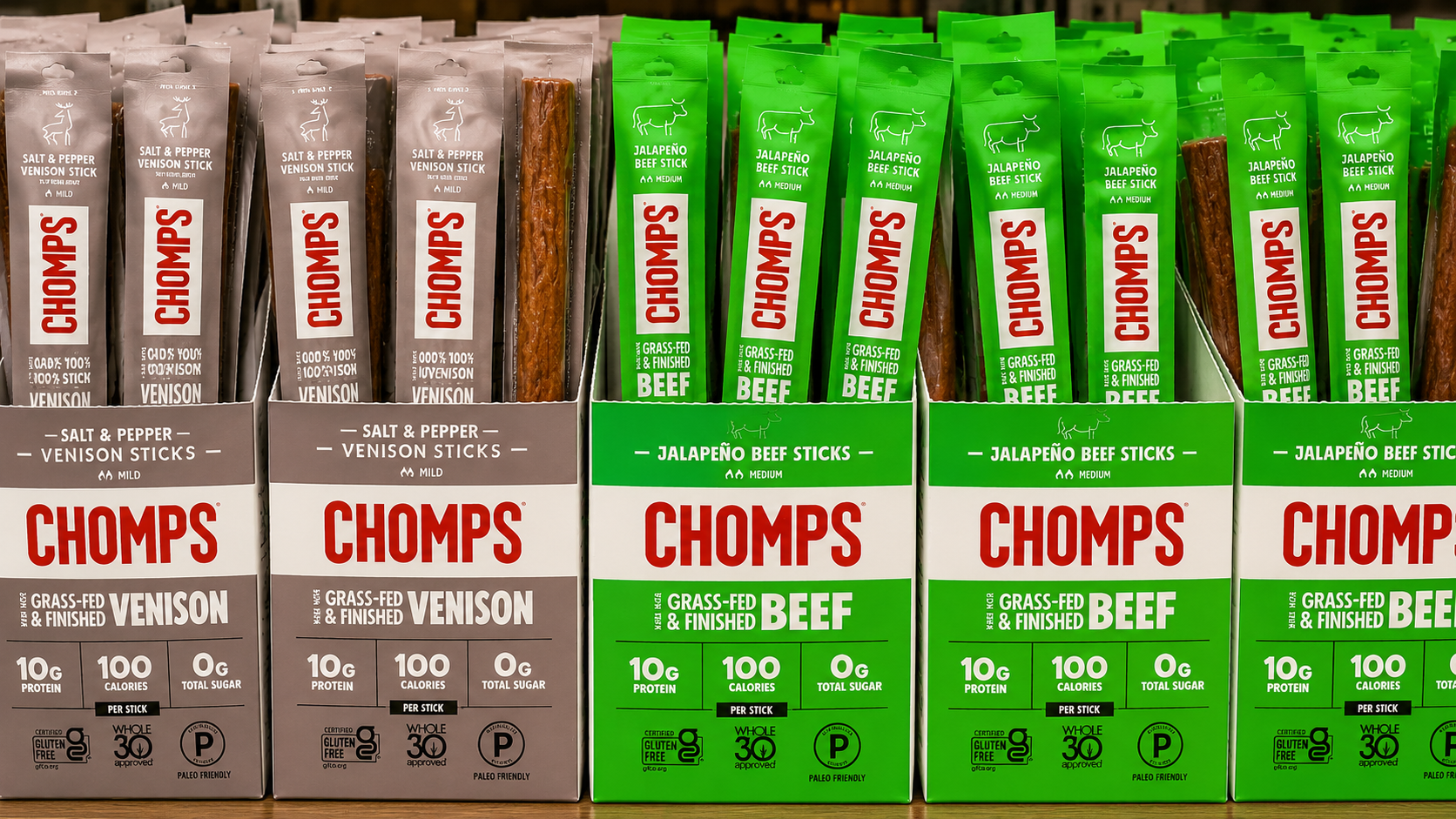
The modern grocery store has mastered a remarkable feat of marketing. It has convinced millions of consumers that spending more than $30 per pound for processed meat is a reasonable financial decision.
That reality becomes clear when examining one of the fastest-growing snack categories in America: premium meat sticks.
A single Chomps meat stick commonly sells for about $2.25 and weighs approximately 1.15 ounces. On the surface, the purchase appears insignificant. Most shoppers barely think twice about spending a couple of dollars while walking through a checkout line.
The math tells a different story.
At $2.25 for roughly one ounce of meat, consumers are effectively paying about $31 per pound.
To put that number into perspective, many grocery stores sell boneless skinless chicken breasts for between $2.99 and $5.99 per pound. Rotisserie chickens frequently sell for $5 to $8 and provide several pounds of ready-to-eat meat. Eggs remain one of the least expensive sources of protein available, while Greek yogurt often delivers comparable protein content at a fraction of the cost.
In practical terms, a shopper purchasing premium meat sticks may be paying five to ten times more per pound than fresh chicken.
The nutritional argument does not fully explain the difference. A typical meat stick contains roughly 10 to 12 grams of protein. While that is respectable for a snack, the cost per gram of protein remains dramatically higher than many traditional food staples.
The real product being sold is not meat.
It is convenience.
The food industry has increasingly shifted from selling ingredients to selling time. Consumers are no longer simply purchasing protein. They are purchasing portability, shelf stability, individual packaging, and the ability to eat without preparation, refrigeration, utensils, or cleanup.
Those conveniences certainly have value. For a traveler, truck driver, construction worker, hiker, or busy parent, grabbing a shelf-stable snack may be worth the premium. The problem emerges when consumers begin viewing these products as economical food choices rather than convenience products.
They are not the same thing.
A person eating two premium meat sticks each day spends approximately $4.50 daily. Over the course of a month, that habit approaches $135. Over a year, it exceeds $1,600.
For the same amount of money, a consumer could purchase hundreds of pounds of chicken, dozens of rotisserie chickens, thousands of eggs, or enough yogurt and other protein sources to supply substantially more nutrition.
The contrast highlights a growing trend throughout the American food economy. Consumers often focus on the price of an individual item rather than the price of the product relative to its actual quantity. A $2.25 snack appears affordable because the transaction is small. Yet viewed on a per-pound basis, the economics become difficult to ignore.
Most consumers would never walk into a butcher shop and willingly pay more than $30 per pound for everyday protein. Yet many do exactly that every week without realizing it because the product is marketed as a convenient snack rather than what it actually represents from a pricing standpoint.
None of this suggests premium meat sticks are unhealthy or inherently bad products. Many contain quality ingredients and provide a practical source of protein. The issue is value.
As food prices continue climbing across the United States, consumers are becoming increasingly aware of where their grocery dollars go. In that environment, products that command luxury-level pricing for ordinary nutrition deserve closer scrutiny.
The next time a shopper reaches for a meat stick at the checkout counter, the question may not be whether it tastes good or contains quality ingredients.
The more relevant question may be whether one ounce of processed meat is really worth paying the equivalent of $31 per pound.
For a growing number of consumers, the answer is becoming increasingly difficult to justify.