


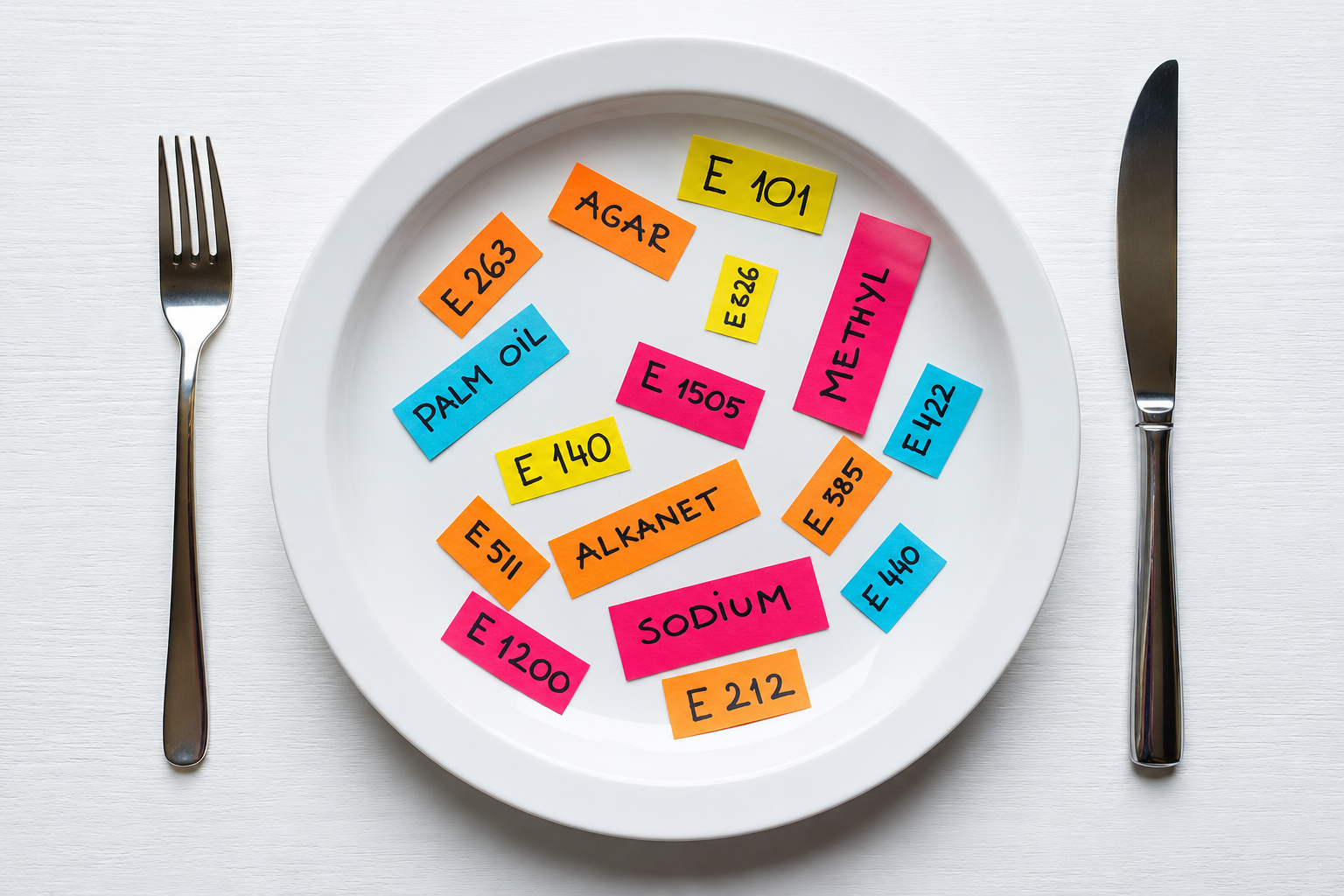
Modern food chemistry uses additives designed to make products last longer, look brighter, and remain stable on store shelves. Once inside the human body, however, some of these substances can interact with cells, enzymes, hormones, and metabolic processes in ways that researchers continue to study. Titanium dioxide nanoparticles, BHT, BHA, TBHQ, potassium bromate, propylparaben, ethoxyquin, and synthetic dyes enter the body through various foods and consumer products, raising questions about their cumulative biological effects. They do not necessarily cause immediate illness, but concerns about long-term exposure have contributed to restrictions or regulatory scrutiny of several of these substances around the world, even as some remain permitted in the United States. These additives also represent only a portion of the preservatives, stabilizers, colorants, and other substances used throughout the American food supply, making their potential effects part of a much larger discussion about modern food chemistry.
Titanium dioxide, particularly in its nano-sized form, has drawn attention because extremely small particles can interact with biological tissues differently from larger particles of the same substance. Research has examined whether these particles can cross biological barriers, interact with intestinal cells, contribute to oxidative stress, and potentially affect genetic material. Cells rely on carefully coordinated structures to separate chromosomes during division, and disturbances to this process can contribute to chromosomal abnormalities, including aneuploidy, a condition in which a cell contains an abnormal number of chromosomes. The European Union no longer permits titanium dioxide as a food additive after regulators concluded that concerns about genotoxicity could not be ruled out. The regulatory approach in the United States remains different, and titanium dioxide continues to be permitted for certain food uses under federal regulations.
The synthetic phenolic antioxidants BHT, BHA, and TBHQ are used primarily to slow oxidation and prevent fats and oils in packaged foods from becoming rancid. Once consumed, these compounds are metabolized by the body, and researchers have investigated their potential effects on oxidative balance, cellular membranes, enzymes, and other biological processes. Cells normally maintain an elaborate antioxidant defense system involving substances such as glutathione, which helps neutralize reactive molecules and protect cellular structures. When oxidative processes exceed the body’s ability to manage them, oxidative stress can develop, potentially affecting proteins, membranes, and mitochondria, the structures responsible for much of a cell’s energy production. Research into these preservatives has produced differing findings depending on the compound, dose, exposure level, and experimental model, which is why regulatory approaches vary considerably among countries.
Potassium bromate presents a different concern because it is a powerful oxidizing agent. It has historically been used as a flour treatment agent because it can strengthen dough and improve baking performance. Oxidizing compounds, however, can also generate reactive oxygen species within biological systems. Research involving potassium bromate has demonstrated oxidative damage under certain experimental conditions, including effects involving proteins, cellular membranes, and DNA. Glutathione and other antioxidant defenses help the body respond to oxidative stress, but sufficiently high oxidative pressure can overwhelm those protective systems and impair mitochondrial function. Concerns about potassium bromate’s potential carcinogenicity and genotoxicity have led numerous countries to prohibit its use in food. The United States continues to permit potassium bromate under specified conditions, although the baking process is intended to convert bromate into bromide and minimize residual bromate in finished products.
Propylparaben introduces another area of concern because parabens have been studied for potential endocrine activity. Propylparaben has been used as a preservative in certain foods, cosmetics, and pharmaceutical products. Hormonal signaling is essential to the regulation of growth, metabolism, reproduction, immune function, and numerous other biological processes. Some laboratory research has found that certain parabens can exhibit weak hormone-like activity, prompting continuing investigation into their potential effects at different exposure levels. Regulatory agencies have consequently taken different approaches to propylparaben depending on its intended use, concentration, and route of exposure. The European Union does not authorize propylparaben as a food additive, while U.S. regulations continue to permit certain uses.
Ethoxyquin has a different history. Developed as an antioxidant, it has been used primarily to prevent oxidation in animal feed and certain agricultural applications. Researchers and regulators have examined ethoxyquin and its metabolites for possible effects involving oxidative processes, liver function, cellular metabolism, and organ toxicity. Because the liver plays a central role in processing foreign compounds, changes involving detoxification enzymes can alter how substances are metabolized and eliminated. Regulatory authorities in different parts of the world have reassessed ethoxyquin over time as additional toxicological evidence has emerged. Its regulatory status also depends heavily on whether the discussion involves direct human food use, animal feed, agricultural applications, or residues that may ultimately enter the human food chain.
Synthetic food dyes add another dimension to the discussion. These color additives are used to make foods, beverages, cereals, desserts, and candies more visually appealing, but individual dyes have different chemical structures and should not be treated as though they all produce identical biological effects. Researchers have investigated certain synthetic dyes for possible relationships with hypersensitivity, behavioral effects in susceptible children, inflammation, and other biological responses. The liver and other organs metabolize many compounds that enter the body, including food colorants, and those metabolic processes can produce intermediate substances before they are ultimately eliminated. Regulatory treatment of synthetic dyes varies considerably around the world. Some color additives permitted in the United States are subject to additional labeling requirements or different restrictions elsewhere, while other dyes have been removed from particular markets entirely.
Taken together, these substances illustrate the complexity of evaluating modern food additives. Titanium dioxide has generated concern over possible genotoxic effects; BHT, BHA, and TBHQ have been examined for their effects on oxidation and cellular processes; potassium bromate is associated with oxidative and genotoxic concerns; propylparaben has been investigated for endocrine activity; ethoxyquin has undergone scrutiny over toxicological effects and its metabolites; and synthetic dyes continue to be studied for a range of potential biological and behavioral effects. Each substance behaves differently, and the scientific evidence, permitted exposure levels, and regulatory conclusions are not identical from one chemical to another.
That distinction is important because the presence of a chemical in food does not automatically mean that it will cause harm, just as regulatory approval does not mean scientific investigation has ended. Toxicology depends heavily on dose, frequency, duration of exposure, metabolism, individual susceptibility, and the way multiple exposures interact over time. Modern consumers encounter an enormous variety of naturally occurring and manufactured chemicals every day, and determining which exposures carry meaningful health risks requires careful scientific evaluation rather than treating every additive as equally hazardous.
The broader issue is therefore larger than any single preservative, antioxidant, flour treatment agent, or artificial color. Food science has given consumers products that remain safe from microbial spoilage longer, travel farther, maintain consistency, and reduce certain forms of food waste. At the same time, advances in toxicology, molecular biology, and analytical technology continue to give researchers better tools for examining what happens after these substances enter the body. As that knowledge develops, regulatory standards can change with it.
For consumers, the continuing scientific debate underscores the value of understanding what is in the foods they purchase and recognizing that food regulation is not static. Ingredients considered acceptable under one regulatory framework may be restricted under another, and new evidence can alter those assessments. The additives examined here represent only a fraction of the substances used throughout the modern food system, leaving a much larger scientific question that will continue to demand careful research: not simply whether a substance has a purpose in food production, but how repeated exposure may affect the human body over a lifetime.