


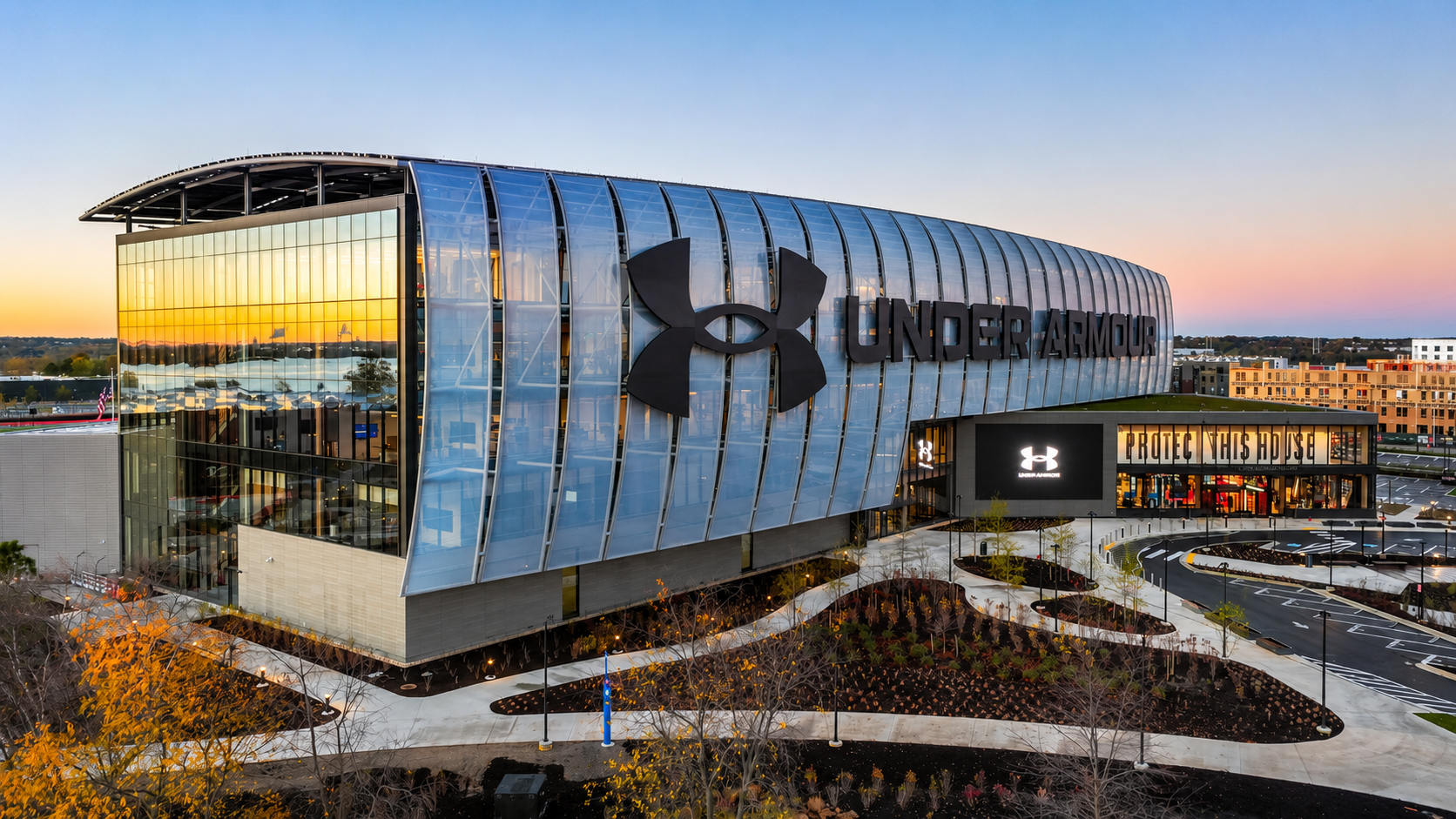
For nearly a decade, Under Armour’s presence in Southwest Portland represented more than another corporate office on the map. It reflected Oregon’s enduring reputation as one of the world’s premier centers for athletic footwear design, product innovation, and performance apparel. Later this year, that chapter will quietly come to an end as the company closes its Portland campus and consolidates portions of its business closer to its East Coast headquarters, marking another shift in an industry that continues to redefine where and how work is done.
The decision is part of Under Armour’s broader corporate restructuring, an effort aimed at streamlining operations while concentrating key administrative and business functions in Baltimore, where the company was founded, along with expanding selected operations in New York. While the closure signals the end of the company’s current Portland campus, it does not represent a complete departure from Oregon. Under Armour has indicated it intends to maintain a smaller Portland office focused primarily on footwear design and product development, preserving a connection to the region’s highly specialized talent base.
That distinction matters in a state where athletic footwear has become one of Oregon’s defining industries. Portland has spent decades cultivating an ecosystem of designers, engineers, material specialists, marketers, and innovators whose work influences products sold around the globe. The concentration of industry experience has attracted companies from across the country seeking access to a workforce that remains difficult to replicate elsewhere.
Under Armour’s Portland campus opened in 2017 after the company renovated the historic former YMCA property in Southwest Portland. At the time, the investment reflected the company’s ambition to strengthen its footwear business by placing designers and developers in the heart of one of the industry’s most competitive markets. The campus became home to teams responsible for footwear innovation, product creation, and research, reinforcing Portland’s standing as a destination for athletic apparel companies seeking creative expertise.
Although the campus itself will close, the company’s decision to retain portions of its footwear operation in Portland suggests that Oregon’s value to the industry remains unchanged. Rather than abandoning the region, Under Armour is reshaping its presence to align with changing corporate priorities while continuing to rely on the expertise that has made Portland synonymous with athletic product development.
For Oregon, the announcement carries both practical and symbolic significance. The state has long been recognized as the home of global athletic brands, with an economy that benefits from thousands of jobs connected directly and indirectly to footwear, apparel, design, manufacturing support, logistics, marketing, and technology. Every major corporate adjustment within that sector naturally draws attention because of the ripple effects it can create throughout the local business community.
The company has not disclosed how many employees may relocate, how many positions will remain in Oregon, or whether workforce reductions will accompany the transition. Those details are expected to emerge as the relocation progresses through the remainder of the year.
The move also reflects broader changes occurring throughout corporate America, where businesses continue evaluating the balance between regional offices, centralized headquarters, hybrid work models, and long-term operating costs. Companies across numerous industries have spent the past several years reassessing real estate needs while concentrating resources in locations viewed as strategically advantageous.
Even so, Portland’s place within the athletic footwear industry appears secure. The region continues to serve as a magnet for experienced designers, developers, and innovators whose knowledge has helped shape some of the world’s most recognizable athletic products. That concentration of talent remains one of Oregon’s strongest economic advantages and continues to attract investment despite periodic corporate restructuring.
In many ways, Under Armour’s Portland campus will become another chapter in Oregon’s evolving business story. Its buildings may no longer house the company’s flagship West Coast operations, but the expertise cultivated there will continue contributing to an industry that remains deeply rooted in the state. Gone, but not forgotten, the campus leaves behind a reminder that while corporate footprints may expand or contract over time, Oregon’s influence on the future of athletic footwear continues to extend far beyond its borders.