


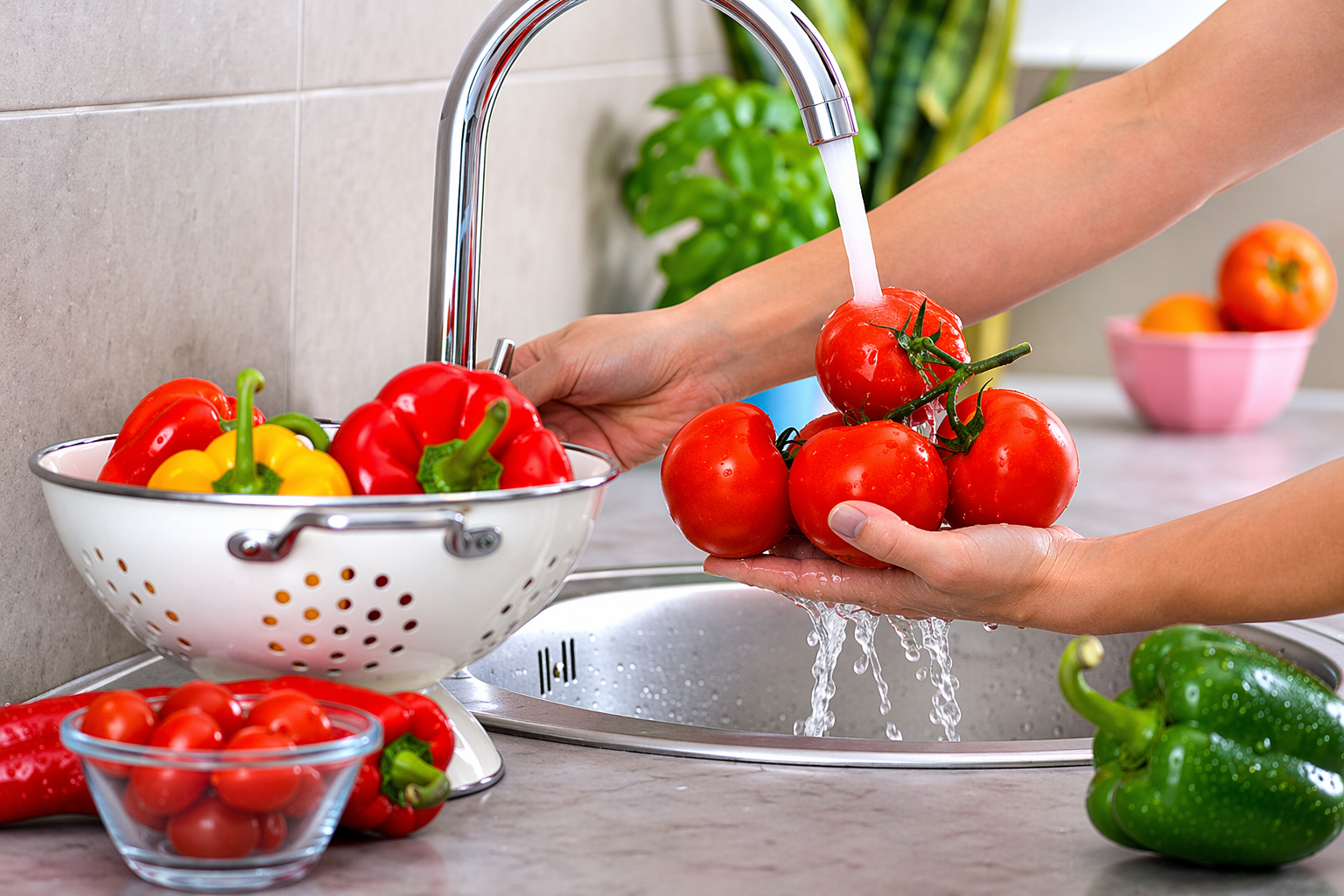
A piece of fruit pulled from a grocery bag can look spotless, polished, and ready to eat. What it carries, however, is often invisible. From the moment produce leaves the soil to the time it reaches a kitchen counter, it passes through fields, storage facilities, transport trucks, and multiple sets of hands. Each step adds another layer of potential exposure that makes washing fruits and vegetables less of a suggestion and more of a basic safeguard.
Fresh produce can harbor traces of soil, fine dust, and residues left behind from farming practices. Even under strict agricultural guidelines, small amounts of pesticides may remain on the surface. While those residues are regulated, reducing them further is a reasonable step for anyone paying attention to long term health. Just as important is the presence of microorganisms. Bacteria such as E. coli, Salmonella, and Listeria are not visible and do not announce themselves with odor or discoloration, yet they remain among the most common causes of foodborne illness tied to raw produce.
A steady rinse under cold running water does most of the work. The simple action of water flowing across the surface helps lift away debris and loosen contaminants. Gently rubbing fruits and vegetables by hand increases that effect, while firmer items like potatoes or melons benefit from a brush that can reach into textured skins. Even produce that will be peeled deserves a rinse first, since a knife can carry whatever sits on the exterior into the edible portion beneath.
Some households have taken this a step further by incorporating a diluted hydrogen peroxide soak. The standard three percent hydrogen peroxide solution, commonly found in stores, acts as a mild disinfectant when properly diluted in water. When produce is briefly submerged in that mixture, it can reduce additional surface bacteria beyond what water alone removes. This approach appeals to those looking for an extra margin of caution, particularly in homes where immune health is a concern or where produce may have been handled extensively before purchase.
The process requires restraint to remain effective and safe. Only a small amount of hydrogen peroxide should be mixed into a larger volume of water, and the soak should last just a few minutes. Afterward, a thorough rinse under running water is essential to remove any remaining solution. Used this way, hydrogen peroxide does not penetrate the food or alter it significantly, but it can provide an added layer of cleanliness at the surface level.
It is worth understanding that this step is optional rather than necessary. Public health guidance from organizations such as the FDA and the CDC continues to emphasize water as the primary and sufficient method for cleaning produce. Chemical washes, including soaps or undiluted disinfectants, are discouraged due to the risk of leaving behind substances not intended for consumption.
Washing fruits and vegetables is less about perfection and more about reduction. It lowers the amount of unwanted material that reaches the plate and cuts down the risk of illness without changing the food itself. Whether someone sticks with a thorough rinse or adds a cautious peroxide soak, the goal remains the same: taking a routine step that quietly protects everyday health.