


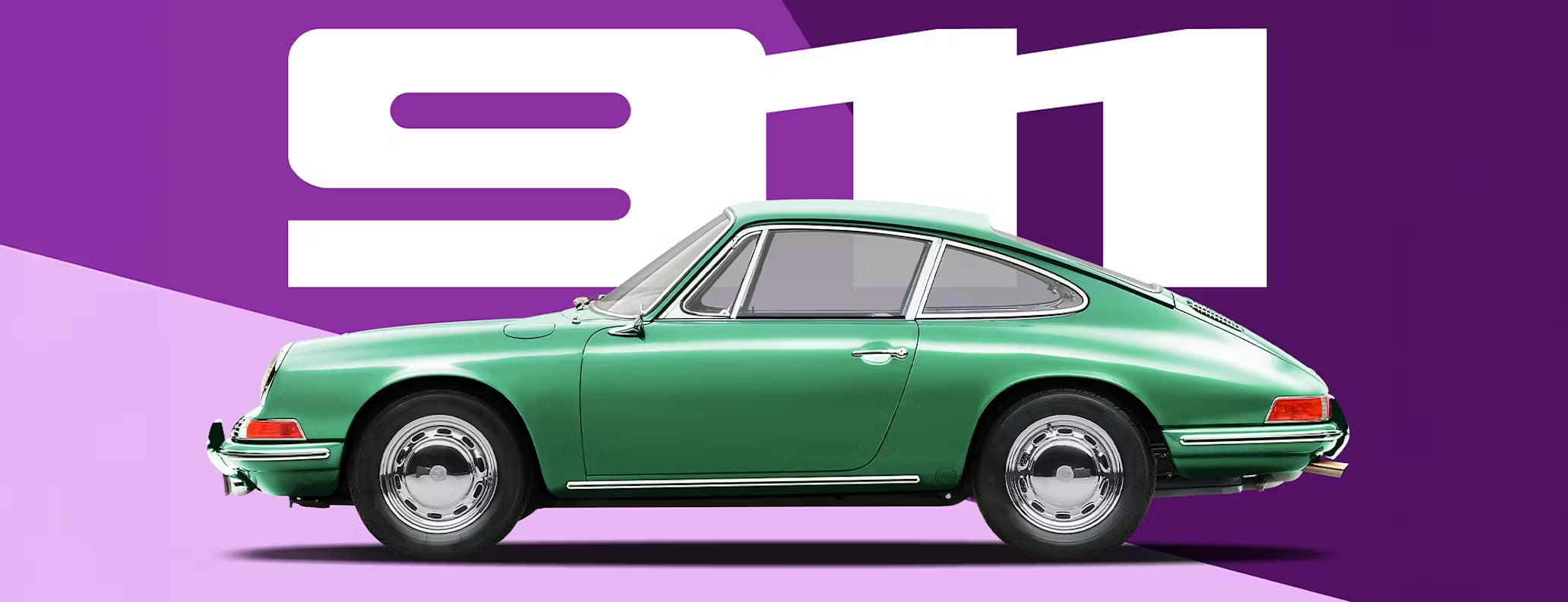
When the first Porsche 911 rolled off the production line in 1964, few could have predicted it would become one of the most iconic and enduring sports cars in automotive history. More than six decades later, the 911 is not only still in production—it has remained true to its original spirit while evolving into a benchmark of performance, precision, and practicality. At the heart of the 911’s legacy is its unique engine layout, groundbreaking engineering, and a design philosophy that values refinement over reinvention.
Unlike most performance cars, the Porsche 911 is defined by its distinctive rear-engine configuration. This means the engine sits behind the rear axle, a layout that was considered unconventional—and even problematic—by many engineers due to its propensity for oversteer. But rather than abandoning the design, Porsche embraced it. Over time, they honed the 911’s chassis dynamics to take full advantage of the layout’s strengths: excellent traction under acceleration, a compact footprint, and balanced weight distribution in modern iterations.
What makes the 911 engine stand out even more is its use of the flat-six boxer configuration. In this setup, six cylinders are horizontally opposed in two banks of three, lying flat and moving in a side-to-side motion. This creates an engine with a low center of gravity, minimal vibration, and compact packaging—all ideal traits for a rear-mounted drivetrain. Few manufacturers use this engine design, and none have done so with the consistency and longevity of Porsche.
For its first 35 years, the 911 was powered by an air-cooled engine, a hallmark of simplicity and mechanical purity. Unlike water-cooled engines that rely on radiators and coolant, air-cooled engines depend on airflow to maintain temperature. While this made the 911 lighter and simpler, it eventually became a liability in the face of modern emissions and performance standards. In 1999, Porsche made a controversial but necessary shift to water-cooled engines with the introduction of the 996 generation. Though met with resistance from purists, the move allowed the 911 to achieve higher output, better efficiency, and stricter compliance with global regulations—without sacrificing the driving experience.
The evolution of the 911 has always been about refinement. Porsche has never scrapped the concept and started over. Instead, each generation builds upon the last, incorporating modern technology while respecting the car’s heritage. This continuity is rare in the automotive world. Many sports cars come and go, often replaced by newer models with different names and philosophies. But the 911 has remained a constant—recognizable by its silhouette, defined by its sound, and revered for its driving feel.
What truly sets the 911 apart, however, is its duality. It is both a supercar and a daily driver. It can lap a racetrack with professional poise and cruise through city streets with surprising comfort. Few high-performance vehicles offer this level of versatility. And with regular maintenance, a 911 can last decades—many original models from the 1970s and 1980s are still on the road today. The engineering, build quality, and timeless design have allowed the 911 to become not just a car, but a lifelong companion for those who own it.
Today technology moves fast and trends come and go, the Porsche 911 remains a symbol of consistency and excellence. It stands as proof that innovation doesn’t always require reinvention. With a foundation rooted in purpose-driven engineering, the 911 has become more than just a sports car—it’s a testament to what can be achieved when form and function evolve together. And for those lucky enough to own one, it’s not just a vehicle—it’s a legacy that can truly last a lifetime.