


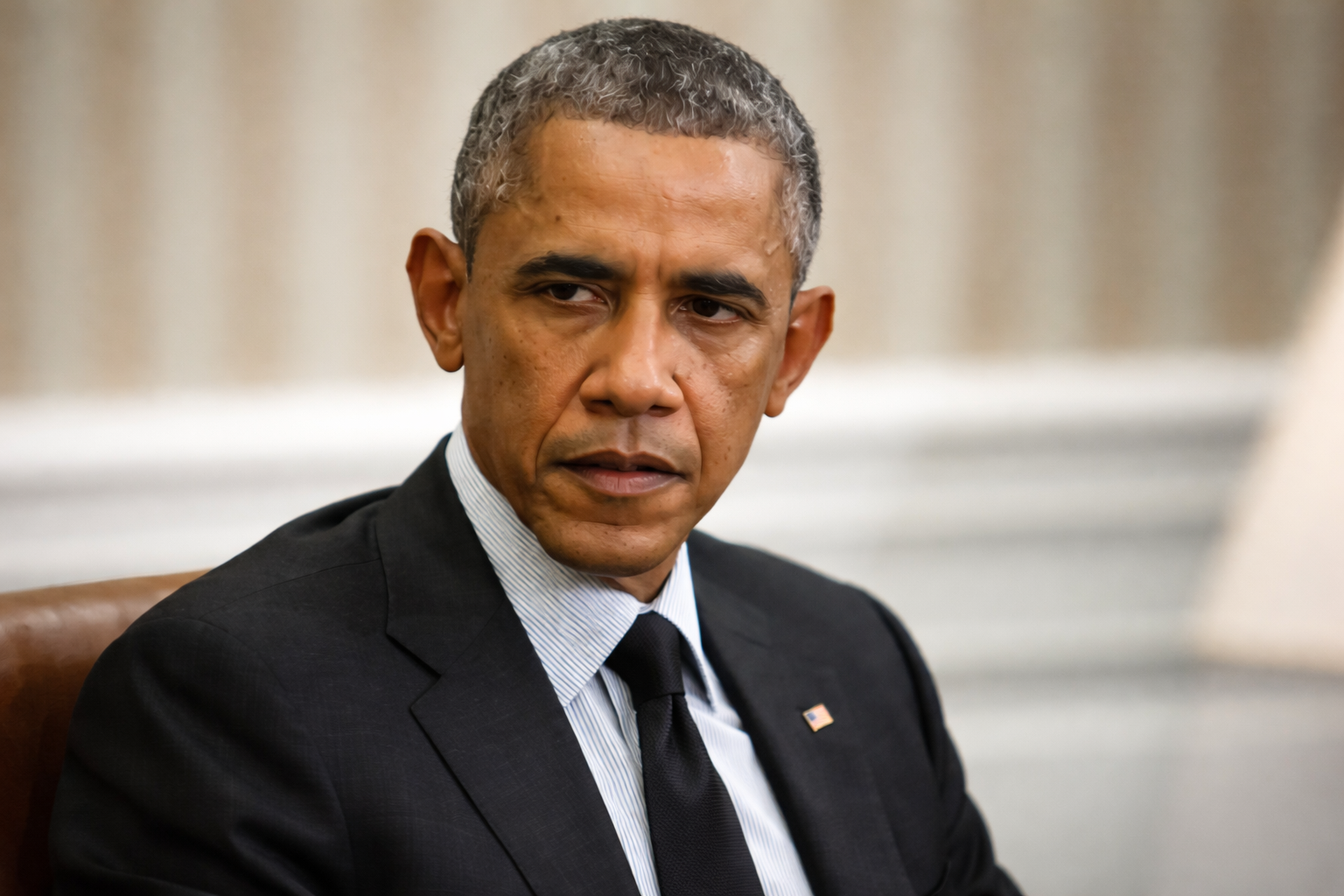
Former President Barack Obama spoke publicly this week following the circulation of a controversial social media video shared from the official account of President Donald Trump, a post that depicted Obama and former First Lady Michelle Obama using imagery widely condemned as racist. The incident, which remained online for several hours before being deleted, has prompted bipartisan criticism and reignited national debate over the tone and boundaries of political discourse in the United States.
The video, originally posted on Truth Social, included manipulated imagery portraying the Obamas as apes, a depiction civil rights scholars note has deep historical roots in dehumanizing propaganda used against Black Americans. Though brief in duration, the imagery quickly spread across social media platforms and news outlets, generating swift reaction from elected officials, advocacy groups, and religious leaders.
Approximately one week after the post was removed, Obama addressed the broader political environment during a public interview. While he did not center his remarks exclusively on President Trump, he directly criticized the decline in civility across television and online platforms, describing elements of today’s political culture as a “clown show.” He warned that repeated exposure to inflammatory and degrading content risks normalizing behavior that weakens democratic norms.
Obama emphasized that leadership carries an expectation of restraint and accountability. He argued that the health of a democracy depends not only on laws and elections but also on standards of conduct that signal respect for fellow citizens. He suggested that many Americans, regardless of political affiliation, are unsettled by increasingly hostile rhetoric in public life.
The White House initially responded to the controversy by characterizing criticism as exaggerated. Administration officials later indicated that a staff member had posted the video and suggested the president had not reviewed the full clip before it was shared. President Trump has not issued a public apology, nor has he formally condemned the imagery. The video was removed from the platform after mounting backlash.
Reaction extended beyond partisan lines. Republican Senator Tim Scott publicly stated that racially insensitive imagery has no place in political debate. Democratic lawmakers described the post as harmful and divisive. Several governors and members of Congress from both parties called for higher standards of conduct in official communications.
Religious leaders also addressed the matter. A group of Catholic bishops issued statements urging reflection and reaffirming that public officials should model dignity and respect. Civil rights organizations reiterated that comparing Black individuals to primates has historically been used to justify discrimination and violence, underscoring why the imagery provoked strong reaction.
The episode has also drawn attention to the evolving role of social media in political messaging. Digital platforms allow instantaneous publication to millions of users, amplifying content before traditional media gatekeeping or fact-checking can occur. Scholars of political communication note that provocative material often spreads more rapidly than policy-focused messaging, creating incentives for sensationalism.
Experts have further pointed to the growing influence of artificial intelligence and advanced digital editing tools. As manipulated imagery becomes easier to produce and distribute, distinguishing satire, misinformation, and deliberate provocation grows more challenging. The incident has renewed discussion about platform moderation policies and the responsibilities of elected officials in online spaces.
Public reaction appears divided. Some voters view the controversy as emblematic of a deeper erosion of civility in American politics. Others argue that political figures across the spectrum are routinely subjected to harsh and exaggerated criticism, reflecting an already polarized environment.
Regardless of political perspective, the incident has placed renewed focus on how national leaders communicate and the broader cultural signals their words and actions send. Obama’s remarks framed the controversy within a larger concern about political norms and public standards. As the country approaches another election cycle, the debate over rhetoric, race, and responsibility remains central to the national conversation.