


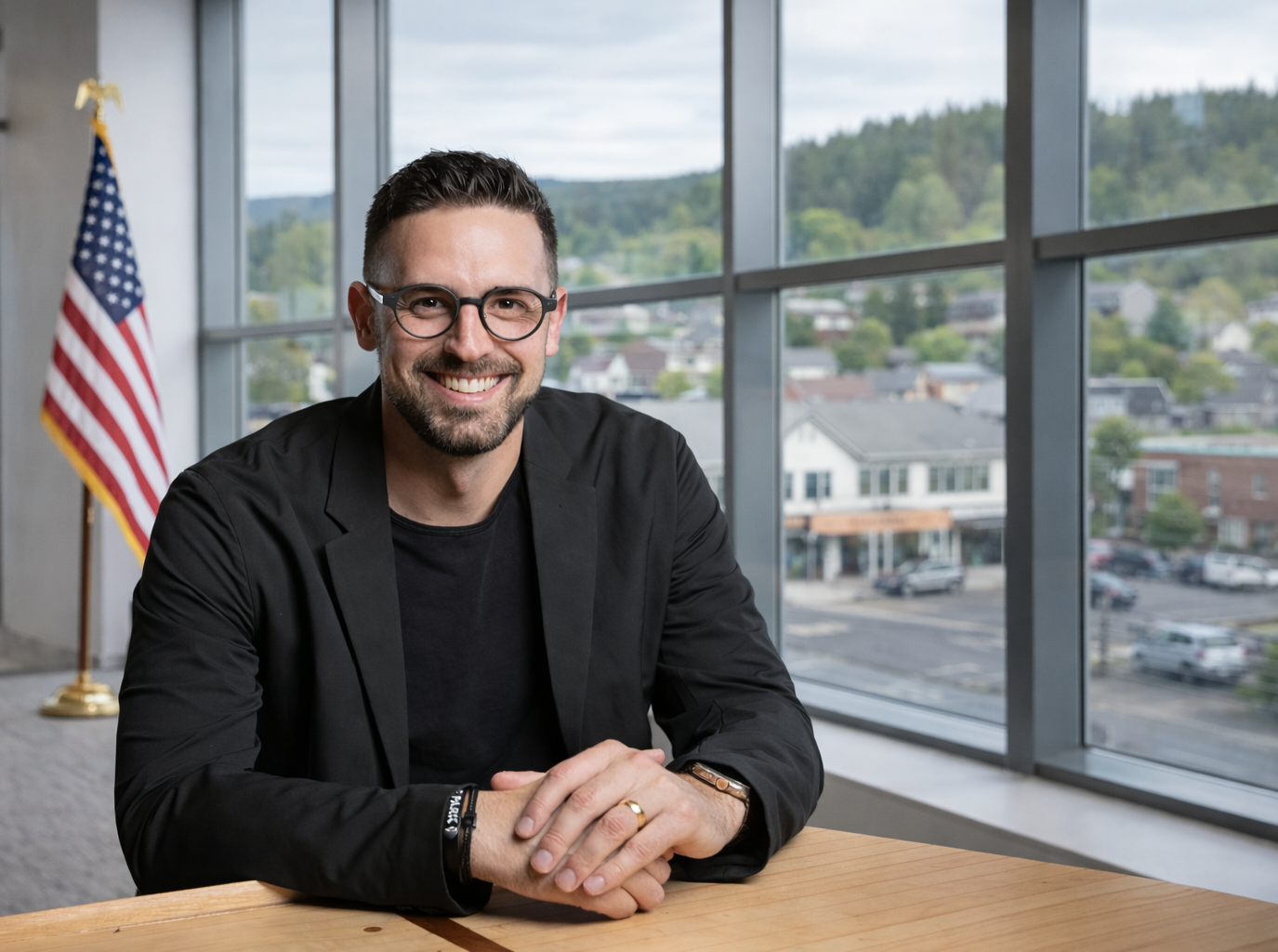
In a recent candidate interview conducted by CRG, Seth Benham was asked a direct question that many residents across Josephine County continue to grapple with: what are the most pressing issues facing the county right now, and what can realistically be done about them in the first six months of leadership.
Benham’s answer did not wander. It centered on three areas he believes are defining the county’s current trajectory, economic stability, housing availability, and public safety, each tied closely to decisions being made not only at the local level, but across the state of Oregon.
At the top of his list is the condition of the local business environment, which he described as weakened in recent years by the loss of several companies, including larger employers. That kind of decline, he explained, does not happen in isolation. When businesses leave, jobs disappear with them, and the broader economic structure of the county begins to strain under that loss.
His focus, if elected, would be on reversing that pattern by creating conditions that support both existing businesses and new ones trying to get established. That includes taking a closer look at how Oregon’s tax structure affects businesses across the board, from small startups to larger corporations, and whether those burdens are preventing growth rather than encouraging it. Early-stage incentives, including potential tax relief for new businesses, are part of the approach he believes could help stabilize and rebuild the local economy.
Housing, the second issue he identified, remains a growing pressure point for residents throughout Josephine County. Benham pointed to a lack of available inventory, particularly for working families and younger residents trying to enter the housing market, as a problem that has been building for years.
He tied that shortage in part to regulatory and development barriers, including permitting timelines and limitations created by urban growth boundaries. While those frameworks are part of Oregon’s broader land use system, Benham suggested there is room to make the process more efficient and responsive. Increasing the supply of market-rate housing, he said, is essential, especially for those who do not qualify for subsidized housing but still cannot afford current prices. Expanding development opportunities, both within city limits and in surrounding county areas, is one of the steps he believes could begin to ease that imbalance.
The third issue, and one that continues to generate ongoing debate across the region, is public safety and community standards, particularly as they relate to homelessness. Benham, who has dealt with the issue during his time on the city council, described it as one of the most complex challenges facing Josephine County today.
Rather than approaching the issue from a single angle, he emphasized the need for balance. Addressing homelessness, in his view, requires both compassion and accountability, not one at the expense of the other. Finding a way to bring those two elements together is what he sees as critical to making meaningful progress.
He also pointed to House Bill 3115 as a central factor in how local communities are able to respond. With efforts underway to repeal the legislation, Benham stated that repeal would be the preferred outcome. If that does not happen, he indicated that reform will be necessary to return more authority to local jurisdictions. The current structure, he suggested, does not adequately account for the differences between communities across Oregon, leaving local governments constrained in how they address their own challenges.
Looking ahead to the first six months in office, Benham acknowledged that the timing would coincide with the state’s legislative session, making it an immediate opportunity to begin addressing these issues through policy. His approach would focus on advancing legislation tied to business support, housing development, and public safety, while also working to secure funding for infrastructure projects that have historically been overlooked in Josephine County.
For residents, the issues he outlined are not distant policy discussions. They are visible in everyday life, from the availability of jobs and the cost of housing to the ongoing presence of homelessness in public spaces. The direction taken by the next elected leadership will play a direct role in shaping how those challenges are addressed moving forward.
Benham’s response, delivered through the CRG interview, offers a clear indication of where he intends to focus his efforts, grounded in the belief that the county’s most pressing problems are interconnected, and that addressing them will require both local action and state-level engagement.