


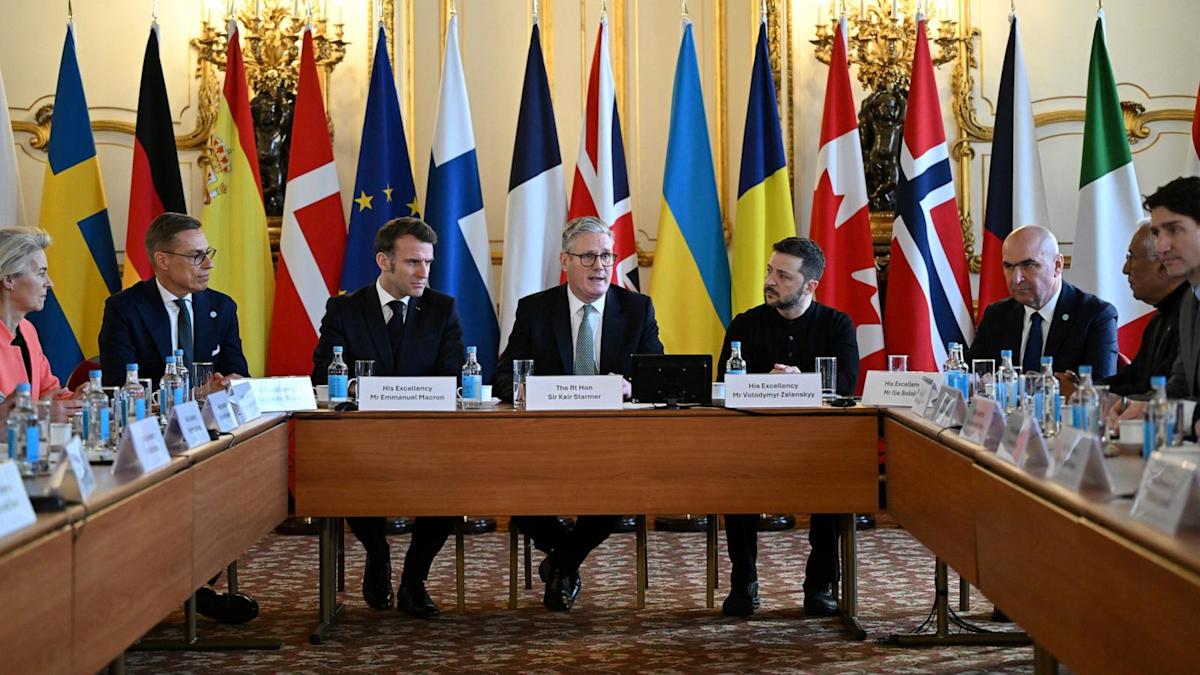
Leaders of the world’s largest advanced economies convened in France this week for the annual Group of Seven summit, gathering at a moment when international attention is divided between the ongoing war in Ukraine and escalating concerns across the Middle East. The meeting brings together heads of government from the United States, Canada, the United Kingdom, France, Germany, Italy and Japan, along with representatives of the European Union and invited international partners.
The summit opened with Ukraine once again occupying a central place on the agenda as Ukrainian President Volodymyr Zelenskyy joined discussions with G7 leaders. His participation comes as Ukraine continues to seek military, financial and diplomatic support more than four years after Russia’s full-scale invasion reshaped European security and altered geopolitical relationships around the world.
While previous G7 meetings have largely focused on sustaining support for Kyiv, this year’s summit arrives during a period of growing international complexity. The conflict in Ukraine remains active across multiple fronts, but leaders are also confronting mounting instability in the Middle East, ongoing concerns regarding Iran’s regional role, global energy security, trade challenges and the economic implications of prolonged international conflicts.
European leaders entered the summit emphasizing the importance of maintaining international focus on Ukraine despite competing global crises. Several governments have expressed concern that attention directed toward developments in the Middle East could divert diplomatic and economic resources away from support efforts that Ukraine continues to rely upon. Discussions during the summit have included military assistance, economic aid, sanctions enforcement and broader strategies intended to strengthen Ukraine’s long-term security position.
The United States delegation arrived with a wide-ranging agenda that extends beyond the war in Eastern Europe. Administration officials indicated that summit discussions would include international trade, supply chain stability, emerging technologies, artificial intelligence and global security concerns. The gathering also provides an opportunity for bilateral meetings among world leaders as they navigate an increasingly complex international landscape.
Attention has also centered on diplomatic efforts aimed at reducing tensions between Russia and Ukraine. Discussions involving President Donald Trump and President Zelenskyy have drawn significant interest as governments continue exploring potential pathways toward negotiations. While no major breakthroughs have been announced, diplomatic engagement remains a recurring topic among participating nations seeking avenues to reduce hostilities and promote long-term stability.
The Middle East has emerged as a second major focus of the summit. Leaders are evaluating the implications of regional instability, ongoing concerns involving Iran and the potential effects on global energy markets. Shipping routes, energy supplies and broader economic impacts have become important components of discussions as governments assess risks that could affect economies far beyond the region itself.
For many participating nations, the summit represents an opportunity to demonstrate unity while confronting multiple international challenges simultaneously. The gathering is taking place against a backdrop of economic uncertainty, evolving security threats and growing pressure on governments to balance domestic priorities with international commitments.
As the summit continues, world leaders are expected to work toward coordinated positions on security, economic cooperation and geopolitical stability. Whether the meeting produces new policy initiatives, additional support commitments or expanded diplomatic efforts, its outcome is likely to influence international relations and global security discussions well beyond the summit’s conclusion.
The decisions and conversations taking place in France this week underscore the increasingly interconnected nature of modern global challenges, where conflicts in one region can have far-reaching political, economic and security consequences around the world.