


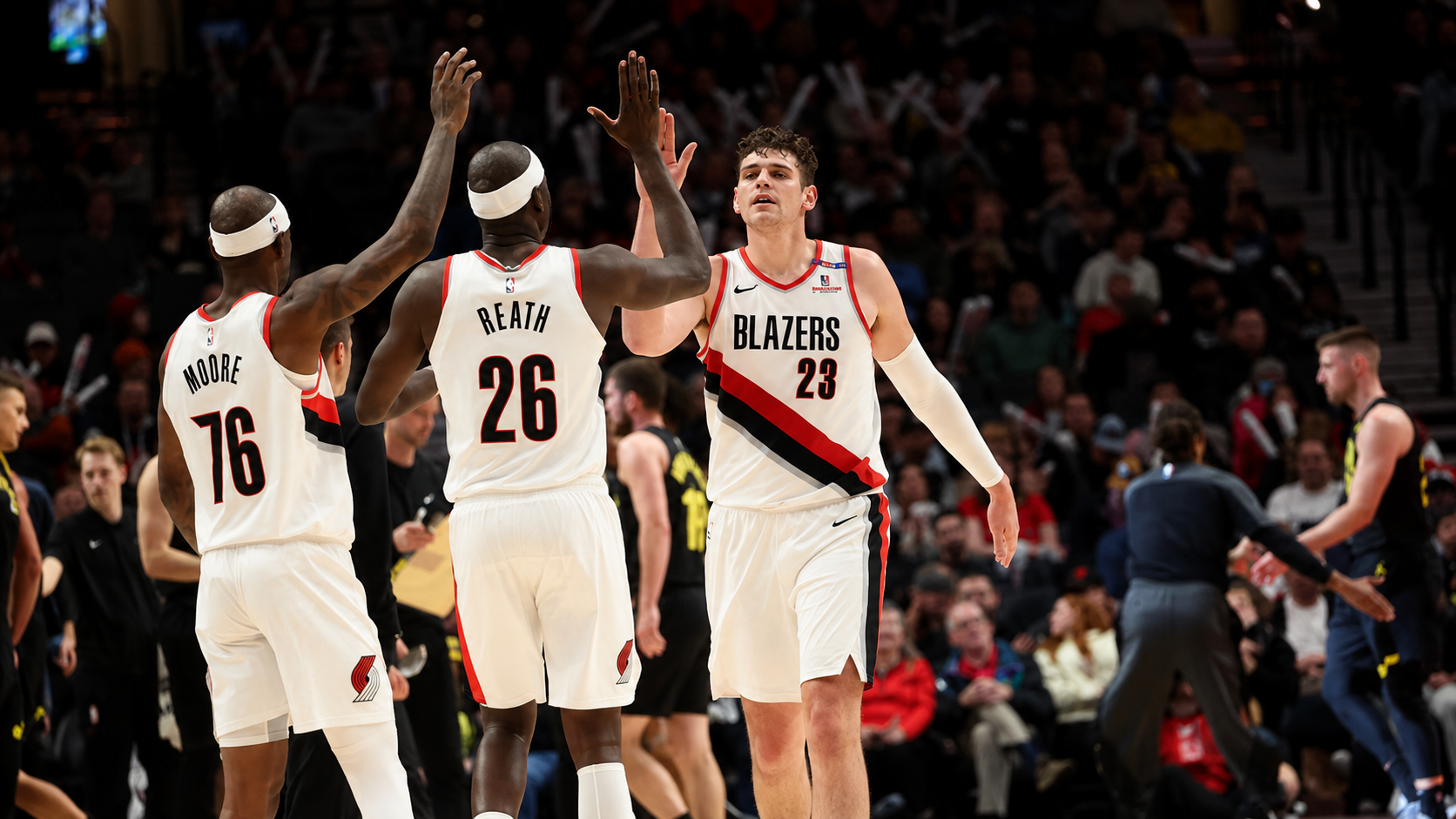
The future of the Portland Trail Blazers remains the subject of an increasingly important statewide debate as negotiations continue over a proposed long-term agreement to renovate Portland’s aging Moda Center. While no final decision has been reached, the discussion has expanded well beyond professional basketball, evolving into a broader conversation about Oregon’s economy, public investment, downtown revitalization, tourism, and the long-term competitiveness of the state’s largest metropolitan region.
At the center of the debate is a proposed renovation estimated at roughly $600 million for the city-owned Moda Center, home of the Trail Blazers since 1995. After more than three decades of nearly continuous use, officials say the arena requires extensive modernization to replace aging infrastructure, improve fan amenities, enhance technology, and ensure the facility remains capable of attracting major sporting events, concerts, conventions, and entertainment productions for years to come.
Although negotiations remain ongoing, political leaders from throughout the Portland metropolitan area have intensified their efforts to keep the NBA franchise in Oregon. Regional elected officials, business organizations, labor groups, and economic development advocates have publicly urged state and local governments to complete an agreement that would secure the Trail Blazers’ long-term future in Portland while preserving one of Oregon’s most recognizable economic and cultural assets.
Supporters argue that the discussion is no longer simply about financing an arena renovation. They contend the decision represents an investment in Oregon’s broader economy. Every Trail Blazers home game brings thousands of visitors into downtown Portland, supporting restaurants, hotels, retailers, parking facilities, transit providers, and hundreds of businesses that rely on steady event traffic throughout the year. Beyond basketball, the Moda Center hosts concerts, family entertainment, college athletics, community events, and national touring productions that generate additional visitor spending and tax revenue across the region.
Economic advocates also point to the arena’s role in attracting future events that could otherwise bypass Oregon if the facility is allowed to become outdated. Major sporting championships, national conventions, and high-profile entertainment tours increasingly seek modern venues capable of meeting evolving technological and operational requirements. Supporters believe substantial upgrades would strengthen Portland’s ability to compete for those opportunities while reinforcing downtown’s ongoing economic recovery.
The proposal under discussion would combine funding from multiple levels of government, with the State of Oregon expected to provide the largest contribution alongside investments from the City of Portland and Multnomah County. Even with those commitments under discussion, significant questions remain unanswered regarding the final financing structure, long-term lease terms, project oversight, and the responsibilities of the Trail Blazers’ ownership.
Those unresolved issues have become the primary obstacle preventing an agreement.
City leaders have maintained that before committing hundreds of millions of taxpayer dollars, they want legally enforceable guarantees that the franchise will remain in Portland for decades, along with greater transparency regarding construction costs, project planning, financial accountability, and protections against future cost overruns. Team representatives have continued to argue that public funding commitments should be finalized before additional project details move forward, leaving both sides attempting to resolve a fundamental disagreement over how negotiations should proceed.
The discussion has become even more visible following recent comments from NBA Commissioner Adam Silver, who acknowledged publicly that negotiations have not advanced as quickly as anticipated while reaffirming the league’s desire to keep the Trail Blazers in Portland. Those remarks have added urgency to negotiations that many believe will shape the franchise’s future for generations.
The debate has also expanded into a broader public discussion about the role of taxpayer dollars in financing facilities used by professional sports teams. Critics question whether governments should commit substantial public resources during a period when communities continue facing housing shortages, transportation needs, public safety concerns, and other competing priorities. Others argue that because the Moda Center is publicly owned, improvements would remain public assets regardless of team ownership, making the investment fundamentally different from subsidizing a privately owned facility.
For many economists, the discussion extends beyond basketball entirely. The Trail Blazers represent Oregon’s only NBA franchise and one of the state’s most recognizable international brands. The organization generates employment, tourism, media exposure, and business activity that reaches well beyond Portland into communities across Oregon. Regional leaders increasingly describe the negotiations as an economic development decision that could influence future investment, business confidence, and Portland’s ability to compete with other western cities for entertainment and major events.
As negotiations continue, no final agreement has been approved, and several major financial and legal questions remain unresolved. City officials are expected to continue reviewing proposed terms in the coming weeks while discussions between government leaders, the Trail Blazers, and the NBA remain active.
For now, the future of the Moda Center renovation and the long-term home of the Portland Trail Blazers remains under negotiation. Until a final agreement is reached, the proposal continues to generate vigorous debate across Oregon as policymakers, business leaders, taxpayers, and basketball fans weigh the economic opportunities, financial risks, and lasting impact that the decision could have on the state for decades to come.