


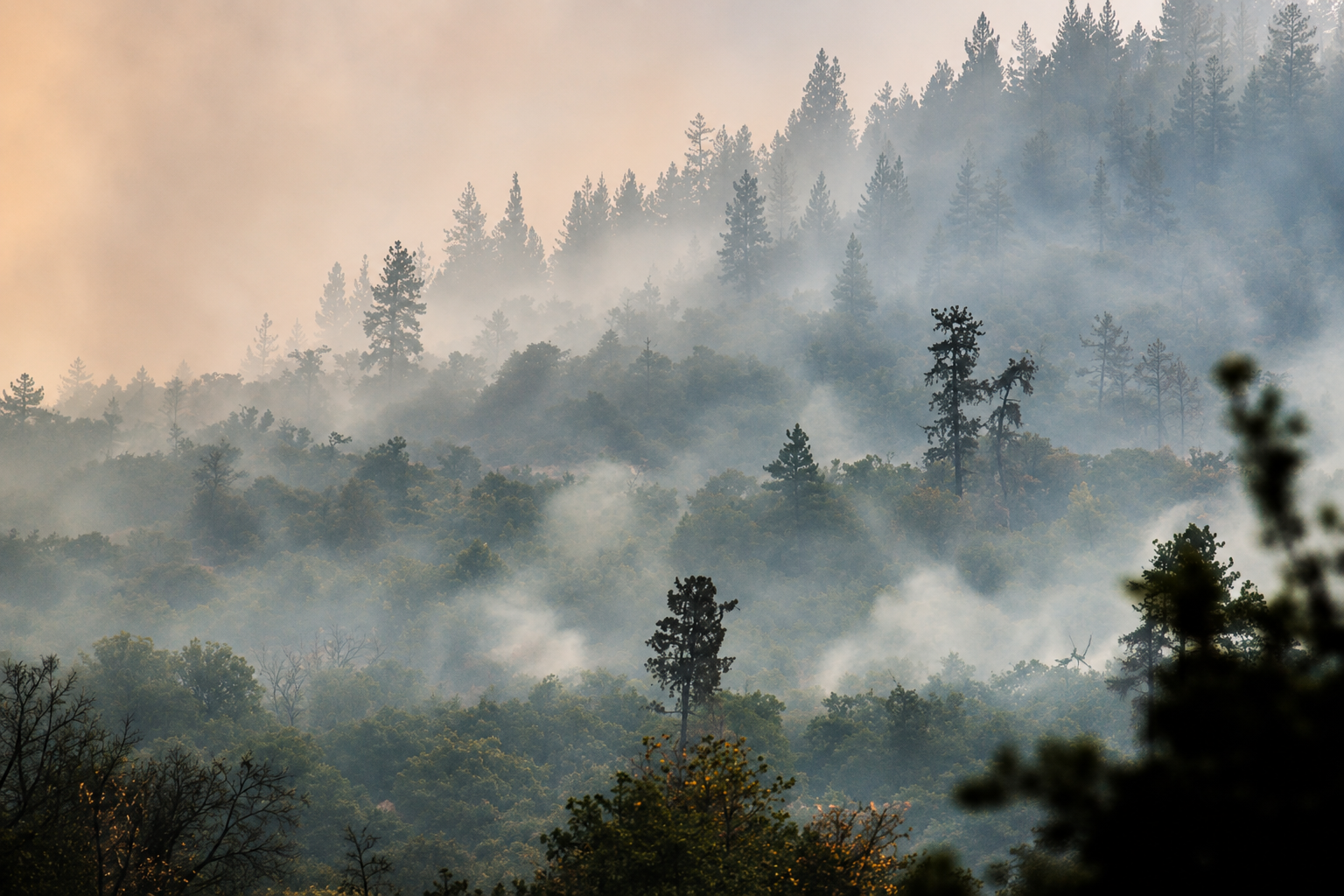
Wildfire season in Oregon brings dangers that extend far beyond flames, evacuation zones and burned acreage. Smoke drifting across communities can create a widespread environmental health hazard capable of affecting people hundreds of miles from an active fire. Even when the nearest wildfire poses no immediate threat to homes or property, deteriorating air quality can expose residents to microscopic particles capable of reaching deep into the respiratory system and affecting cardiovascular health.
Among the greatest concerns in wildfire smoke is fine particulate matter known as PM2.5, referring to airborne particles measuring 2.5 micrometers or smaller. These particles are approximately 30 times smaller than the width of a human hair and can penetrate into the deepest regions of the lungs when inhaled. Exposure can irritate airways, reduce lung function and aggravate existing respiratory and cardiovascular conditions.
Wildfire smoke is a complex mixture produced when vegetation, trees, structures and other materials burn. Depending on what is burning and atmospheric conditions, smoke can contain fine particles, gases and numerous chemical compounds. Concentrations can change substantially over the course of a day as winds shift, temperatures change and wildfire behavior intensifies or subsides.
The body’s initial response to smoke exposure can appear relatively minor. Burning or watery eyes, nasal and throat irritation, headaches, coughing and fatigue are common complaints. Greater exposure may produce wheezing, chest tightness, increased mucus production, difficulty breathing or reduced tolerance for physical activity.
The health implications, however, are not limited to irritated lungs.
Fine-particle pollution has been associated with cardiovascular effects, including abnormal heart rhythms, heart attacks, strokes and worsening heart failure, particularly among people who already have cardiovascular disease or related risk factors. Respiratory illnesses including asthma, chronic obstructive pulmonary disease and emphysema can also become more difficult to control during periods of elevated smoke.
Oregon has experienced measurable increases in respiratory-related emergency department visits during severe wildfire smoke events. The state’s historic 2020 wildfire season, for example, coincided with a substantial increase in emergency visits involving asthma-like illness during periods of extremely poor air quality.
Certain populations face greater risks. Older adults, infants and children, pregnant people and individuals with asthma, COPD, cardiovascular disease or other underlying respiratory conditions should take additional precautions. Children warrant particular attention because their lungs are still developing and they breathe more air relative to their body size than adults.
Outdoor workers, athletes and people performing strenuous activities outside can also receive substantially greater smoke exposure because physical exertion increases breathing rates and the volume of air entering the lungs.
Healthy adults are not immune. Significant concentrations of wildfire smoke can cause respiratory symptoms in people without previously diagnosed heart or lung disease. Repeated exposure over several days or prolonged periods of unhealthy air makes reducing the amount of smoke inhaled increasingly important.
Residents should not rely exclusively on smell, visibility or the appearance of the sky to determine whether outdoor air is safe. Air-quality measurements, particularly the Air Quality Index and PM2.5 readings, provide more useful information about potential exposure. Conditions can also vary dramatically between communities and can change within hours as smoke moves through valleys and across mountain ranges.
When air quality deteriorates, residents can reduce exposure by limiting strenuous outdoor activities and spending more time in filtered indoor environments. Windows and doors can be kept closed when temperatures allow, while portable HEPA air cleaners can help reduce indoor particle concentrations. Properly maintained central heating and cooling systems equipped with appropriate high-efficiency filtration can provide additional protection.
Vehicles can offer another temporary filtered environment when windows remain closed and climate-control systems are placed on recirculation.
People who must remain outdoors during significant smoke conditions can reduce particulate exposure by wearing a properly fitted NIOSH-approved N95 or P100 respirator. Ordinary cloth face coverings and typical surgical masks are not designed to adequately filter the microscopic particles that create much of wildfire smoke’s health risk.
Oregon residents must also balance smoke precautions against another seasonal hazard: extreme heat. Closing a home to prevent smoke infiltration can allow indoor temperatures to climb dangerously high when air conditioning is unavailable. During simultaneous heat and smoke events, an air-conditioned cleaner-air environment may provide greater protection than remaining inside an excessively hot residence.
Medical attention should be considered when smoke exposure is followed by persistent coughing, unusual wheezing, recurring shortness of breath, continuing chest tightness or a noticeable decline in normal physical tolerance. People with asthma, COPD, heart disease or other existing conditions should contact their medical provider when symptoms worsen or medications are no longer controlling them as expected. Physicians can determine whether examination, oxygen monitoring, pulmonary-function testing or cardiovascular evaluation is appropriate.
Severe difficulty breathing, significant chest pain or pressure, fainting, confusion, blue or gray discoloration of the lips or skin, or symptoms consistent with a heart attack or stroke require immediate emergency medical attention.
Wildfire smoke can travel far beyond the boundaries drawn around an active fire. For communities throughout Southern Oregon, Central Oregon, the Willamette Valley, Eastern Oregon and other areas affected by seasonal smoke, understanding air quality is therefore an important component of wildfire preparedness.
Oregon’s wildfire season is visible in flames, evacuation notices and columns of smoke rising above the landscape. Its less visible threat is measured in microscopic particles suspended in the air people breathe. Monitoring air conditions, reducing exposure when pollution rises and recognizing symptoms that warrant medical evaluation can help residents protect themselves throughout periods when wildfire smoke settles across the state.