


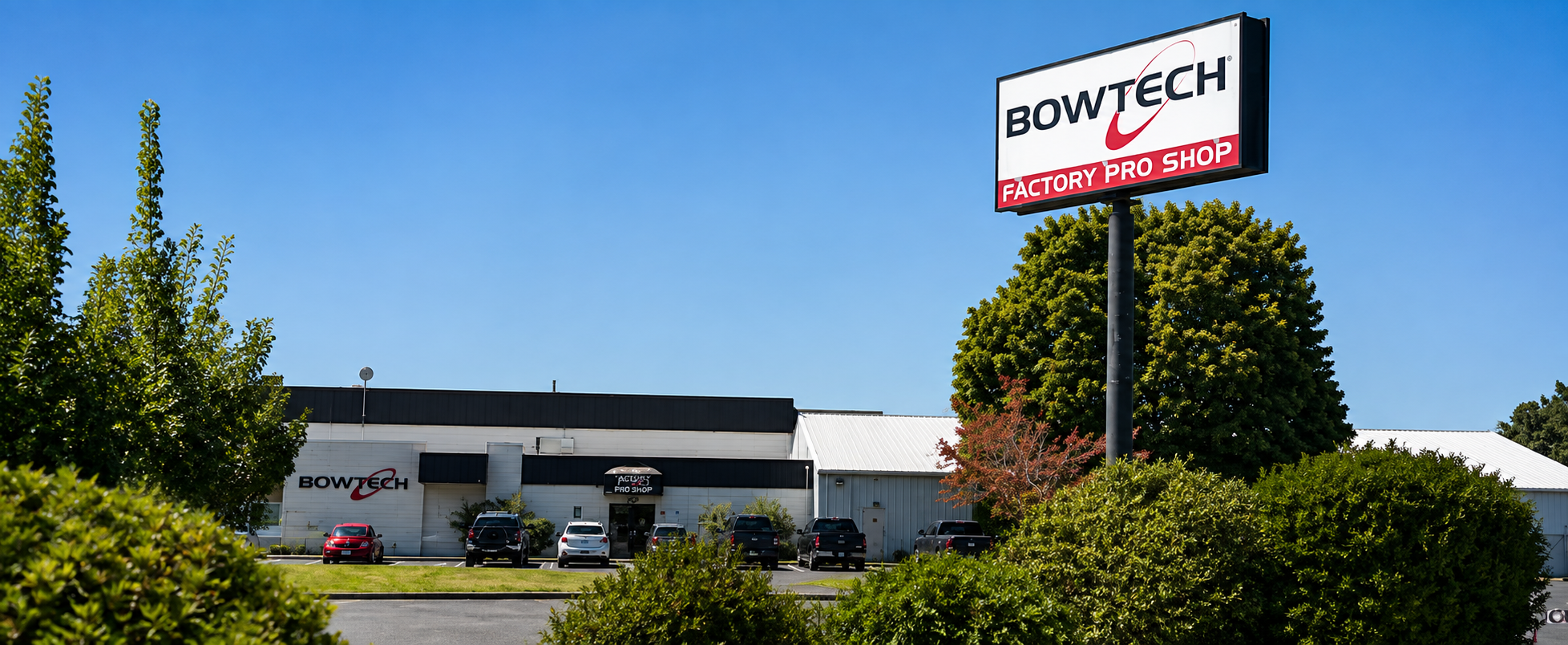
Oregon is losing another homegrown manufacturer as Bowtech Archery prepares to close its Eugene operations and relocate to Houston, Texas, ending a 27-year business presence in the city where the company was founded. The relocation will eliminate 43 Eugene jobs and close Bowtech’s longtime manufacturing and headquarters operations, adding another name to a growing list of employers reducing workforces, closing facilities or shifting operations outside Oregon during a period of weakness in the state’s labor market.
Bowtech was founded in Eugene in 1999 and developed from a local startup into a nationally recognized manufacturer of compound bows and archery equipment. Over the years, the business expanded its product portfolio and became associated with several archery brands, including Diamond Archery. Its Eugene operation includes a roughly 50,000-square-foot headquarters and production facility along with another manufacturing location near Airport Road. After nearly three decades of building its business in Oregon, those operations are now scheduled to move to Texas.
The company plans to relocate operations to Houston, where Bowtech’s parent company has ties through Texas-based private investment firm JDH Capital, which acquired Pure Archery Group in 2022. The transition is expected to occur in phases, with the Eugene factory retail operation closing in September and layoffs beginning later that month. The permanent closure of the Eugene operation is expected by late February 2027, bringing the company’s manufacturing presence in the community to an end.
Oregon’s official layoff tracking system lists 43 workers affected by the Bowtech decision. The positions are primarily associated with manufacturing, although marketing jobs are also among those being eliminated. Layoffs are expected to occur in stages through February. At the same time positions are disappearing in Oregon, Bowtech has been recruiting employees in Houston, including for positions similar to some being eliminated in Eugene. The transition therefore represents more than an overall workforce reduction, with employment and business operations being geographically transferred from Oregon to Texas.
Bowtech has attributed the relocation to long-term operational considerations rather than Oregon politics or the state’s business climate. The company has identified Houston’s more central location for distribution and its proximity to Texas-based ownership among the considerations surrounding the move. The new operation is expected to support manufacturing, product development, marketing and future expansion. There is currently no factual basis to characterize Bowtech’s departure as a direct response to Oregon taxes, regulations or state policies, although the economic result for Oregon remains the same: manufacturing positions are disappearing, a longtime Oregon operation is closing and future investment associated with those operations will occur primarily in another state.
Bowtech’s departure arrives during a broader period of employment weakness across Oregon. The state lost approximately 22,800 nonfarm payroll jobs between December 2024 and December 2025, making 2025 the first year since the pandemic in which statewide employment declined on a year-over-year basis. By May 2026, Oregon remained approximately 20,900 payroll jobs below its September 2024 employment peak, illustrating that the state’s labor market has yet to fully recover those losses.
Manufacturing has been among the industries experiencing particularly significant reductions. During the 12-month period ending in May, Oregon’s durable-goods manufacturing sector lost approximately 5,900 jobs, representing a decline of 4.7 percent. Nondurable manufacturing employment declined by another 2,200 positions, or approximately 4 percent. Oregon’s unemployment rate stood at 5.2 percent in June, placing additional economic importance on the state’s ability to retain existing employers while attracting new investment capable of replacing positions eliminated elsewhere.
Bowtech is also not the only Oregon operation recently affected by corporate consolidation or relocation. Daimler Truck North America announced plans this summer to discontinue truck manufacturing in Portland and transfer that production to facilities in North Carolina and South Carolina, affecting approximately 375 positions. The circumstances are different from Bowtech because Daimler is maintaining its North American headquarters in Portland and continues investing in Oregon, including a recently opened $40 million engineering facility. The production shift nevertheless removes hundreds of manufacturing positions from the state’s employment base.
Other employers have announced workforce reductions during 2026, including Springfield-based PacificSource, which reported nearly 100 layoffs. Oregon’s official layoff records also contain reductions involving companies in distribution, manufacturing, health care and other industries. Nike has undertaken a much larger global restructuring involving approximately 1,400 positions, although those jobs are spread across its worldwide operations and should not be counted entirely as Oregon employment losses.
The reasons behind Oregon’s recent job reductions vary considerably. Corporate restructuring, consolidation, changes in ownership, operating costs, market demand and broader national economic conditions can all influence decisions involving individual facilities. Companies relocating operations outside Oregon represent only one portion of the state’s employment losses, and available evidence does not support attributing the broader employment decline to any single economic or political factor.
Bowtech nevertheless carries particular significance because of its history in Eugene. This is not an outside corporation simply closing an Oregon branch after a brief presence in the state. Bowtech began in Eugene, built its business there and remained connected to the community for nearly three decades. What started as an Oregon archery company eventually developed into a national sporting-goods manufacturer, making its departure a loss not only of current employment but also of a business that originated and expanded within Oregon.
Some Bowtech employees have reportedly been offered opportunities to relocate, while others may remain connected to the company through hybrid arrangements. Bowtech is also expected to retain some relationships with Oregon’s archery community. Those connections, however, will not replace the Eugene manufacturing operation or the positions being eliminated as the company’s primary operations move more than 2,000 miles away.
Forty-three positions represent a relatively small portion of Oregon’s overall workforce when considered independently, but the economic significance changes when Bowtech is viewed alongside thousands of jobs lost since Oregon’s employment peak, continued manufacturing declines and other recent corporate reductions. Each individual closure or relocation has its own circumstances, yet collectively they contribute to an employment picture that Oregon economic officials, businesses and communities will continue confronting as the state competes for investment and jobs.
For 27 years, Bowtech manufactured bows, developed products and built a nationally recognized brand from Eugene. By early 2027, the company’s Eugene manufacturing era is expected to be over, with its principal operations centered in Houston. For Oregon, the departure means another homegrown company is moving its operations elsewhere, another manufacturing facility is closing and another 43 local jobs are being eliminated from the state’s economy.