


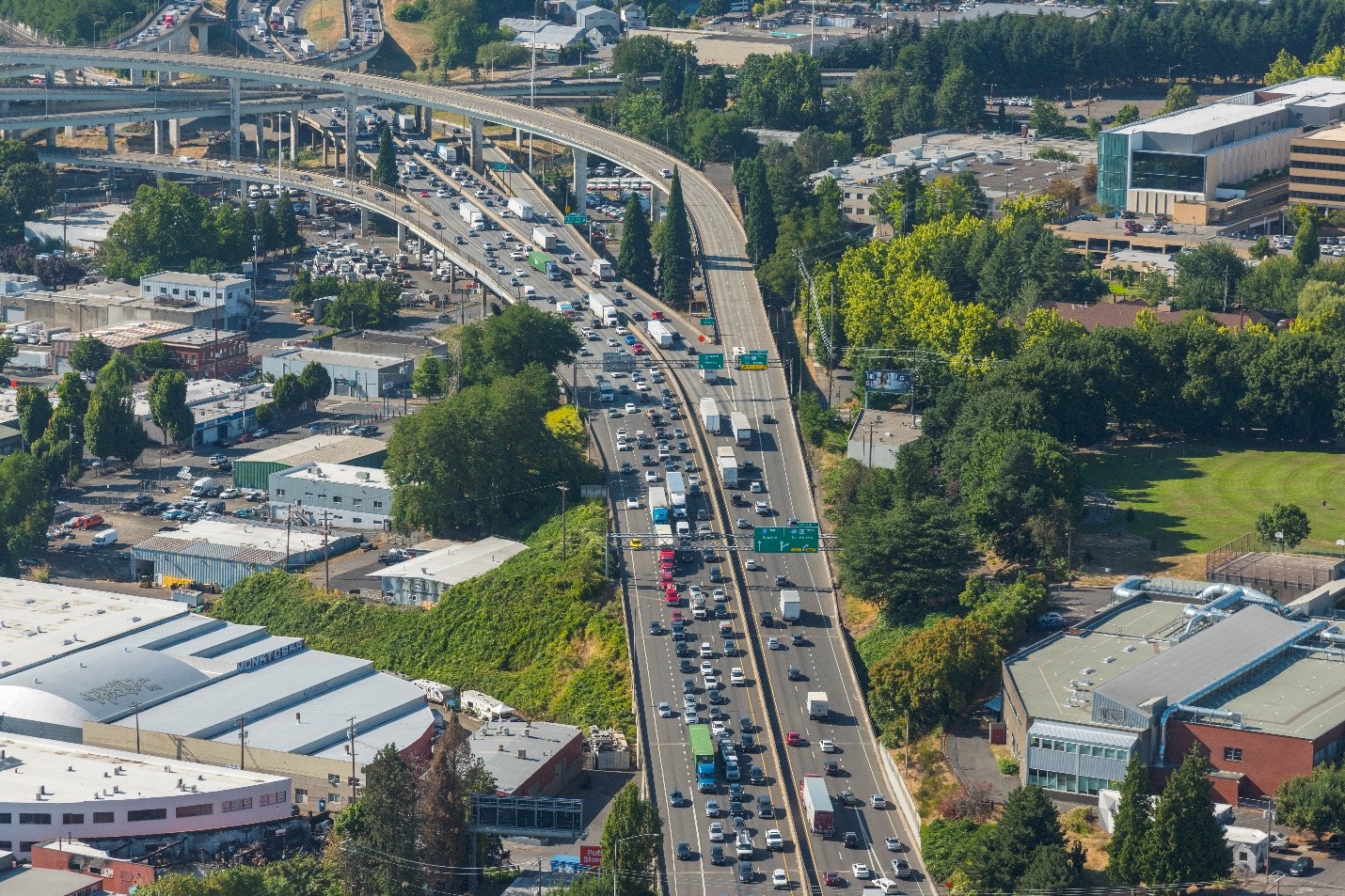
A major interruption to Interstate 5 is approaching in Portland, where one of Oregon’s busiest and most complicated freeway corridors is scheduled to lose all southbound through traffic for approximately five weeks beginning September 11. The continuous closure through the Rose Quarter will reroute thousands of vehicles each day, close or restrict several important freeway connections and place additional traffic onto surrounding highways and Portland streets while construction crews undertake extensive repairs.
The Oregon Department of Transportation is preparing to close the southbound through lanes of I-5 between Interstate 405 and Interstate 84 around the clock, seven days a week. The shutdown covers roughly two miles of freeway but sits at the center of a transportation network where I-5, I-84 and I-405 converge, making the effects considerably larger than the physical construction area. ODOT expects the work to continue for up to five weeks, placing the anticipated reopening sometime in October if construction proceeds according to schedule.
This will not resemble the more familiar pattern of overnight construction, temporary lane reductions or weekend closures. Southbound through traffic will be removed from the affected section for the duration of the project, allowing construction crews continuous access to pavement and structures that carry some of the heaviest traffic in Oregon. One southbound lane is expected to remain available between the I-405 split and the Broadway and Weidler exit, maintaining access to the Rose Quarter, Moda Center, Oregon Convention Center and surrounding neighborhoods. That lane will serve local access rather than motorists attempting to continue south through Portland on I-5.
The shutdown will reach beyond the interstate itself. Several ramps serving the Rose Quarter and surrounding freeway system are scheduled to close, including connections that normally funnel vehicles onto southbound I-5. The southbound I-5 connection to eastbound I-84 will also be affected, adding another complication for motorists attempting to move between Portland’s major interstate corridors. Northbound I-5 is expected to remain open during the project, although increased congestion elsewhere in the freeway network could affect travel in both directions.
The primary southbound detour will move traffic onto I-405 around the western side of downtown Portland before reconnecting with I-5. Motorists making longer regional trips may also be able to use I-205 to bypass central Portland, depending on their origin and destination. With large volumes of vehicles moving away from their normal routes, ODOT is preparing for congestion that could spread well outside the Rose Quarter and into other portions of the metropolitan transportation system.
Traffic projections illustrate the potential scale of the disruption. ODOT has warned that trips through affected portions of the Portland region could take two to three times longer than normal when traffic volumes are heavy. Congestion could stretch north toward the Interstate Bridge and Vancouver, Washington, while increased traffic on I-405, I-205 and Portland surface streets could produce delays well beyond the immediate construction zone. Drivers attempting to avoid the closure by navigating city streets could also add pressure to neighborhoods and arterial roads that were not designed to absorb interstate-level traffic volumes.
Behind the unusual closure is a roadway that has endured decades of intensive use. The pavement through the Rose Quarter has developed cracking, rutting, potholes and other deterioration, requiring work that goes substantially beyond filling individual defects or applying another temporary surface treatment. Construction will involve removing deteriorated material, repairing sections of the roadway and installing new concrete intended to extend the service life of the freeway.
Crews will also perform related structural and transportation improvements during the extended shutdown. The work is part of Phase 1A associated with the larger I-5 Rose Quarter Improvement Project and includes bridge work near the I-5 and I-84 interchange, stormwater improvements, highway signage and an extension of the southbound auxiliary lane between I-84 and the Morrison Bridge and OMSI exits. Those improvements are intended to address infrastructure needs within a corridor that carries passenger vehicles, commercial trucks, buses and regional traffic through the center of Portland.
Closing an interstate continuously for more than a month represents a significant departure from the way highway construction is normally experienced by motorists, but the extended shutdown provides crews with uninterrupted access to the roadway. Alternatives involving repeated weekend closures or maintaining traffic immediately beside active construction would have extended the project and required construction zones to be established and removed repeatedly. Concentrating the work into a single construction window allows multiple operations to proceed while southbound through traffic is kept outside the work area.
Weather also influenced the timing. Concrete and structural work require suitable conditions, and September provides a period when Portland historically has a better chance of avoiding prolonged winter rainfall while also moving beyond the hottest portion of summer. The construction window was selected around those requirements as well as major events, holidays and other transportation projects.
The closure comes on a section of interstate that functions as far more than a Portland commuter route. I-5 is the primary north-south transportation corridor through western Oregon and an essential connection between California, Oregon and Washington. Passenger vehicles share the highway with commercial trucks transporting food, retail merchandise, industrial supplies and other freight, making disruptions in Portland capable of affecting travel patterns throughout the region even when the construction itself remains confined to a relatively short stretch of freeway.
Motorists heading into Portland during the closure will need to pay particularly close attention to freeway signs and changing traffic conditions because familiar connections may no longer be available. Travelers who normally depend on I-5 to move directly through central Portland may instead find themselves routed onto I-405 or another alternate corridor, and congestion could change considerably depending on the day and time.
For Southern Oregon residents, the construction will not close or restrict I-5 through Grants Pass, Medford, Roseburg or Eugene. The concern begins for anyone traveling into or through the Portland metropolitan area after September 11, particularly motorists returning south from Portland or Washington. Travelers from Southern Oregon heading north for Portland International Airport, medical appointments, business, sporting events, concerts or other destinations should be prepared for unfamiliar detours and potentially substantial delays once they reach the Portland area.
With the southbound shutdown expected to remain in place for approximately five weeks, Southern Oregon motorists planning Portland trips from September into October should check current highway conditions before leaving, allow additional travel time and avoid assuming that the route used to enter Portland will remain available for the return trip. The construction zone may cover only about two miles of I-5, but for travelers accustomed to moving straight through the Rose Quarter, September 11 will mark the beginning of a very different trip through Oregon’s largest metropolitan area.