


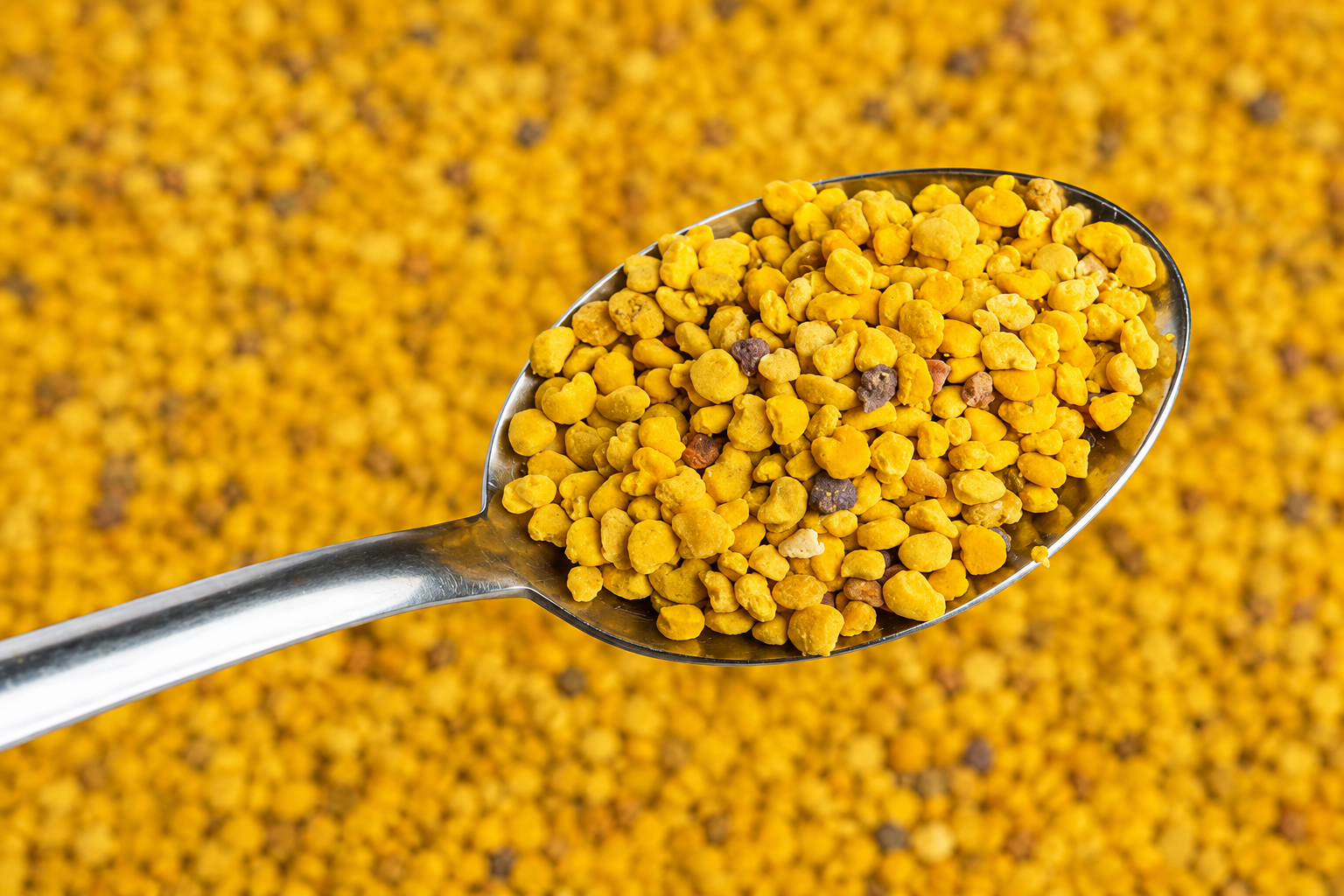
This famous food, bee pollen, has been historically recorded since long before medicine had the language to describe nutrients or cellular repair. In the ancient Mediterranean, beekeeping was already a specialized craft, and pollen was recognized as the substance that fed the hive, the food that allowed bees to grow, repair, and sustain their colonies. Greek naturalists noticed something remarkable: bees did not simply consume raw pollen. They packed it into honeycomb cells, mixed it with nectar and enzymes, and allowed it to ferment. This fermented pollen became known as bee bread, and it was recognized as a powerful source of nourishment. Aristotle described bee pollen as the “strength of the hive,” while Pliny the Elder wrote about the substances bees gathered and stored to sustain their colonies. Ancient physicians also associated bee-derived foods with stamina, recovery, and nourishment.
In Egypt, bee-derived substances appear in both medical and ritual contexts. Historical records describe preparations involving honey and other products of the hive as strengthening tonics, while archaeological evidence demonstrates the important role of beekeeping and honey in Egyptian society. Healers used bee-derived preparations for inflammation, digestive problems, and general vitality—roles that have since prompted scientific interest in pollen’s dense profile of amino acids, B vitamins, minerals, and antioxidant compounds. Even without the language of modern biochemistry, ancient cultures recognized the nutritional value of substances produced and collected by bees.
Chinese medical traditions also contain longstanding references to pollen and bee-derived substances as tonics. Pollen has historically been associated with strengthening the body, supporting digestion, and promoting vitality. Later traditional uses included preparations intended to address fatigue, weakness, and recovery from illness. These historical applications have interesting parallels with modern research into pollen’s nutritional composition, including amino acids, antioxidants, vitamins, minerals, and other biologically active compounds involved in normal cellular metabolism.
Persian and Islamic physicians likewise preserved extensive knowledge concerning the medicinal use of bee-derived substances. Avicenna, in The Canon of Medicine, discussed honey and other natural substances in preparations intended to support digestion, strength, and general health. Although physicians of the period could not chemically isolate or identify the individual compounds found in pollen, bee products became incorporated into formulations intended to support vitality, endurance, recovery, and, in some traditions, sexual vigor.
By the Renaissance and into the modern era, pollen and other bee products continued to attract attention as nutrient-rich tonics across parts of Europe. During the 19th and early 20th centuries, beekeepers and natural-health practitioners in Russia and Eastern Europe wrote about bee bread and pollen in connection with stamina, nutrition, immune health, and recovery. With the development of modern nutritional science, researchers eventually gained the ability to examine the individual compounds contained within pollen and investigate how they interact with human physiology.
What ties these traditions together is the same core idea: bee pollen was valued as a concentrated source of nourishment. Today, science can examine some of the reasons behind that reputation. Bee pollen contains amino acids involved in protein synthesis, along with vitamins and minerals that participate in normal cellular metabolism. B vitamins, for example, contribute to metabolic pathways involved in converting food into usable cellular energy. These processes support the countless energy-dependent functions occurring throughout the human body, including tissue maintenance and repair.
Bee pollen also contains antioxidants, including flavonoids, carotenoids, and phenolic compounds, that are being studied for their ability to counter oxidative stress. Ancient physicians did not have the term “oxidative stress,” but they were familiar with its outward companions: inflammation, fatigue, slow recovery, and vulnerability during illness. Modern research has therefore focused considerable attention on pollen’s antioxidant composition and its potential biological effects.
Fermentation, the process that transforms collected pollen into bee bread within the hive, further changes its composition. Bees combine pollen with nectar or honey and their own secretions before storing it in honeycomb cells, where microbial and enzymatic activity alters the material. Researchers continue to investigate whether this process can improve the digestibility or bioavailability of certain components by partially breaking down pollen’s resistant outer structures.
Bee pollen has also attracted scientific interest for its possible effects on immune and inflammatory processes. Laboratory and animal research has examined how compounds contained in pollen may interact with inflammatory pathways and immune signaling. These findings have helped researchers better understand why bee products acquired longstanding reputations in traditional medicine, although the extent of these effects in humans continues to require careful clinical study.
The digestive system represents another area of interest. Pollen contains enzymes, polysaccharides, proteins, lipids, vitamins, minerals, and plant compounds that interact with digestion and metabolism in complex ways. The intestinal lining serves as a critical barrier that regulates nutrient absorption while playing an important role in immune function. Researchers are continuing to examine how dietary compounds found in pollen and fermented bee products may interact with the gut microbiome and intestinal environment.
Even the nervous system depends upon many of the nutrients found in pollen. Amino acids serve as precursors or building blocks for numerous compounds within the body, while B vitamins participate in normal neurological and energy metabolism. Antioxidants help protect cells against oxidative damage, including cells within the nervous system. These biological relationships provide a modern framework for investigating historical claims that nutrient-rich foods could help sustain mental as well as physical endurance.
Across civilizations, pollen, honey, bee bread, and other products of the hive have occupied an enduring place in food and traditional medicine. Their story is one of remarkable continuity: cultures separated by geography and centuries repeatedly recognized the hive as a source of concentrated nourishment long before scientists could identify vitamins, amino acids, antioxidants, enzymes, or cellular metabolic pathways.
As we continue this five-day exploration of ancient performance botanicals and traditional foods, bee pollen stands naturally as the second chapter: the strength-food of civilizations, a remarkable product of the hive whose ancient reputation continues to inspire modern scientific investigation.