


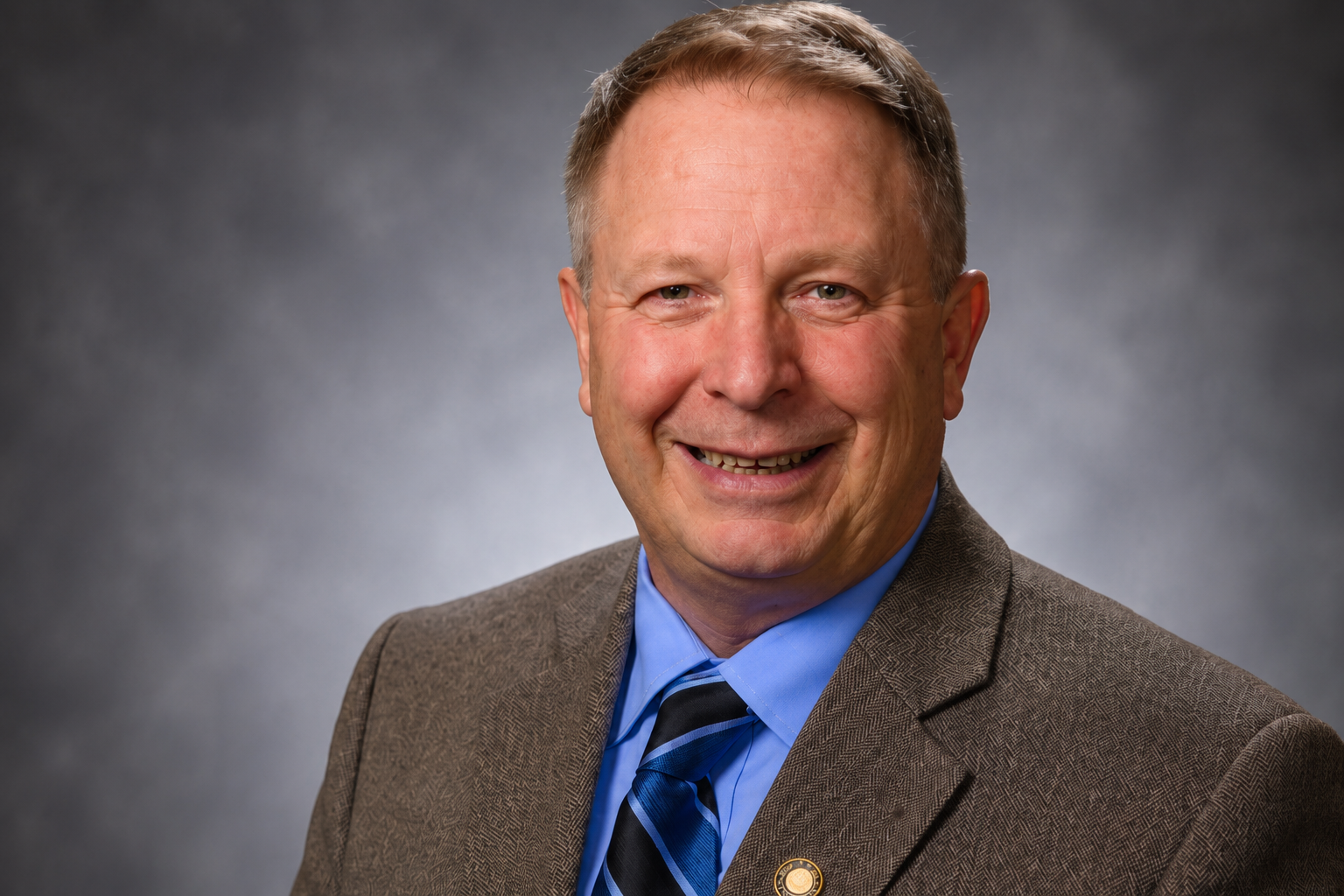
There comes a point when being a former elected official no longer gives someone license to speak as though yesterday’s political résumé automatically makes today’s assertions credible. Herman Baertschiger first served in the Oregon Legislature and later returned to local government as a Josephine County commissioner from 2021 to 2024. That background certainly gives him experience with both state and county government, but experience does not excuse anyone from keeping up with the facts before stepping behind a microphone and criticizing the people currently doing the job.
Baertschiger appeared on the Bill Meyer radio show program Tuesday morning this week discussing the proposed renewal of Josephine County’s Adult Jail and Juvenile Detention levy. The problem was not that he expressed an opinion, because he is entitled to one just like every other resident. The problem is that portions of the discussion appeared disconnected from the public process that has actually been taking place surrounding the levy. When someone speaks publicly about an issue involving public safety, millions of taxpayer dollars and a decision ultimately belonging to Josephine County voters, getting the current facts straight should be the minimum requirement.
The existing Adult Jail and Juvenile Detention local-option levy is 93 cents per $1,000 of assessed property value. It supports both the county jail and juvenile detention operations, and county commissioners have been publicly discussing what should happen when that levy comes up for renewal. This issue did not suddenly materialize behind closed doors this week. Commissioners have publicly discussed future funding for the Adult Jail and Juvenile Detention for at least two months, including the possibility of renewing the levy, changing its structure and examining alternative methods of financing these essential public-safety services.
More recently, commissioners considered whether the levy should be reduced slightly and directed primarily toward jail operations, with juvenile detention addressed through another funding mechanism. That possibility was discussed publicly as officials worked through the financial realities confronting both operations. Government discussions change as new numbers, alternatives and consequences are considered, and anyone commenting publicly on those discussions has a responsibility to distinguish between an idea that was considered last week and the direction commissioners appear to be taking today.
Based on the commissioners’ most recent public deliberations, the direction now appears to be considerably simpler: renew the existing levy at the same 93-cent rate and continue using it for the same general purposes of supporting the Adult Jail and Juvenile Detention system, subject ultimately to voter approval. If that proposal moves forward to the November ballot, Josephine County voters will make the decision, which is precisely where the final decision belongs.
Against that backdrop, complaints suggesting that the current Board of Commissioners has somehow failed to discuss the matter publicly deserve serious scrutiny. Baertschiger is certainly free to criticize the current commissioners, and former elected officials do not surrender their First Amendment rights when they leave office. However, having once occupied an elected position does not transform outdated information, incomplete information or political rhetoric into fact, particularly when public meetings and county records provide residents with an opportunity to examine what commissioners have actually been discussing.
Despite being a member of the Josephine County Board of Commissioners the last time this levy was renewed in 2021, the day before the current Board was to meet to finalize the levy renewal ballot language and terms, Baertschiger claimed on the radio the current levy renewal discussions lacked transparency by the current Board, there was no telling how much of the levy goes to the jail versus the juvenile justice detention program, and essentially criticized the current Board for discussing the possibility of a slight reduction to the levy rate and making it just for the adult jail operations.
Except Baertschiger was ignorant to the discussions by the current Board just the day before, when the Board essentially agreed to simply put forward a ballot language proposal which would renew the levy at same rate and for the same purposes. And the current Board’s reasoning was similar to last week’s Southern Oregon Government Watch article herein the Grants Pass Tribune. Baertschiger claimed on the radio that the Board was about to approve a slightly smaller levy ballot measure that was only for jail operations, which was not true and not the most current information.
Baertschiger’s state and local government experience should produce greater care when discussing current county business, not less, because a former officeholder invoking years of government experience carries an additional responsibility to make certain the information being presented to the public is current. A former officeholder often also carries with it a certain amount of credibility even if not earned, as many in the public don’t have time to follow closely the finer details of what the various levels of government are doing on a day-to-day basis. This is part of why radio, video and print media exist.
For anyone that is paying close attention, Baertschiger seems to be playing a dirty political game rather than serving as a subject matter expert in a very important public safety funding discussion. In other words, Baertschiger’s agenda on the Bill Meyer Show, in my opinion, was to try and make the current Board of Commissioners look bad rather than to initiate a realistic debate about the terms of the current proposed levy renewal.
If a former commissioner intends to use his previous position to lend authority to his commentary about what today’s commissioners are doing, there is a corresponding responsibility to know what today’s commissioners are actually doing. That means watching the meetings, reviewing the documents, following the discussions and understanding how the proposal has evolved before criticizing the final direction. Criticism based on current facts is healthy in representative government; criticism based on an incomplete understanding of the current record contributes little beyond confusion.
What Josephine County does not need is another round of political noise generated from incomplete information while residents are trying to understand a legitimate public-policy question involving millions of dollars and two critical components of the county’s public-safety system. The Adult Jail and Juvenile Detention operations affect corrections personnel, deputies, police officers, juvenile justice employees, defendants, victims, families and taxpayers. Decisions involving those services remain long after a radio interview ends, which is precisely why the discussion deserves something more substantial than political rhetoric.
There are legitimate questions voters should ask about the levy, including how much money it will generate, how that money will be divided, whether expenditures are properly controlled, what happens to jail capacity without the levy and how juvenile detention would be financed if it were removed from the funding structure. Residents can also reasonably ask whether either operation could be provided more efficiently and whether county government has adequately demonstrated the need for the money. Those are substantive questions worthy of vigorous public debate, and people on either side of the levy should be encouraged to ask them.
Josephine County has endured enough political warfare in recent years without former officeholders unnecessarily contributing to the confusion. Former legislators and commissioners can provide valuable perspective when they bring experience, institutional knowledge and accurate information into a public discussion. When they instead rely on outdated assumptions or characterize current government actions without adequately following the proceedings, their previous titles should not shield those statements from scrutiny.
Baertschiger is no longer a Josephine County commissioner and acknowledging that reality is neither disrespectful nor personal. He also no longer represents Southern Oregon in the state Legislature. The current commissioners are responsible for determining what levy proposal moves forward, and Josephine County voters are responsible for deciding whether they will approve it. Baertschiger may advocate for or against that proposal like any other citizen, but his former positions do not give his assertions greater factual weight when the public record demonstrates something different.
Another thing missing from recent discussions of the jail and juvenile justice detention levy is what Grants Pass and Josephine County looked like the last time there was very little funding for both of these programs between 2012 and 2017. Lawbreakers would get a ticket for a relatively serious crime from Grants Pass Police and tear it up right in front of the officer because they knew they wouldn’t be taken to jail. Calls for police in Josephine County outside the City of Grants Pass often went unanswered. Dozens of people would show up at Grants Pass City Council meetings demanding something be done about the lawlessness in the downtown and other areas of Grants Pass and Josephine County.
During the 10-years this 93-cent levy has been in place after voter approval, memory of the tough times may have faded. But today Josephine County voters deserve accurate information from everyone participating in this debate. They deserve commissioners willing to explain exactly what they intend to place on the ballot and where the money will go, journalists willing to examine those claims and opponents willing to challenge the proposal with facts rather than rhetoric. Most importantly, voters deserve the opportunity to decide for themselves whether maintaining the Adult Jail and Juvenile Detention levy at its existing rate is worth the cost.
My personal opinion is that it is worth the cost, partially because I’ve seen the cost of going without jail and juvenile detention services. But I’m also concerned about relatively new state laws approved by the legislature that make it harder for professionals that work in our local justice system and also make it more costly to operate these programs. In the case of the adult jail, Oregon SB 48, which went into effect July 1, 2022, is a prime example of a state law that needs to be either repealed or substantially amended.
Josephine County has enough serious issues demanding informed public discussion without recycling yesterday’s political battles through today’s microphones. Former elected officials who genuinely want to contribute should bring facts, experience and solutions to the table rather than adding another layer of confusion to an already contentious political environment. When the information is not current, the responsible choice is simple: do the homework before speaking or make room for those who have.
Baertschiger’s opinion about the current Board lacking transparency only makes one thing clear, Baertschiger doesn’t watch all the televised County Board meetings anymore. Someone that doesn’t even watch all the Board meetings should not be held up as a subject matter expert on Board decisions.
For any citizens that want to testify to the Board before the levy renewal ballot language is finalized, there will be one final opportunity. Tonight, Wednesday August 12th, at 5:30pm in the Anne Basker Auditorium, the Board will finalize the levy renewal ballot language after hearing public comments.