


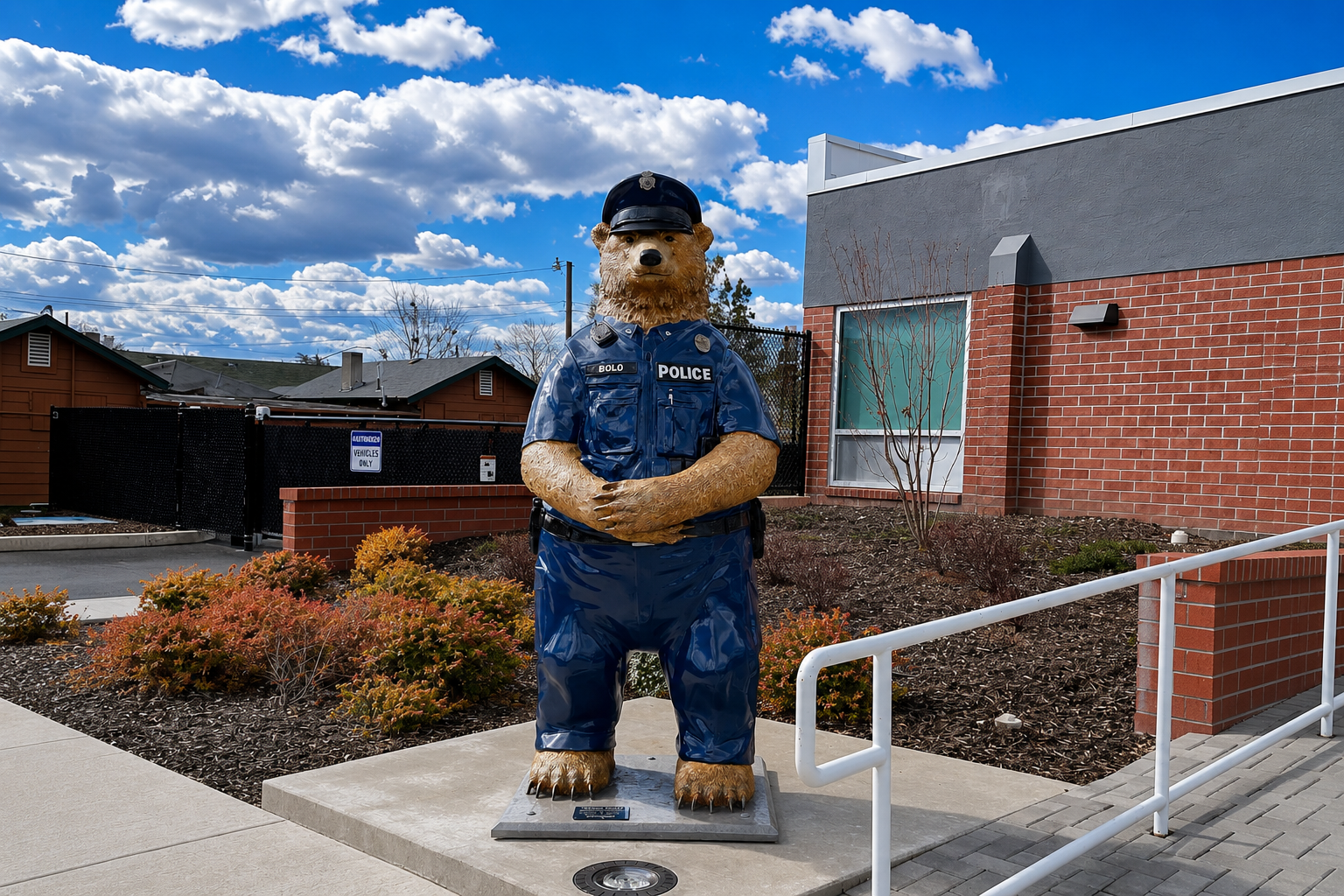
On Monday, August 17, the Grants Pass City Council had a workshop discussion dealing with the potential of refinancing the outstanding Police Headquarters building loan. In my opinion, the Council made the right decision to start moving forward with a refinancing process. However, there is a way to do this refinancing that wasn’t presented as an option to the City Council, one that could save the City at least $345,000 compared to the option selected.
As for background, around 8 years ago the City Police and the Josephine County 911 Agency (operated by City of Grants Pass staff) moved into a new headquarters building after leasing space in the County Courthouse for decades. Everyone agreed the new police space was needed for a variety of reasons. Instead of building a new building from the ground up, the City purchased the building between 6th and 7th Streets not far from City Hall that used to house the local State DHS Office and remodeled the building for Police and 911 use.
Between the property acquisition and remodeling cost, the total project cost ended up being approximately $9.4 million in the end. By using both some internal funds and a bank loan of $6 million, the City was able to do the project without increasing property tax rates. In my opinion, this was a win for both the city and for taxpayers.
The most inexpensive external financing source for the $6 million in project funds needed was a full faith and bond/loan structure directly with a large bank. Interest rates were near all-time lows in recent decades at the time, and the City borrowed the $6 million at a very attractive rate of 2.5% during the 10-year term of the loan. I was the Finance Director for the City at the time, and if I had to go back and do it all again, I would recommend the exact same structure as was advised back then.
Doing a direct loan placement with a bank can sometimes be a cheaper option for a municipality than a public bond offering when smaller amounts are borrowed. This is because there are a lot of upfront finance and legal costs to do a public bond offering. However, a commercial loan directly with a bank such as this is usually limited to no more than 10 years in term.
Therefore, in order to limit the impact on the Police budget we set up the loan/bond repayments so the first seven years would be about $507,000 per year, with larger balloon payments in years 8-10. The original intent was to refinance the obligation around year eight, if other resources had not been identified to pay off the remainder of the loan in full. So, this refinancing discussion is right on time as we approach the first of three balloon payments in the summer of 2027.
The intent when we set up this loan structure close to 7 years ago, other than limiting the budget impact on the Police and General Fund budget, was to use internal resources to effectively refinance the balloon payments part of the loan starting in 2027 if the City was not in a position to pay off the loan or make the balloon payments as scheduled.
Using internal funds, even if it is in the form of an interfund loan from one City fund to another City fund, is usually the most inexpensive option as compared to seeking external financing sources. Except an internal loan wasn’t even given to the City Council as an option for this refinancing process. And it’s not clear why this was not provided as an option.
The City Council was given an option of extending the loan for 8 more years from this year, 10 more years, or 15 more years. But the interest rates and payment schedules shown were all projected rates for external finance sources and city staff would seek competitive proposals from banks to refinance the remainder of the $3.3 million loan that is outstanding today.
While a couple council members inquired about the possibility of just using the City’s General Fund (where the Police budget resides) to either pay off the loan early or to just make the balloon payments as they come up over the next three years, doing an internal interfund loan was not discussed as an option. By my rough calculations, doing an interfund loan to refinance this obligation would save the City and the Police budget at least $345,000 in interest payments over the extended term of the new loan.
This savings is because we can borrow internally at a lower interest rate than external financing sources and we can continue to pay the scheduled balloon payments on the existing loan since the existing loan is accruing interest at such a low rate. The $3.3 million outstanding today is only accruing interest expenses at a rate of 2.5%, and because we’re in a higher interest rate environment today the City earns almost 4% on its total cash/investment balances in all City funds. It doesn’t make sense to pay off a 2.5% loan when you’re earning close to 4% on your cash in the bank.
The proposed 8-year new payoff schedule was projected to have an interest rate cost of 4.85%. The 10-year term had a projected cost of 4.95%, while the 15-year term has a projected cost of 5.15% and could be used to lower the annual debt payments. Like using a loan to buy a house or a car, the longer the term the lower the payments are but usually the higher the interest rate.
If you look at the monthly investment report in the City Council meeting packet for August 19, you’ll see the City currently has well over $100 million in the bank between all funds. Not all these funds are legally or financially eligible to provide an internal loan, but an internal loan to the General Fund to refinance this obligation could be made from certain internal funds.
As one example, the City’s Equipment Replacement Fund has close to $9 million in it according to the last quarterly financial report, and this could be a source of an internal fund loan. The Equipment Replacement Fund saves money to replace all City vehicles and large equipment such as the Fire Engines. Internal borrowings from this fund wouldn’t deprive the fund from earning interest, as interfund loans are usually structured so the interest cost is the same cost as the interest rate the City earns on cash balances in the investment portfolio.
If the Police budget keeps paying approximately $507,000 per year towards paying down this obligation as it has in recent years, and we assume balloon payments are made as scheduled in coming years and the General Fund borrows from another fund in each of the next three years to make up the difference, the total interest savings would be at least $345,000 as compared to the 8-year refinance option with an external financing source. And the total debt amount can be paid back almost two years earlier than if the City refinanced the entire remaining loan at external market rates today.
In my opinion, an interfund loan is a clear winner in this case, and the Grants Pass City Council should revisit this refinancing discussion before the shopping for an external finance source begins.