


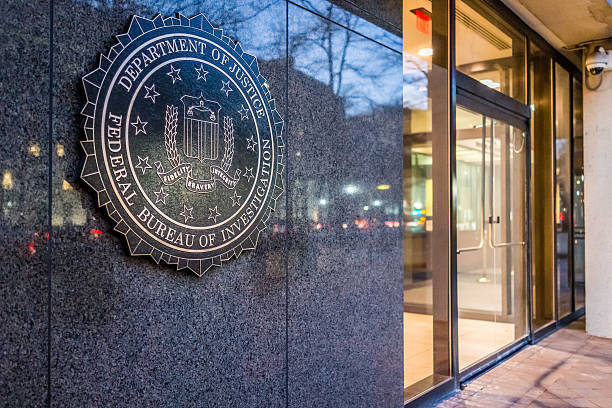
A federal judge has blocked the Trump administration from relocating FBI headquarters to the Ronald Reagan Building in Washington, halting an effort to overturn a years-long federal selection process that had designated Greenbelt, Maryland, as the future home of the nation’s premier federal law enforcement agency.
The decision, issued Monday by U.S. District Judge Theodore D. Chuang in Maryland, prevents the administration from moving FBI headquarters operations into the Reagan Building, renovating the property for that purpose or redirecting congressionally appropriated money toward the Washington location. The ruling places Greenbelt back at the center of a headquarters project that has moved through multiple presidential administrations, congressional funding decisions and an increasingly complicated dispute over federal spending authority.
The controversy involves far more than where FBI employees will eventually report to work. At its center is a fundamental question of federal governance involving the authority of Congress to establish conditions for spending public money and the authority of a presidential administration to change the direction of a major federal project after those conditions have been established.
The FBI has spent years seeking a replacement for the aging J. Edgar Hoover Building on Pennsylvania Avenue in Washington. The headquarters facility, completed in the 1970s, has long been considered inadequate for the bureau’s modern security, technology and operational requirements. Efforts to replace it eventually produced three finalists for a new headquarters: Greenbelt and Landover in Maryland and Springfield, Virginia.
Congress subsequently enacted measures requiring the General Services Administration, which manages much of the federal government’s real estate portfolio, to select the headquarters from those locations. Following an extensive evaluation, GSA announced Greenbelt as the winning site in November 2023 during the Biden administration.
The decision carried substantial economic implications for Prince George’s County. Local officials have projected that the headquarters could bring approximately 7,500 jobs and billions of dollars in investment to the area. Maryland and local governments also committed significant resources toward infrastructure and development associated with the federal project.
The direction changed after President Donald Trump returned to office.
In July 2025, the FBI and GSA announced that the bureau would instead relocate to the Ronald Reagan Building and International Trade Center in Washington. The large federally owned complex sits only a short distance from the existing Hoover Building and had available space that administration officials believed could be converted for FBI operations.
Federal officials presented the Washington proposal primarily as a cost-saving alternative. Rather than constructing an entirely new headquarters campus in Maryland, the government could renovate an existing federal property while avoiding continuing maintenance expenses at the deteriorating Hoover Building. Federal estimates cited during the dispute placed renovation of the Reagan Building at approximately $1.6 billion, compared with an estimated $2.4 billion for new construction under a long-term cost analysis.
The administration also moved toward redirecting hundreds of millions of dollars associated with the headquarters project toward the Reagan Building plan. Reuters reported that approximately $555 million was at issue in the attempted funding transfer, while Maryland’s broader legal challenge involved more than $1 billion in federal funding that state officials maintained had been designated for the Greenbelt project.
Maryland and Prince George’s County filed suit in November 2025, arguing that the executive branch could not discard the congressionally established selection process and move the headquarters to a location outside the three sites Congress had authorized for consideration. Their case also challenged the administration’s authority to redirect money Congress had appropriated for the headquarters project.
Chuang agreed with the challengers, concluding that the administration’s actions were inconsistent with federal law. His ruling found that congressional directives establishing the site-selection framework did not provide authority for the executive branch to cancel the selected location and substitute an unauthorized site.
The court also addressed restrictions enacted by Congress concerning federal money for the Reagan Building. Appropriations language prohibited previously allocated funding from being used for renovation of the building for FBI headquarters purposes until the bureau submitted required architectural and building plans. According to the court, those requirements had not been satisfied.
The resulting injunction prevents the administration from proceeding with the Reagan Building relocation under its current plan and blocks the use of disputed federal funds for that purpose.
The FBI has opposed the ruling and maintains that converting an existing federal building represents a more economical approach than constructing a new headquarters. Following the decision, the bureau criticized judicial interference with the administration’s efforts to reduce federal costs and indicated that it would continue pursuing what it considers the most efficient solution for FBI operations and taxpayers.
Maryland officials have taken the opposite position, maintaining that Greenbelt prevailed through a competitive federal process and that substantial state and local planning proceeded in reliance upon that decision. The case therefore places competing considerations of cost, executive management and congressional control of federal spending within the same legal dispute.
The ruling does not mean construction in Greenbelt will immediately begin. Additional legal and administrative proceedings remain, and the federal government may challenge the decision through the appellate courts. Chuang ordered the parties to submit a joint status report outlining proposed next steps in the litigation.
For the FBI, the decision extends a headquarters search that has persisted for well over a decade while employees continue working in the Hoover Building and other facilities throughout the Washington region. For Congress and the executive branch, the dispute now carries consequences beyond federal real estate, testing how far an administration can go in changing a major project when Congress has already established the locations, funding and conditions governing its execution.
Until that legal question moves further through the courts or Congress changes the underlying requirements, the Reagan Building plan is blocked and Greenbelt remains the federally selected site for the FBI headquarters project.