


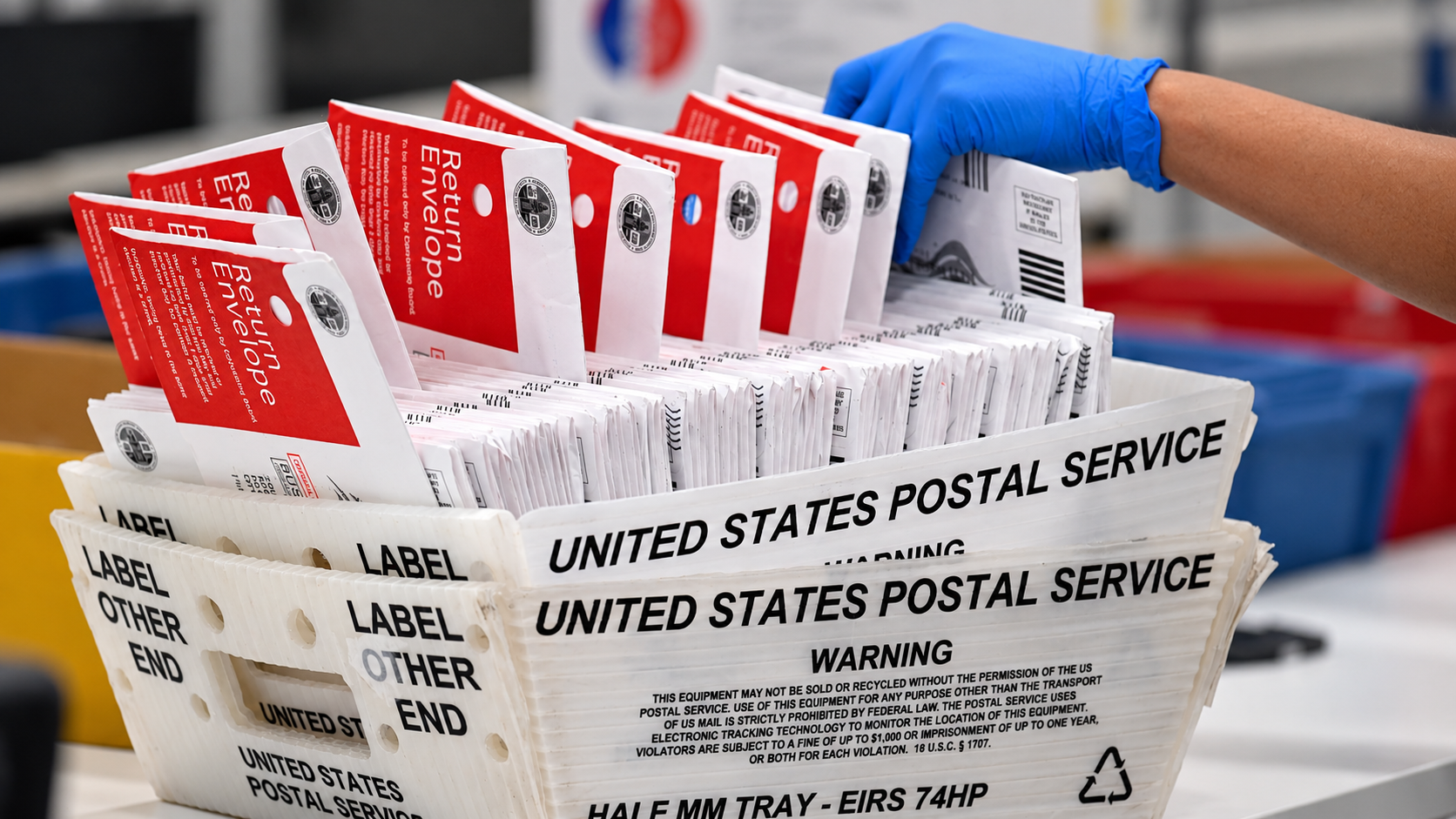
Oregon voters will cast their ballots under the state’s established vote-by-mail system this November after the U.S. Supreme Court declined to allow new federal postal requirements to take effect before the 2026 midterm elections.
The court’s action leaves in place a lower-court order blocking a U.S. Postal Service rule that would have required states to comply with new ballot-envelope and voter-information requirements before ballots could move through the mail. The proposed regulations emerged from a March executive order issued by President Donald Trump and became the subject of litigation involving Oregon and other states.
Under the disputed postal rule, states would have faced additional requirements governing ballot-envelope designs and the submission of voter information. Oregon officials challenged the federal action in court, arguing that the requirements exceeded Postal Service authority, conflicted with state responsibility for administering elections and threatened to disrupt election preparations shortly before ballots were scheduled for distribution.
Federal courts blocked implementation of the requirements while the litigation proceeded. The Trump administration subsequently asked the Supreme Court to permit the rules to take effect for the November election. The justices declined that request, preserving the lower-court injunction and allowing existing mail-ballot procedures to continue through the current election cycle.
For Oregon, the ruling means voters and county election offices will proceed under the system already established for the November election rather than modifying ballot production, mailing procedures and voter records shortly before ballots are distributed.
Oregon has conducted statewide elections primarily by mail for decades. Registered voters receive ballots at their mailing addresses and may return completed ballots through the Postal Service or at official ballot drop sites maintained throughout the state. County election offices remain responsible for processing ballots and administering local election operations under state law.
Secretary of State Tobias Read has advised voters who choose the Postal Service to return their ballots at least seven days before Election Day. Voters may also use official ballot drop boxes, including those operated by county election offices and at designated locations throughout communities across Oregon.
The decision carries particular practical significance for Oregon because the state does not merely offer mail voting as an alternative to traditional polling places. Ballots are routinely mailed to registered voters statewide, making postal handling an integral part of election administration from Southern Oregon communities to the Portland metropolitan area and the state’s rural counties.
Oregon Attorney General Dan Rayfield joined a multistate legal challenge against the federal requirements in August. The coalition argued that the Postal Service regulations conflicted with federal law and improperly inserted the federal government into election procedures traditionally administered by states. A federal court initially issued temporary relief before a preliminary injunction prevented the requirements from taking effect.
Senate Majority Leader Kayse Jama also responded to the Supreme Court action, pointing to Oregon’s history with vote-by-mail and indicating that the Legislature would continue supporting state legal efforts involving election administration.
The Supreme Court’s order addresses whether the disputed requirements can be implemented during the 2026 election period; it does not necessarily end the broader litigation over federal authority and mail-ballot procedures. The underlying legal questions may continue through the courts after the November election.
For Oregon voters, the immediate election procedure is settled. Ballots will be distributed and returned under Oregon’s existing vote-by-mail framework, without the additional federal postal requirements that were challenged in court.