


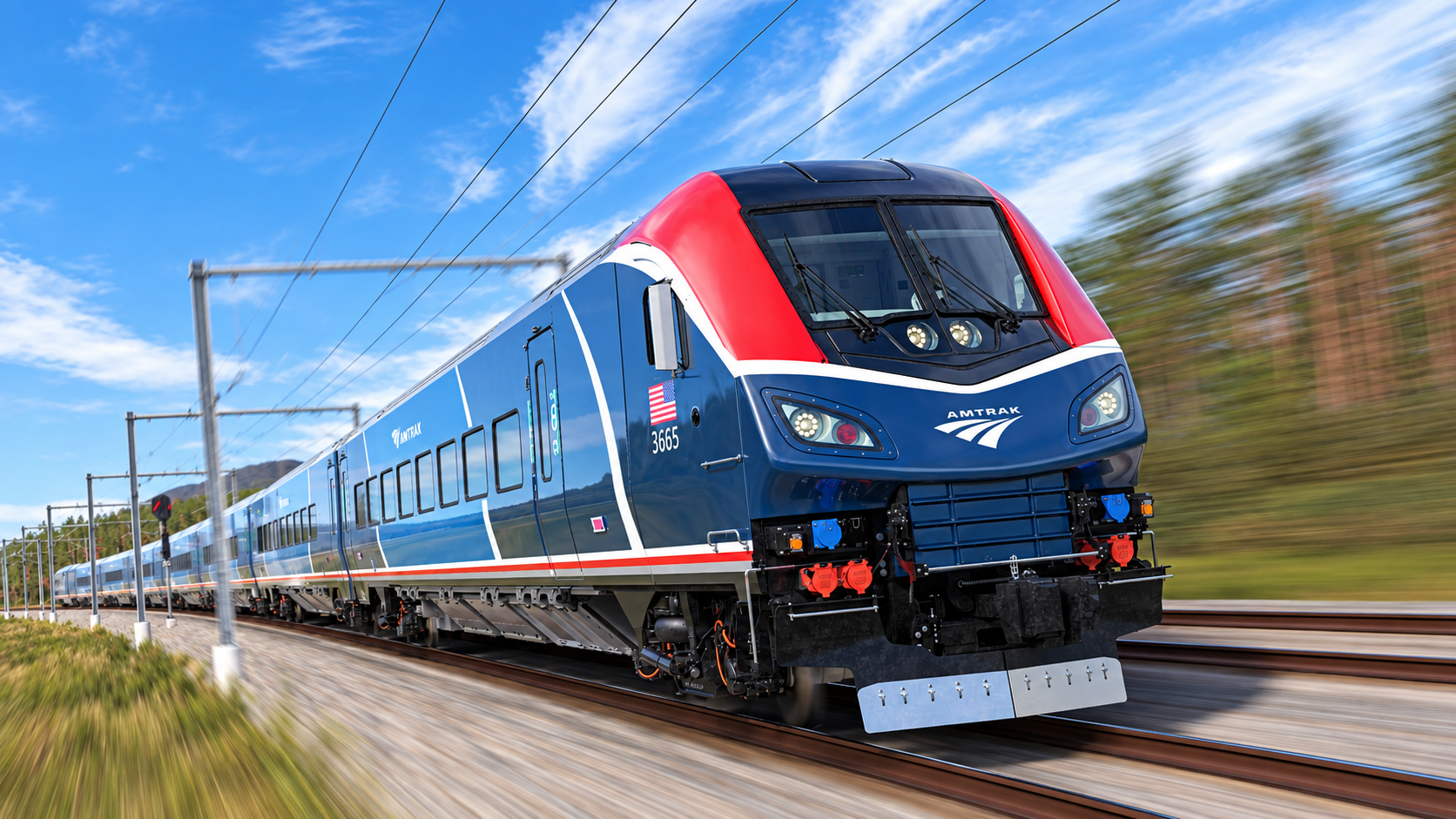
Oregon rail passengers will board Amtrak’s newest trains beginning September 30, when the Airo fleet makes its national debut between Eugene, Portland, Seattle and Vancouver, British Columbia. The launch will bring new equipment, additional seating and a more comfortable trip to the Cascades corridor, but the service will travel no farther south than Eugene.
Two Airo trains will make four daily trips during the initial rollout. One will operate between Seattle and Eugene, while the other will connect Seattle and Vancouver. Additional trains will enter service through early 2027 until Amtrak completes the replacement of its existing Cascades fleet.
Passengers will find more than 300 seats aboard each train, along with larger windows, adjustable headrests, improved lighting, complimentary Wi-Fi and power connections at every seat. The trains also include automated boarding steps, accessible seating, more spacious restrooms and updated digital displays carrying schedule and travel information.
The September launch places Oregon and Washington at the front of Amtrak’s nationwide equipment replacement program. The Cascades corridor will become the first route in the country to carry passengers aboard the Airo fleet, ahead of its planned introduction on routes in the Northeast.
Oregon helps finance two daily Cascades round trips between Eugene and Portland. Those trains continue north through Washington under a partnership involving Amtrak and the transportation departments of both states. The service connects many of the Northwest’s largest cities while offering travelers an alternative to Interstate 5 and short-distance air travel.
That alternative still disappears at Eugene.
Grants Pass and Medford will receive no direct service from the new fleet, and Amtrak has announced no timetable for extending the Cascades corridor into the Rogue Valley. Southern Oregon passengers traveling north must first reach Eugene, approximately 140 highway miles from Grants Pass and about 165 miles from Medford.
The other option is Klamath Falls, where passengers can board Amtrak’s Coast Starlight between Seattle and Los Angeles. The Southwest POINT bus connects Medford with the Klamath Falls station, but the arrangement requires Rogue Valley travelers to cross the Cascades before beginning the rail portion of their trip.
Passenger trains have not directly served Medford or Grants Pass since the 1950s. Although freight tracks still pass through the region, decades of population growth in Jackson and Josephine counties have not produced a return of intercity rail.
Oregon transportation studies have previously considered a route south of Eugene with stations in Roseburg, Grants Pass, Medford and Ashland. None of those proposals has developed into a financed project. No active state or federal program currently provides money or a construction schedule for restoring Rogue Valley service.
Any future route would require Oregon officials to establish expected ridership, negotiate access to privately controlled railroad tracks and determine whether bridges, signals, stations and sections of track could accommodate dependable passenger schedules. State and federal money would then be needed for construction and continuing operations.
The Airo debut will deliver a visible improvement for passengers traveling through Eugene, Albany, Salem and Portland. It will also expose the geographic boundary of Oregon’s passenger-rail investment. Travelers along the northern Interstate 5 corridor are preparing to board the country’s newest Amtrak equipment, while residents of Grants Pass and Medford remain hours from the nearest practical train station.