


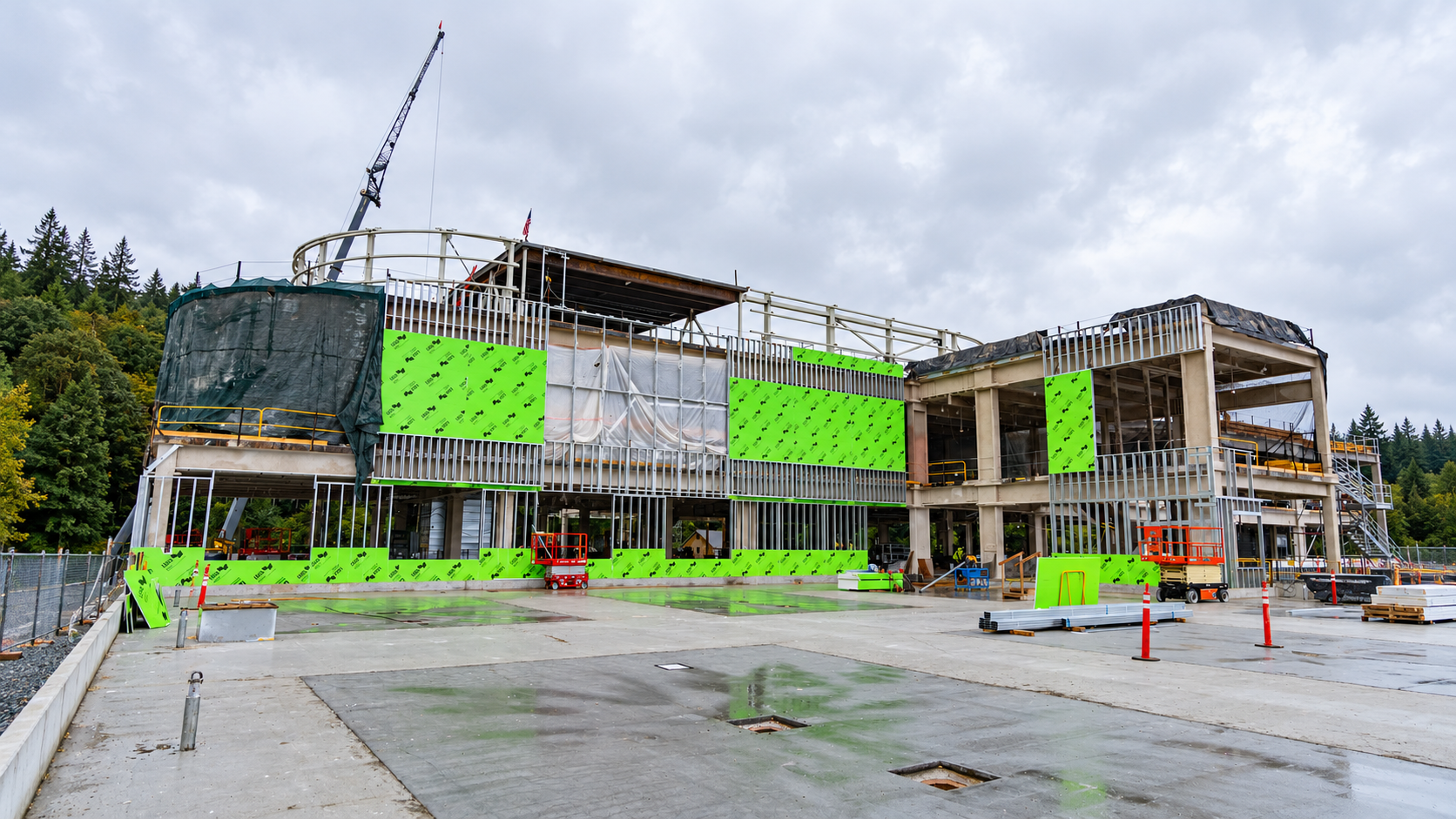
Federal officials have released $14,567,624 for Columbia Memorial Hospital’s expansion, restoring a major source of financing to a $300 million project already under construction on Oregon’s north coast.
The money will support features intended to help the Astoria hospital withstand an earthquake and tsunami, including a vertical evacuation structure designed to shelter as many as 1,900 patients, employees and community members. The federal grant had been awarded through the Federal Emergency Management Agency’s Building Resilient Infrastructure and Communities program, but became inaccessible after the program was suspended in 2025.
Construction began in October 2024. By this summer, the hospital was continuing work while seeking a decision on the grant. Its release resolves a financing question for the disaster-resistant portion of a project that extends well beyond emergency shelter.
Columbia Memorial plans approximately 180,000 square feet of new construction, with a larger emergency department, additional operating rooms, expanded imaging and radiology services, and more space for outpatient care. The hospital expects the first phase of the expansion to be completed in late 2027, followed by remodeling and demolition work scheduled through late 2028.
The project’s $300 million budget draws on debt, hospital reserves, donations and grants. Oregon has also allocated $6 million toward its disaster-resistant features. Columbia Memorial says it anticipates approximately 50 new jobs when the expansion opens, with further hiring possible as services grow. Those positions are the hospital’s projection, separate from employment generated during construction.
Although the building will substantially increase the hospital’s footprint, Columbia Memorial plans to remain a 25-bed hospital. The additional space is intended in part for emergency treatment, surgery, observation and other services that do not require a longer inpatient stay. The 1,900-person figure describes the planned evacuation refuge, not hospital bed capacity.
Plans call for a deep-pile foundation and for generators and other critical systems to be placed above potential floodwaters. The hospital also plans roof access for evacuation. Together, those features are intended to give the facility a better chance of continuing operations after a major disaster while providing elevated shelter for people nearby.
The federal award had remained unresolved even as construction proceeded. Oregon challenged the suspension of FEMA’s grant program in court, and state and federal officials pressed for the hospital’s funding to be released. The hospital said in August that it was still providing FEMA with construction, budget and scheduling information related to the grant.