


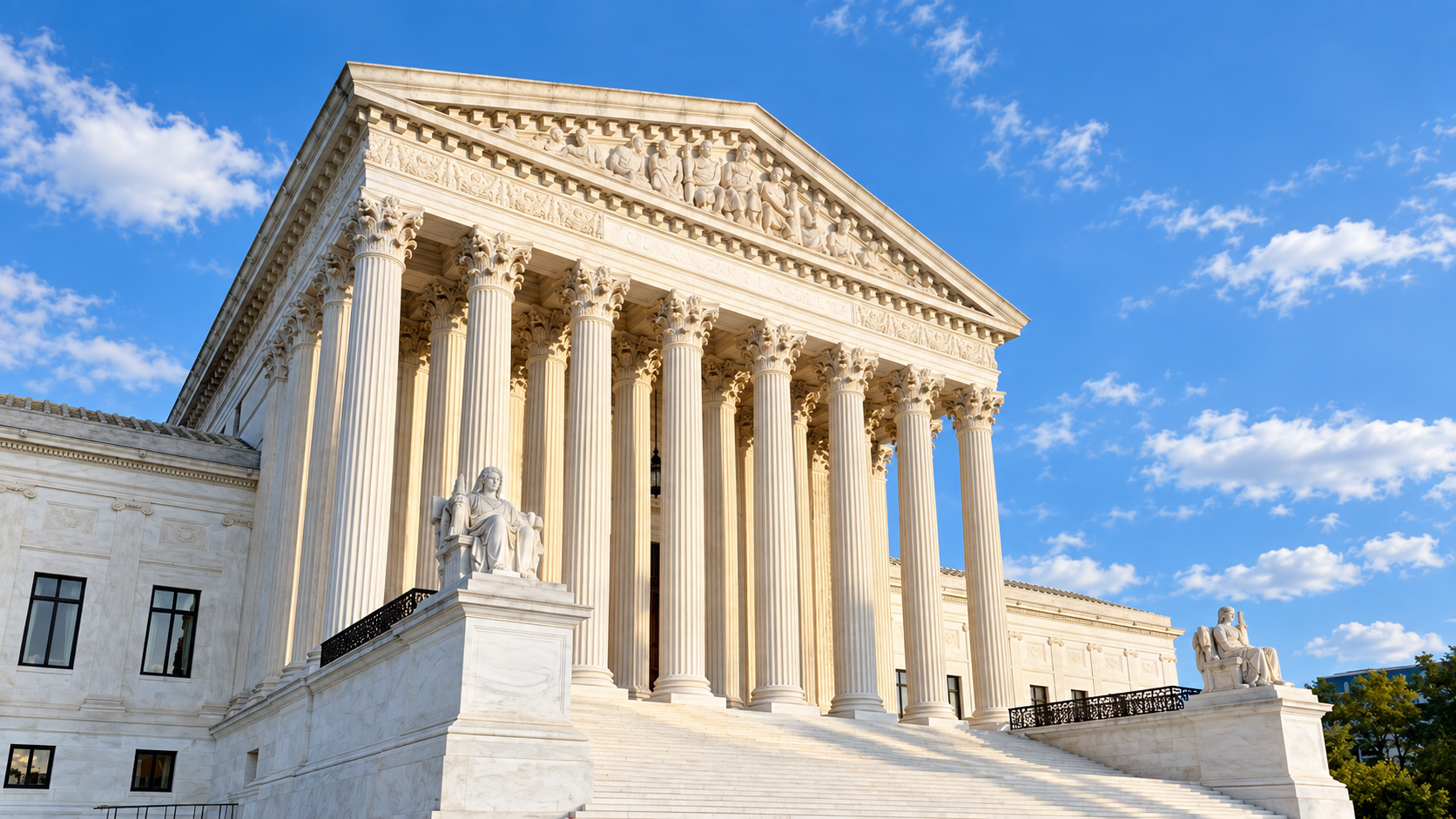
The U.S. Supreme Court opened its new term Monday with a climate liability dispute that could affect Multnomah County’s multibillion-dollar lawsuit against fossil fuel companies, placing Oregon within a national court fight over financial responsibility for damage attributed to climate change.
The justices’ agenda also includes challenges to restrictions on semiautomatic firearms, conditions attached to public funding for religious preschools and federal immigration detention and deportation practices. Although the cases originate outside Oregon, their outcomes could govern disputes involving the state’s firearm regulations, early education programs and residents in federal immigration custody.
Multnomah County is seeking compensation for damage from the 2021 Pacific Northwest heat dome. Its lawsuit requests $50 million for past damages, $1.5 billion for future damages and an estimated $50 billion fund to prepare public health services and infrastructure for future extreme heat. The county must still establish its claims in court; the requested amounts have not been awarded.
The Supreme Court’s opening climate case comes from Colorado, where the city and county of Boulder sued ExxonMobil and Suncor Energy to recover costs they attribute to climate change. The local governments contend that the companies should bear financial responsibility for damage associated with extreme weather.
ExxonMobil and Suncor argue that federal law prevents those claims from proceeding under state law. Their appeal, Suncor Energy (U.S.A.) Inc. v. County Commissioners of Boulder County, challenges a Colorado ruling that allowed the lawsuit to continue. The Trump administration supports the companies’ position.
The case was scheduled for arguments October 5, the first day of the new term. The justices also directed the parties to address whether the Supreme Court has jurisdiction to hear the appeal, a question that could determine whether they reach the broader conflict over climate liability.
Multnomah County’s lawsuit puts an Oregon government among those pursuing fossil fuel companies through state courts. A broad decision barring that approach could undermine its claims. A ruling allowing Boulder’s lawsuit to proceed would preserve a route for comparable litigation, while leaving questions of liability and compensation for further proceedings.
For Southern Oregon communities facing wildfire, smoke and extreme heat, the dispute concerns the legal options governments might use to recover alleged climate damage costs. Any recovery would depend on a government bringing a claim, establishing its legal basis and proving the connection between the defendants’ conduct and the damage alleged.
Firearm restrictions will reach the justices later this year in Viramontes v. Cook County, Illinois. The court accepted the challenge, consolidated it with another case and scheduled arguments for December 2.
The challengers contest prohibitions on possessing AR-15 rifles and similar semiautomatic firearms, arguing that the weapons are commonly owned and protected by the Second Amendment. Governments defending such bans maintain that their use in mass shootings supports restrictions intended to reduce gun violence.
Oregon’s Measure 114 involves a different combination of provisions, including firearm purchase permits and restrictions on magazines holding more than 10 rounds. The Supreme Court’s treatment of semiautomatic firearms could influence how judges evaluate related restrictions, including Oregon’s magazine limits.
The reach of that decision will depend on the court’s reasoning. The pending case has not overturned Measure 114 or resolved the separate constitutional questions surrounding its permit requirements.
Public preschool funding will come before the court November 3 in St. Mary Catholic Parish v. Roy. Religious preschools are challenging their exclusion from Colorado’s taxpayer-funded program over faith-based admissions practices that conflict with the state’s requirements.
The schools contend that Colorado’s conditions infringe on religious exercise. Colorado maintains that religious providers are welcome to participate if they comply with nondiscrimination requirements, including protections for children from LGBTQ families.
Oregon also finances early education through participating providers. Preschool Promise offers publicly funded preschool, while Baby Promise expressly requires nondiscriminatory enrollment. A decision limiting the conditions states may impose on religious providers could become the basis for challenges to comparable requirements in Oregon. Its application would depend on the particular funding program and the terms of the ruling.
Federal immigration practices form another major part of the court’s agenda, with disputes involving deportation to countries other than a person’s homeland and detention without access to a bond hearing.
The administration is defending its authority to carry out those removals and hold certain immigrants without bond hearings. Challengers seek opportunities to object to removal destinations and obtain review of continued custody.
Those questions could directly affect Oregon residents who enter federal immigration detention. The decisions could determine whether an affected person receives an opportunity to challenge deportation to a particular country or request release while immigration proceedings continue, with consequences for families awaiting the resolution of those cases.