


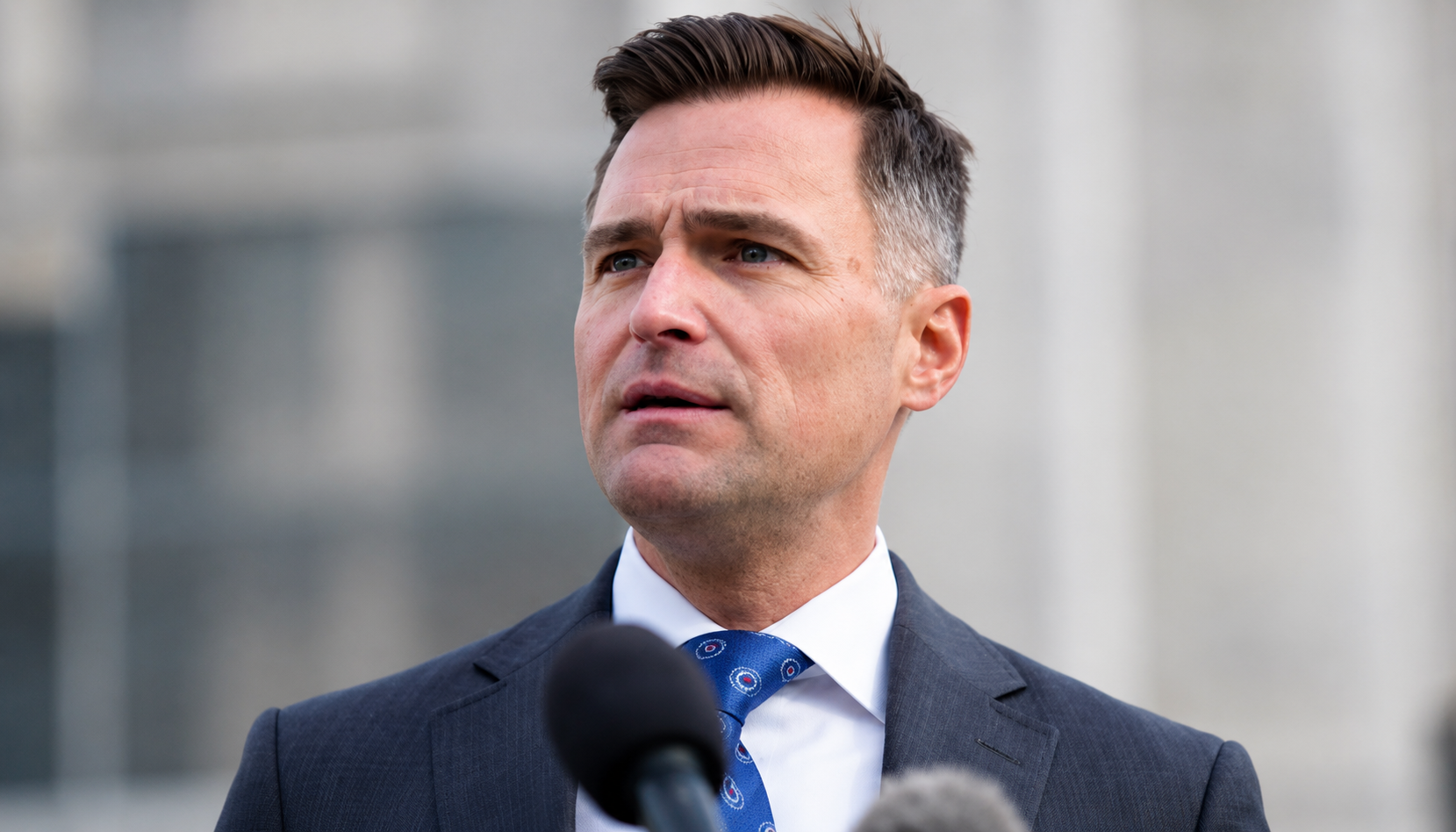
Oregon Attorney General Dan Rayfield has joined New York Attorney General Letitia James in leading a multistate legal challenge against the U.S. Department of Justice over its attempt to prevent approximately 20,000 disputed California mail-in ballots from being counted before voters’ citizenship can be verified. The dispute reached a significant turning point Friday, October 30, when a federal appeals court rejected the Justice Department’s emergency request, allowing California to continue processing ballots under its established election procedures just four days before the November 3 general election.
The decision by the U.S. Court of Appeals for the Ninth Circuit represents the latest development in a legal confrontation involving federal election enforcement, state constitutional authority, voter eligibility and the procedures used to administer elections. Although the disputed ballots are in California, Oregon’s participation reflects the broader implications of a federal court ruling that could influence election administration in states across the country.
Rayfield and James led a coalition of attorneys general representing 20 jurisdictions, including the District of Columbia, in opposing the federal government’s emergency request. Their latest filing followed an earlier October 22 effort involving 22 jurisdictions that supported California’s authority to administer its elections without the additional ballot-separation requirements sought by federal officials.
The controversy began October 15, when the Justice Department filed a federal lawsuit against California after federal immigration and homeland security agencies identified approximately 20,000 registered voters whom officials believed could be noncitizens. Federal authorities sought to have ballots associated with those individuals separated from other ballots until their citizenship status could be established.
The federal government’s position rests on existing federal law prohibiting noncitizens from voting in federal elections. Under 18 U.S.C. Section 611, noncitizens generally are prohibited from participating in elections involving federal offices, subject to limited statutory exceptions. Justice Department officials contend that allowing ballots from potentially ineligible individuals to enter the regular counting process could prevent election administrators from identifying and excluding unlawful votes.
Federal officials developed the disputed list using voter-registration information examined by U.S. Citizenship and Immigration Services and Homeland Security Investigations. The government provided California election officials with the names on October 12 and requested that the corresponding ballots be preserved separately while eligibility determinations were completed.
California officials declined the request, challenging both the reliability of the information and the practicality of changing ballot-processing procedures after voting had begun. The Justice Department subsequently sought judicial intervention, arguing that federal law authorized action to prevent potentially unlawful ballots from being counted.
The lawsuit does not establish that 20,000 noncitizens voted or that 20,000 fraudulent ballots were submitted. The individuals identified by federal authorities were registered voters whose citizenship status had been questioned through the government’s screening process. Whether those individuals were ineligible, whether they received ballots and whether any actually voted are separate factual questions.
California Attorney General Rob Bonta and Secretary of State Shirley Weber opposed the federal government’s request, maintaining that the state’s existing election laws provide procedures for determining voter eligibility and addressing unlawful voting.
California officials also identified potential inaccuracies in the federal list. According to information released by Bonta’s office October 26, a preliminary review involving 200 names in Los Angeles County found that 38.9 percent had a United States birthplace listed in available records, while 71.2 percent had no voting history. More than half had registrations classified as canceled or inactive.
Those findings involved overlapping categories and did not independently resolve the citizenship status of every person identified. They did, however, become part of California’s challenge to the reliability of the federal information being used to justify the requested intervention.
Officials in Mendocino County also reported that the individuals appearing on the federal list provided to their county lived outside its jurisdiction, raising additional questions about the accuracy of the records and their usefulness for identifying potentially ineligible voters.
The federal government maintained that its concerns warranted additional verification before the disputed ballots could be counted. California countered that the proposed procedures could affect eligible voters and interfere with election operations already underway.
The dispute initially reached the Ninth Circuit on October 26, when the appellate court dismissed an emergency appeal because the federal district court had not yet ruled on the underlying request. Two days later, the district court denied the Justice Department’s application for a temporary restraining order.
Federal attorneys returned to the appellate court October 29, seeking an emergency injunction that would require California to separate the disputed ballots and establish a process for verifying citizenship before those votes could be included in election totals.
On Friday, October 30, a three-judge appellate panel rejected that request in a 2-1 decision.
Circuit Judges Mark J. Bennett and Gabriel P. Sanchez concluded that the Justice Department had not met the legal standard required for extraordinary judicial intervention during an election already in progress. The majority also found substantial constitutional questions surrounding the federal executive branch’s authority to require changes to state election procedures without specific congressional authorization.
The decision examined the Elections Clause of the United States Constitution, which assigns states responsibility for establishing the times, places and manner of congressional elections while giving Congress authority to alter those regulations through federal legislation.
The appellate majority determined that the Justice Department had not demonstrated that the federal prohibition against noncitizen voting authorized the particular ballot-processing requirements it sought to impose on California.
The judges also considered the practical consequences of attempting to identify and separate individual ballots after election officials had begun processing them.
California had already received millions of ballots, and election administrators had processed hundreds of thousands. Under established ballot-handling procedures, identifying information is separated from ballots to preserve voter secrecy. Once that separation occurs, election officials generally cannot reconnect an individual ballot to the voter who submitted it.
Requiring election administrators to locate and isolate ballots associated with thousands of names could therefore involve substantial changes to existing procedures, potentially affecting ballots submitted by eligible voters.
The majority concluded that the government had not established a workable method for carrying out its request without creating significant disruption to the election process.
Circuit Judge Patrick J. Bumatay dissented, taking a different position on the federal government’s enforcement authority and the proposed temporary separation of ballots.
Bumatay maintained that preserving the disputed ballots separately while citizenship verification occurred would not necessarily invalidate legitimate votes. His dissent emphasized the federal government’s responsibility to enforce laws prohibiting unlawful participation in federal elections and argued that the requested procedure could protect legally cast ballots from being affected by ineligible voting.
The disagreement among the judges illustrates the competing legal questions involved in the case. Federal authorities are seeking enforcement of citizenship requirements established by Congress, while California and the supporting states are challenging whether the executive branch can require election administrators to adopt additional procedures during an ongoing election.
Another federal law, the National Voter Registration Act, also figures prominently in the dispute. The statute generally restricts systematic voter-registration removals during the 90 days preceding a federal election, although it does not prohibit every individualized eligibility investigation or all removals authorized under federal law.
The restriction is intended to limit large-scale registration changes shortly before elections, when affected voters may have insufficient time to resolve errors. Federal officials and the opposing states disagree over how those protections apply to the ballot-separation measures sought in California.
For Oregon, the litigation carries particular relevance because the state conducts its elections primarily through vote-by-mail procedures.
Oregon’s election system depends on established requirements for voter registration, ballot issuance, signature verification, ballot processing and the preservation of voter privacy. Election officials must administer those procedures while complying with federal voting protections and restrictions on participation by ineligible individuals.
A federal court ruling authorizing additional executive-branch requirements for identifying and separating ballots could have implications for future election disputes involving Oregon and other states that rely extensively on mailed ballots.
Rayfield’s involvement does not mean that Oregon’s election results or approximately 20,000 Oregon ballots are being challenged. The litigation concerns California’s voter-registration records and the federal government’s attempt to impose additional procedures on that state’s election administration.
Oregon’s participation instead concerns the constitutional and statutory boundaries governing federal involvement in state-run elections.
The case also arrives during the final days of voting in Oregon, where election officials have advised voters that ballots mailed close to Election Day may not arrive in time to qualify under applicable postmark requirements. Voters returning ballots during the final days before November 3 can use official ballot drop boxes to ensure their ballots are received before the state’s 8 p.m. Election Day deadline.
Nothing in Friday’s Ninth Circuit decision changes Oregon’s established voting deadlines, ballot-return procedures or eligibility requirements.
The federal litigation is continuing against a broader national backdrop of disputes involving voter-registration records, citizenship verification and the federal government’s access to election information.
On Friday, a separate federal court ordered the government to provide its disputed California voter list to attorneys representing immigrant-rights and voting-rights organizations seeking to evaluate the information. Federal officials appealed that disclosure order.
Another Ninth Circuit panel also ordered certain federal investigations into alleged noncitizen voting in nine states to remain suspended until after Election Day. That separate proceeding involved concerns about the effect of federal investigations on lawful election participation.
Meanwhile, federal subpoenas issued to Los Angeles County election officials have sought records concerning communications and responses to the government’s allegations about potentially ineligible voters. Those proceedings are distinct from the emergency ballot-separation request rejected Friday.
The Justice Department has maintained that preventing unlawful voting is a federal enforcement responsibility. California and the states supporting its position maintain that election laws must be enforced through legally authorized procedures that also protect the voting rights of eligible citizens.
The Ninth Circuit’s October 30 ruling addresses the immediate request for emergency relief rather than providing a final determination of every legal issue in the underlying lawsuit. The federal government may continue pursuing its claims through additional proceedings, including a possible request for review by the United States Supreme Court.
For the November 3 election, the appellate ruling leaves California’s existing ballot-processing procedures in place while the broader litigation continues.
With voting already underway across the country, the dispute has brought Oregon and other states into a federal legal proceeding that extends beyond the eligibility of the approximately 20,000 individuals identified in California. The continuing case concerns the division of election authority between state governments, Congress and federal executive agencies, as well as the procedures courts may authorize when questions about voter eligibility arise immediately before an election.
As of Friday, the federal government’s emergency request has been denied, California election officials remain responsible for administering their election under existing state procedures, and the underlying legal questions remain before the federal judiciary.