


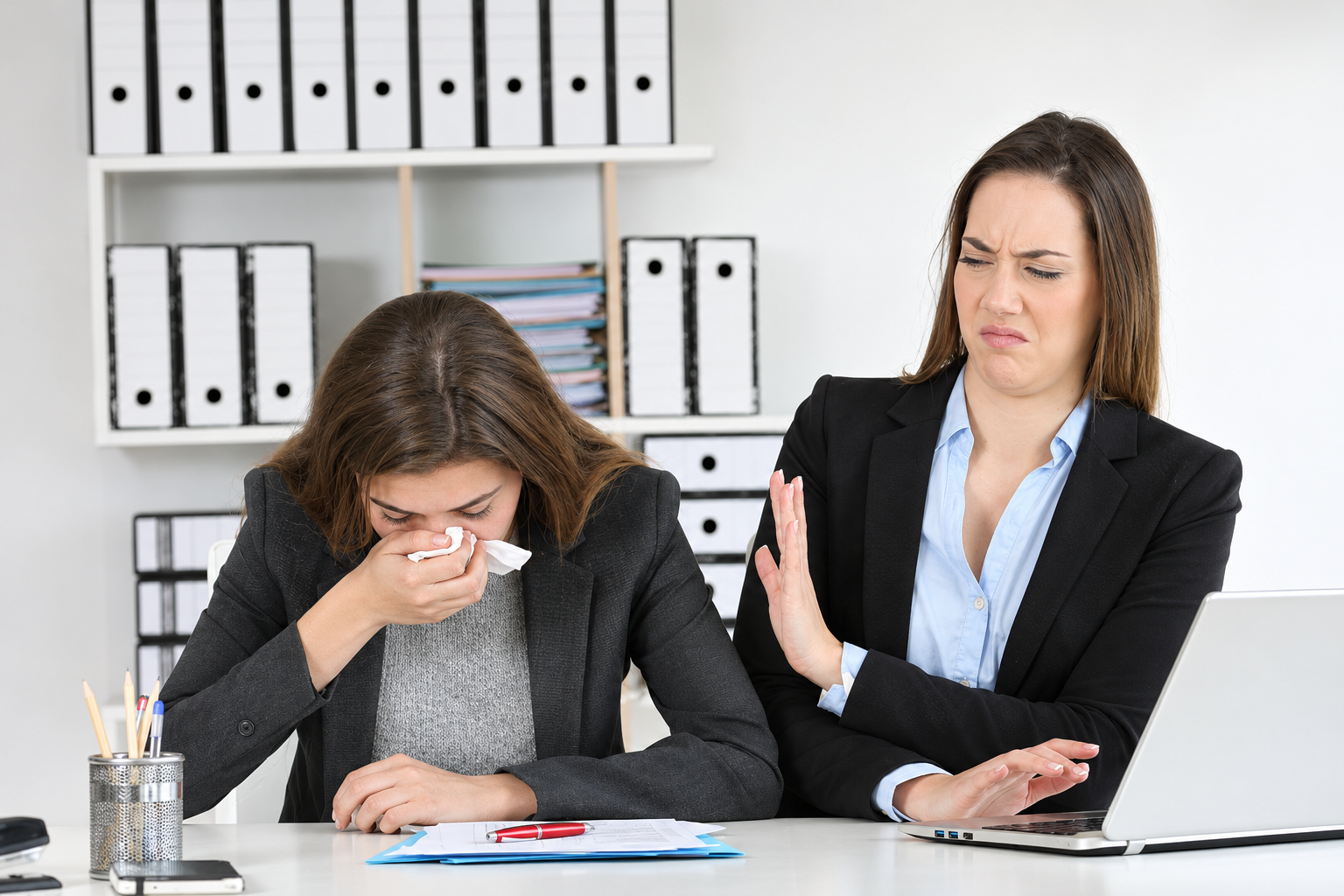
Going to work with a respiratory illness can expose an entire shift to infection, carrying a cough from a shared workspace into employees’ homes. Across Southern Oregon, cold and flu season brings that risk into offices, stores, restaurants and family gatherings, where one person’s manageable illness can become another person’s serious health complication.
Staying home when sick reduces those exposures. For employees covered by Oregon’s sick time law, taking qualifying leave also carries protections against workplace discipline, even when an absence leaves an employer short of staff.
The recommended precautions begin with new respiratory symptoms that are not explained by another cause. A cough, sore throat, runny nose, chills or unusual fatigue can signal an infection that warrants staying home and avoiding close contact with others. A fever is not required for someone to spread a respiratory virus.
For most community activities, the general return guidance calls for symptoms to have been improving overall for at least 24 hours, with no fever during that period and no use of fever-reducing medication. Taking medicine to bring down a temperature does not satisfy the fever-free requirement.
The ability to get through a workday offers no assurance that coworkers or customers will avoid infection. Symptoms resembling a common cold can also occur with influenza or COVID-19, and an illness that remains mild for one person may cause more serious problems for an older adult or someone with a weakened immune system.
At work, prompt notice allows a supervisor to arrange coverage before a shift begins. Employees who become ill can report their absence through the established procedure, request available sick time and update their employer when their anticipated return changes. Arriving sick before deciding to leave creates an exposure that an early call could help prevent.
Oregon law provides most employees with at least one hour of protected sick time for every 30 hours worked. Employers may generally limit use to 40 hours annually or provide the required amount upfront. Employees generally become eligible to use accrued sick time after 90 days of employment.
That leave must be paid when an employer has at least 10 employees in Oregon, or at least six if the employer has a Portland location. Covered employees at smaller businesses still receive protected sick time, although it may be unpaid. The law allows qualifying leave for an employee’s illness and for caring for a covered family member.
An employer’s objection to an absence does not cancel those protections. Employers cannot discipline employees for using sick time protected by Oregon law or count those protected absences against them under an attendance policy that leads to adverse action. Eligibility, available leave and applicable notice requirements still govern its use; calling in sick does not automatically make every absence protected.
Employees who believe an employer has interfered with their sick time rights can contact the Oregon Bureau of Labor and Industries.
Precautions continue after a person returns to work or other activities. For the next five days, a well-fitting mask, improved ventilation, physical distance and careful hygiene can reduce the remaining risk of transmission. Someone who feels better may still spread the virus.
If a fever develops again or symptoms worsen after returning, staying home again is recommended until the return criteria are met. People with suspected or confirmed influenza who never develop a fever are advised to stay home from work for at least five days after symptoms begin. Healthcare settings have separate infection-control guidance.
Outside the workplace, postponing a dinner, volunteer shift or visit with relatives can prevent similar exposures. Advance notice gives hosts time to adjust plans and allows others to avoid contact, particularly when a gathering includes older adults, young children or people with medical conditions that increase their risk.
When an essential trip cannot wait, wearing a well-fitting mask and limiting close contact can help protect people nearby. Calling a medical office before arriving with respiratory symptoms also gives staff an opportunity to provide arrival instructions.
Coughs and sneezes should be covered with a tissue or the bend of an elbow. Used tissues belong in the trash, followed by handwashing. Washing with soap and water for at least 20 seconds helps remove germs; sanitizer containing at least 60 percent alcohol is an alternative when soap and water are unavailable.
Shared counters, doorknobs and equipment need regular cleaning, while indoor air also requires attention. Fresh outdoor air, when conditions allow, and appropriate air filtration can help reduce exposure in occupied rooms. Employers can support those precautions by keeping soap, tissues and sanitizer available and clearly communicating procedures for reporting illness.
People at higher risk of severe illness should contact a healthcare professional promptly when symptoms develop, even if they initially seem mild. Treatments for influenza and COVID-19 work best when started early. Antibiotics do not treat the viruses responsible for ordinary colds. Trouble breathing or chest pain requires immediate medical attention.