


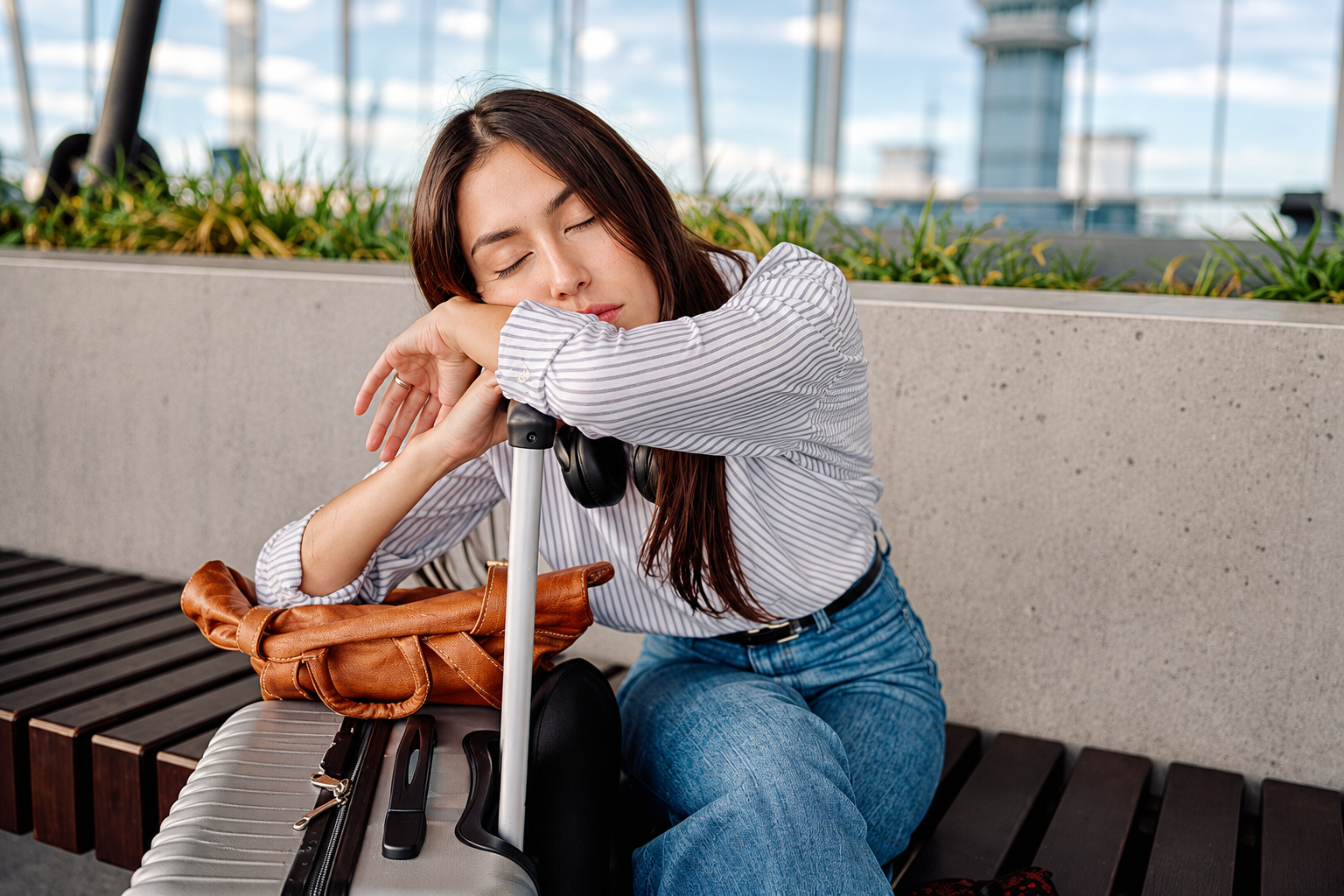
An unexpected night at an airport can cost a traveler sleep. Several days of canceled connections can consume the time reserved for recovering at home. For Southern Oregon residents returning from overseas, the result can be a difficult collision between a body still operating on another time zone and a workday beginning in just a few hours.
Restoring alertness takes more than unpacking and setting an alarm. The most useful measures involve protecting sleep, carefully timing daylight exposure and avoiding habits that carry exhaustion into another night. Recovery usually takes several days, and a disrupted itinerary can add lost sleep to the adjustment already required after crossing time zones.
Jet lag develops when the body’s internal clock falls out of alignment with local time. A traveler may feel ready for bed during the afternoon, then lie awake after midnight. Concentration can falter, appetite can shift, and irritability or stomach discomfort can accompany the fatigue.
Travel delays add another problem. Sleeping briefly in a terminal, waking repeatedly for announcements and boarding an overnight replacement flight can leave passengers short of restorative sleep. Delays alone do not cause jet lag when a journey stays within the same time zone, but the resulting exhaustion can make an international traveler’s symptoms harder to manage.
Recovery can begin while a passenger is still waiting for a confirmed flight. When an overnight delay offers a realistic opportunity for uninterrupted sleep, protecting that rest can reduce the sleep shortage carried home. An eye mask and earplugs can help during a flight or hotel stay. Once the return itinerary is established, arranging sleep and meals around the destination’s time can begin the transition.
For residents returning to Grants Pass, Medford, Ashland or surrounding communities, Pacific time becomes the schedule to rebuild. Regular meals, a consistent bedtime and a dependable waking time provide structure after days of changing departure boards. Repeatedly sleeping through the afternoon can make it harder to sleep when the next workday requires it.
A short nap can help bridge the first day. About 15 to 20 minutes may improve alertness without turning into an extended daytime sleep. Setting an alarm helps keep that rest brief. Late or lengthy naps can reduce the pressure to sleep at night, prolonging the pattern of daytime fatigue and nighttime wakefulness.
That approach has limits when someone is severely sleep deprived. Struggling to remain awake behind the wheel or during hazardous work requires stopping the activity and obtaining rest, even when doing so interrupts the planned schedule.
Daylight also influences recovery, although its timing deserves attention. Light sends a powerful signal to the body’s internal clock. Depending on when it arrives, it can shift sleep earlier or later.
Returning westward from Europe generally requires a different adjustment than returning eastward from destinations across the Pacific. The number of time zones crossed and the traveler’s existing sleep pattern also affect the best timing. For a large overseas time change, an individualized light schedule from a sleep clinician or a reputable jet lag planning tool can be more useful than assuming that early morning sunlight suits every itinerary.
As bedtime approaches, dimmer lighting and less exposure to bright screens help create conditions for sleep. A cool, quiet bedroom can reduce interruptions. Staying awake late to finish laundry, review work messages or catch up on household tasks cuts into the recovery time that remains after a delayed arrival.
Coffee can temporarily improve alertness, but its effects can last for hours. Keeping caffeine to the earlier part of the waking day reduces the chance that a late cup will interfere with bedtime. Repeated servings of coffee or energy drinks may leave a traveler exhausted yet unable to fall asleep.
Alcohol can complicate the same cycle. Although it may initially cause drowsiness, it can disrupt sleep later in the night. Using a drink to force sleep after a difficult journey can therefore leave the next morning no easier.
Regular water intake and manageable meals can address discomfort that accompanies travel. Smaller portions may be easier when appetite and digestion remain unsettled. Neither extra water nor a particular food resets the body clock immediately. A daytime walk offers gentle activity without adding the demands of a strenuous workout to an already tiring day.
Melatonin may help some travelers, but timing matters. Taking it at the wrong point in the body’s cycle can shift the clock in an unwanted direction. A physician or pharmacist can help determine whether it is appropriate, particularly for people taking other medications. Larger doses do not necessarily produce a better adjustment.
Sleep medicines also require care when work resumes quickly. Some can cause lingering drowsiness or impaired coordination, and a longer night of medicated sleep does not guarantee normal daytime performance. Trying an unfamiliar sleep aid immediately before an early commute can introduce another source of impairment.
When delays erase a planned recovery day, an adjusted work schedule may be worth discussing before the first shift. A later start or temporary change in duties can provide additional rest where an employer can accommodate it. Employees whose jobs involve driving, machinery or responsibility for others need to address significant sleepiness before beginning those tasks.
The trip home from the airport deserves the same attention. A passenger who cannot keep their eyes open should arrange a ride or a place to rest before continuing along Interstate 5 or another Southern Oregon highway.
Jet lag generally improves as sleep and local time come back into alignment. Symptoms that persist, worsen or continue to interfere substantially with work warrant medical evaluation. Repeated nights of adequate rest and a consistent schedule offer a more dependable recovery than trying to force a full return to normal in the first morning home.