


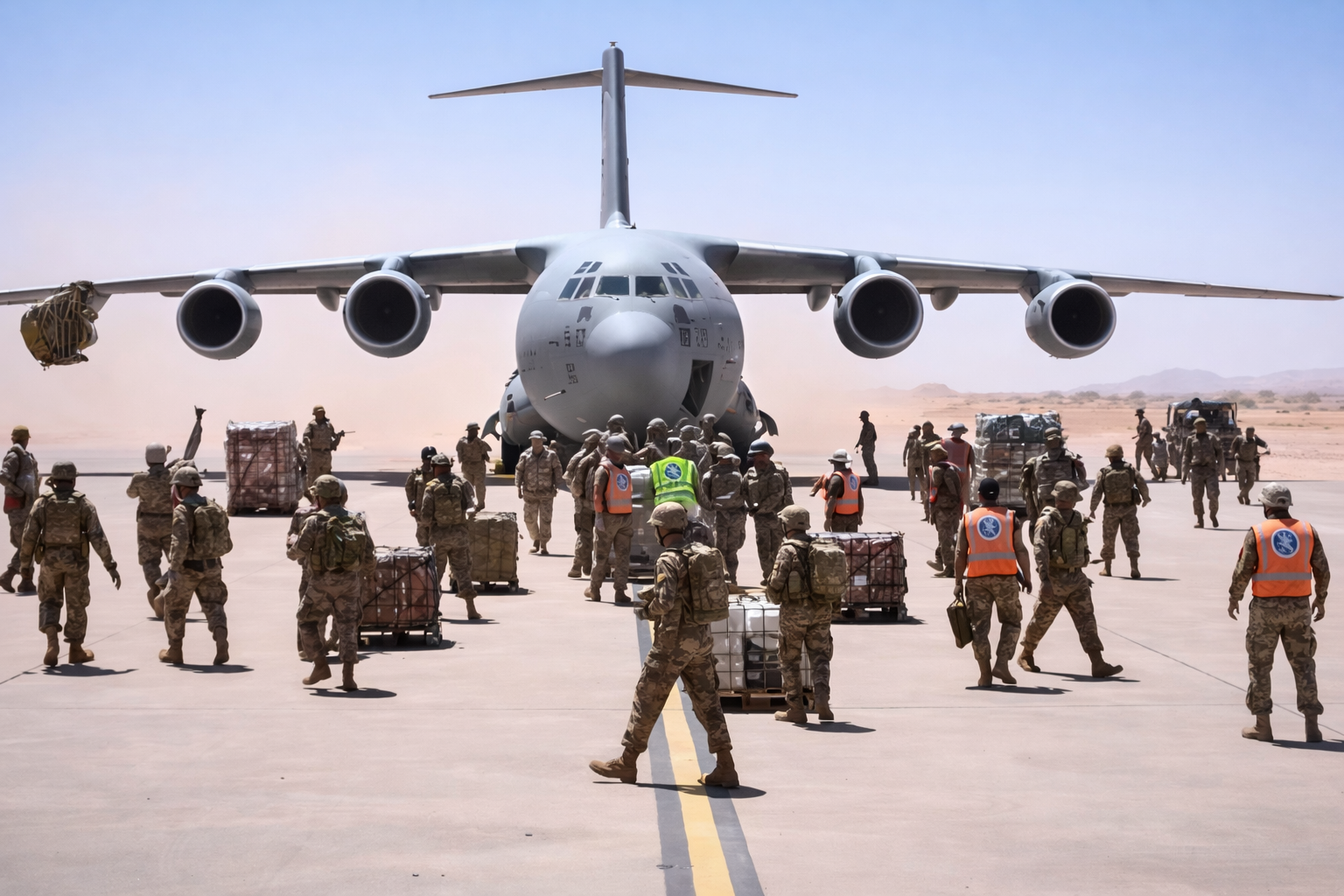
The United States has announced a $2 billion pledge for humanitarian assistance delivered through the United Nations, a commitment that arrives alongside sweeping reductions in broader U.S. foreign aid and a blunt warning to U.N. agencies that the era of expansive budgets and institutional sprawl is over. The pledge, unveiled by the administration of Donald Trump, reflects a recalibration of American engagement with multilateral aid at a time of mounting global crises and tightening fiscal priorities in Washington.
While the United States remains the world’s single largest humanitarian donor, the $2 billion figure represents a significant departure from recent history. In prior years, U.S. contributions to U.N.-related humanitarian programs often reached well into the double-digit billions when emergency funding, voluntary contributions, and specialized assistance programs were combined. The new pledge signals a narrower approach, emphasizing restraint, consolidation, and accountability over scale.
Administration officials have framed the funding as a targeted investment rather than an open-ended commitment. The message to U.N. agencies has been explicit, adapt operations to new financial realities, streamline bureaucracies, and demonstrate measurable outcomes or face further reductions. The phrase that has come to define the policy shift, adapt, shrink, or die, underscores a philosophy that prioritizes efficiency and centralized oversight over the sprawling, multi-agency model that has long characterized U.N. humanitarian work.
Under the proposed framework, much of the U.S. funding would be routed through the U.N. Office for the Coordination of Humanitarian Affairs, a central body designed to allocate resources across crises based on urgency and need. Supporters within the administration argue that this approach reduces duplication, limits administrative overhead, and ensures that aid dollars move more quickly from donor to disaster zone. They contend that past models allowed inefficiencies to persist, with too many agencies competing for limited funds while overlapping in mission and geography.
Critics, however, warn that the reduced funding level comes at a precarious moment. Global humanitarian needs are at record highs, driven by protracted conflicts, climate-related disasters, mass displacement, and food insecurity. Major U.N. agencies responsible for food aid, refugee assistance, and migration support have already reported budget shortfalls leading to program cuts, staff reductions, and scaled-back operations in some of the world’s most vulnerable regions.
The concern among humanitarian organizations is not only the size of the U.S. pledge but also the precedent it sets. American leadership has historically shaped global donor behavior, and a sharp pullback from multilateral funding could encourage other wealthy nations to follow suit. That dynamic, aid experts argue, risks leaving gaps in crisis response that cannot easily be filled by private donors or smaller governments.
From the administration’s perspective, the shift reflects a broader reassessment of foreign assistance priorities. Officials have emphasized that humanitarian aid must coexist with domestic fiscal discipline and national interest considerations. They argue that effectiveness, not dollar totals, should define leadership, and that international institutions must evolve to justify continued support from taxpayers facing economic pressures at home.
The $2 billion pledge is expected to support relief efforts in multiple regions, with allocations guided by ongoing humanitarian assessments rather than fixed country lists. Conflicts, displacement crises, and natural disasters across Africa, the Middle East, and parts of Asia are likely to remain focal points, though final distributions will depend on conditions on the ground and coordination with other donors.
As the United States reshapes its relationship with the United Nations, the implications extend beyond budgets. The decision marks a test of whether a leaner, more centralized humanitarian system can meet escalating global needs, or whether reduced funding will translate into diminished reach and resilience. For now, the pledge stands as both a financial commitment and a policy statement, signaling that American support for global aid continues, but on terms that reflect a harder line on cost, structure, and accountability.