


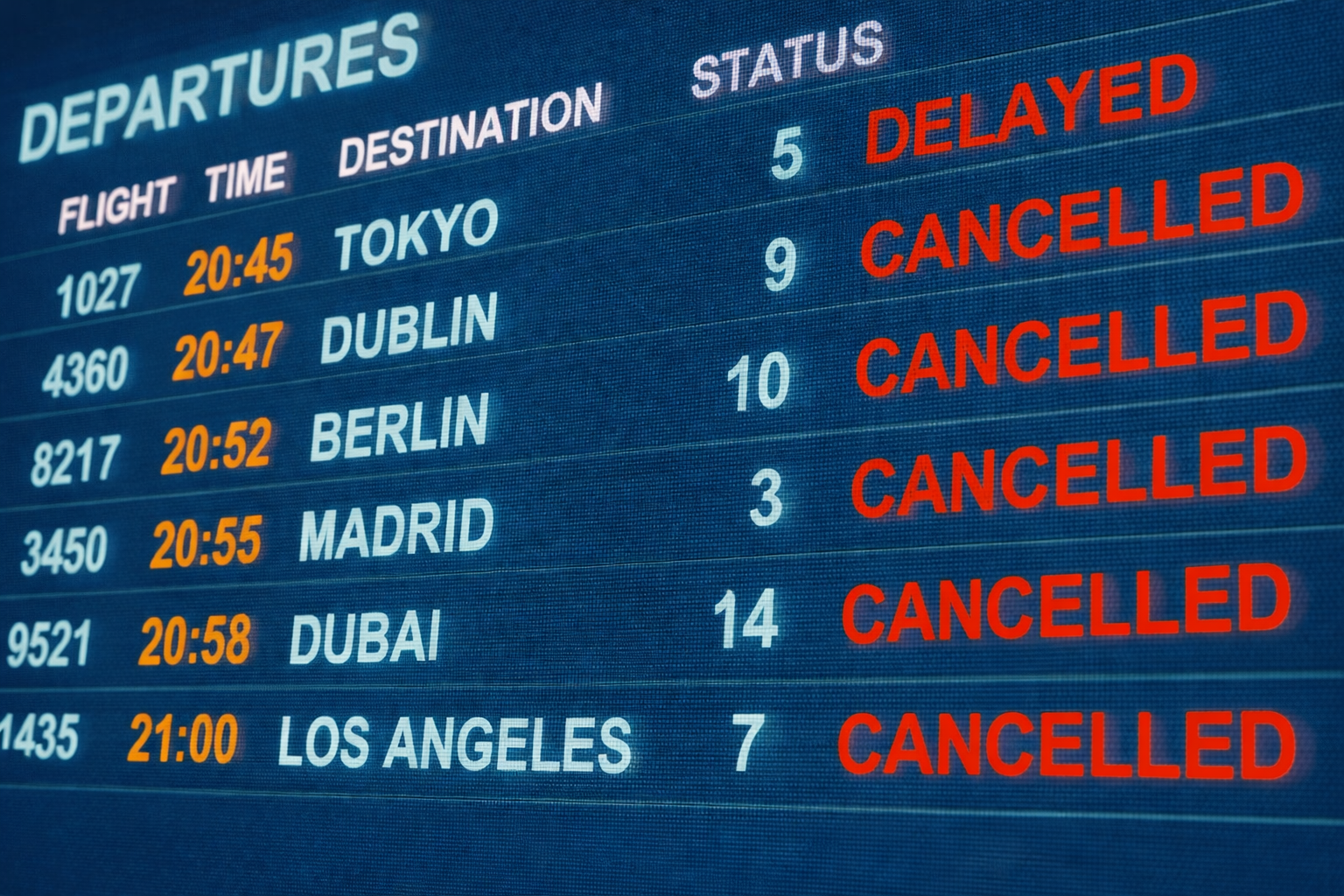
The reopening of Eastern Caribbean airspace over the weekend brought technical clearance for flights to resume, but for many American travelers across the region the announcement did not translate into an immediate journey home. Despite federal aviation authorities lifting restrictions that had halted air traffic amid heightened military activity tied to Venezuela, recovery across the Caribbean has been uneven, leaving some tourists stranded days after their original departure plans unraveled.
The disruption began when the Federal Aviation Administration issued emergency flight guidance restricting portions of Caribbean airspace following the capture of Venezuelan President Nicolás Maduro by U.S. forces. The advisory cited safety of flight concerns connected to regional military operations, prompting airlines to immediately cancel, delay, or reroute flights that rely on air corridors near Venezuela. Because many Caribbean routes operate through tightly coordinated airspace lanes, the impact rippled quickly through leisure destinations and major hubs alike.
Airports in Puerto Rico, the U.S. Virgin Islands, and several smaller island nations saw schedules collapse within hours. Departures were scrubbed mid day, inbound aircraft were diverted, and crews were displaced from their planned rotations. For passengers, the result was confusion, missed hotel checkouts, separated luggage, and a sudden shortage of available seats at a time when winter travel demand was already high.
By late Saturday into Sunday morning, federal authorities announced that airspace restrictions had been lifted. Airlines immediately began rebuilding schedules, adding flights and increasing aircraft size where possible. However, aviation experts noted that reopening airspace is only the first step in a complex recovery process. Aircraft and crews stranded in the wrong locations must be repositioned, maintenance windows adjusted, and airport gate availability coordinated, all while existing flights remain full from peak season bookings.
This logistical reality explains why many travelers continued to report being stuck even as planes returned to the sky. Flights that resumed were often fully booked, filled by passengers displaced from earlier cancellations. Smaller islands were particularly affected because they offer fewer daily departures and limited alternate routing options. When a single day of operations is lost, it can take several more days for capacity to catch up.
Airlines prioritized clearing backlogs through major gateways, funneling passengers from smaller islands into larger hubs such as San Juan and Miami. Extra flights were added on some routes, and larger aircraft were deployed where infrastructure allowed. Even so, travelers with indirect itineraries, tight connections, or limited flexibility found themselves waiting as the system gradually stabilized.
The situation underscores how sensitive Caribbean travel is to geopolitical events far beyond the region itself. Unlike continental networks with dense route options, island aviation depends on precise scheduling and narrow margins. A short term closure can cascade into multi day disruptions, particularly when it coincides with heavy leisure travel and limited spare aircraft availability.
Industry analysts say the episode highlights the difference between regulatory clearance and operational recovery. Airspace reopening removes the legal barrier to flight, but it does not instantly restore the finely tuned choreography of crews, planes, and passengers. Airlines must rebuild from a fragmented network, often prioritizing safety and systemwide stability over speed.
For travelers still waiting to depart, conditions have improved gradually as additional flights come online and schedules normalize. Airlines have continued waiving change fees for affected passengers, and standby options have expanded as capacity increases. While most stranded travelers are expected to return home in the coming days, the episode serves as a reminder that modern air travel, particularly in island regions, can be deeply vulnerable to sudden geopolitical shocks.
As the Caribbean network settles back into routine operations, aviation officials and carriers alike are reviewing the response, assessing how future advisories and recovery plans might reduce passenger disruption when global events intersect with regional airspace.