


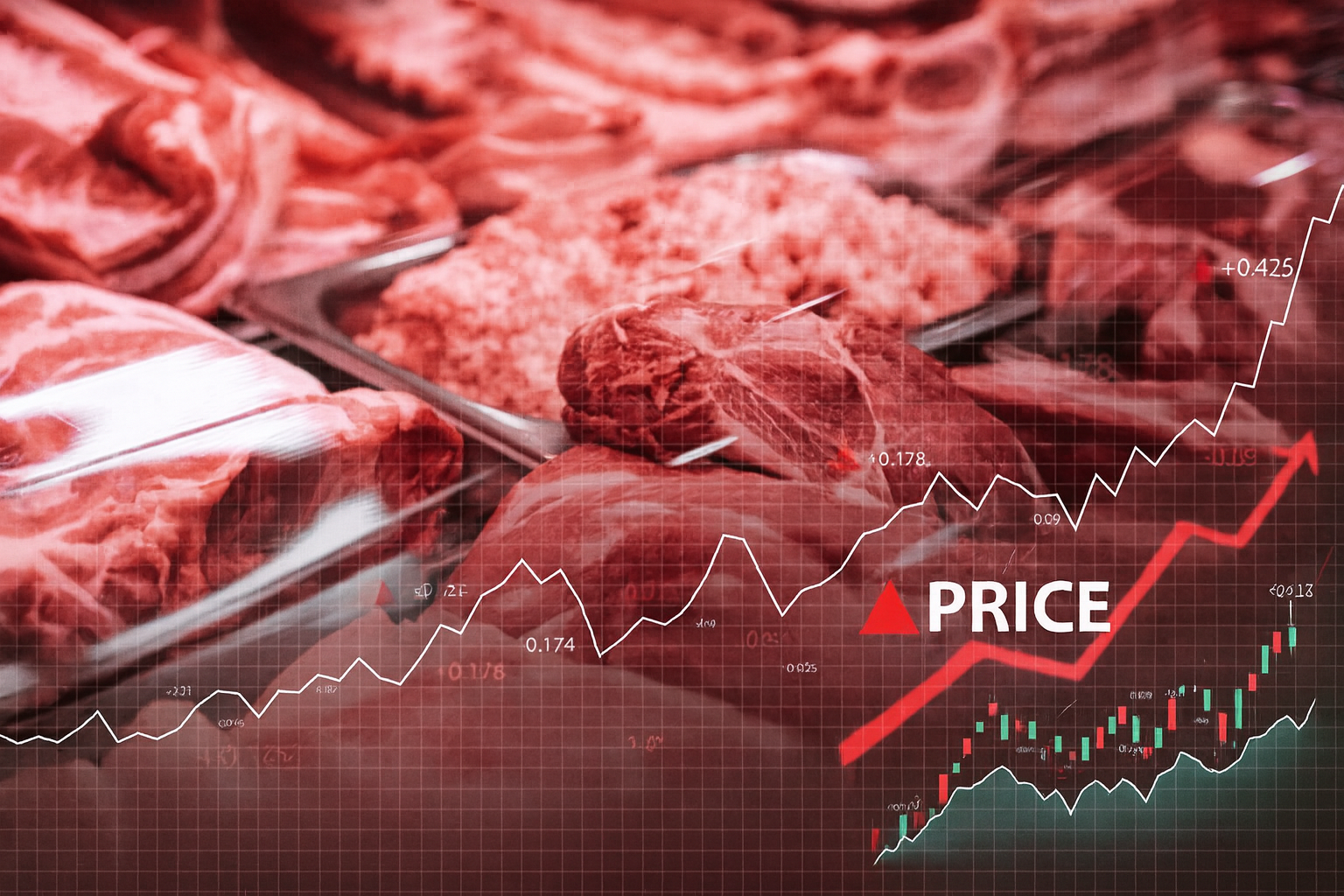
Beef prices in the United States have climbed to record levels according to data from the U.S. Bureau of Labor Statistics. The surge has left consumers paying more at grocery stores and restaurants, while American cattle ranchers face growing frustration over new trade policies that could reshape the industry’s long-term stability.
The current spike in beef prices stems from a convergence of factors affecting both supply and demand. Drought conditions across key cattle-producing states have reduced available grazing land and forced ranchers to thin their herds over the past two years. Higher feed, fuel, and transportation costs have compounded the problem, making it more expensive to raise and deliver cattle to processing plants. As a result, the national cattle herd has dropped to its lowest level in decades, tightening domestic supply at a time when demand remains strong across households and the food service sector.
Consumers are bearing the brunt of the imbalance. With fewer cattle entering the supply chain, wholesale beef prices have increased sharply, and retailers are passing those costs to shoppers. For families, ground beef, steaks, and roasts now represent a significantly higher portion of the grocery bill. Analysts note that inflationary pressures across other staples—such as dairy, poultry, and fresh produce—have further strained household budgets, turning what was once a weekly staple into a more occasional purchase.
On the policy front, the Trump administration’s recent decision to expand beef imports from Argentina has stirred controversy among domestic producers. The move, which quadruples the import quota to roughly 80,000 metric tons, is designed to increase available supply and ease consumer prices. However, ranchers argue that this decision could undermine U.S. producers already struggling with production costs and market uncertainty. By increasing reliance on imported beef, critics fear that the policy could place downward pressure on domestic prices while offering little immediate relief to consumers, since global shipping and supply logistics take time to adjust.
Economic observers suggest that the administration’s import expansion represents a delicate balancing act between consumer affordability and agricultural self-sufficiency. While cheaper imports could offer temporary relief, the long-term risk lies in discouraging domestic herd rebuilding and investment in the U.S. cattle industry. For many ranchers, rebuilding operations after years of drought is already a costly and time-consuming process, often taking several years before new cattle are ready for market. Adding foreign competition could make that recovery even more difficult.
Industry analysts predict that beef prices are unlikely to decline significantly in the near term. Supply remains constrained, and many ranchers are hesitant to expand herds without clearer signs of stability in both market pricing and federal policy. Consumer demand also remains strong, particularly as beef continues to be a favored protein source despite higher costs.
The combination of supply challenges, policy changes, and strong demand has placed the U.S. beef industry at a critical juncture. The coming months will determine whether policy adjustments, weather patterns, and production decisions can bring relief to both consumers and producers—or whether the cost of America’s favorite meat will remain a stubborn fixture of inflation well into 2026.