


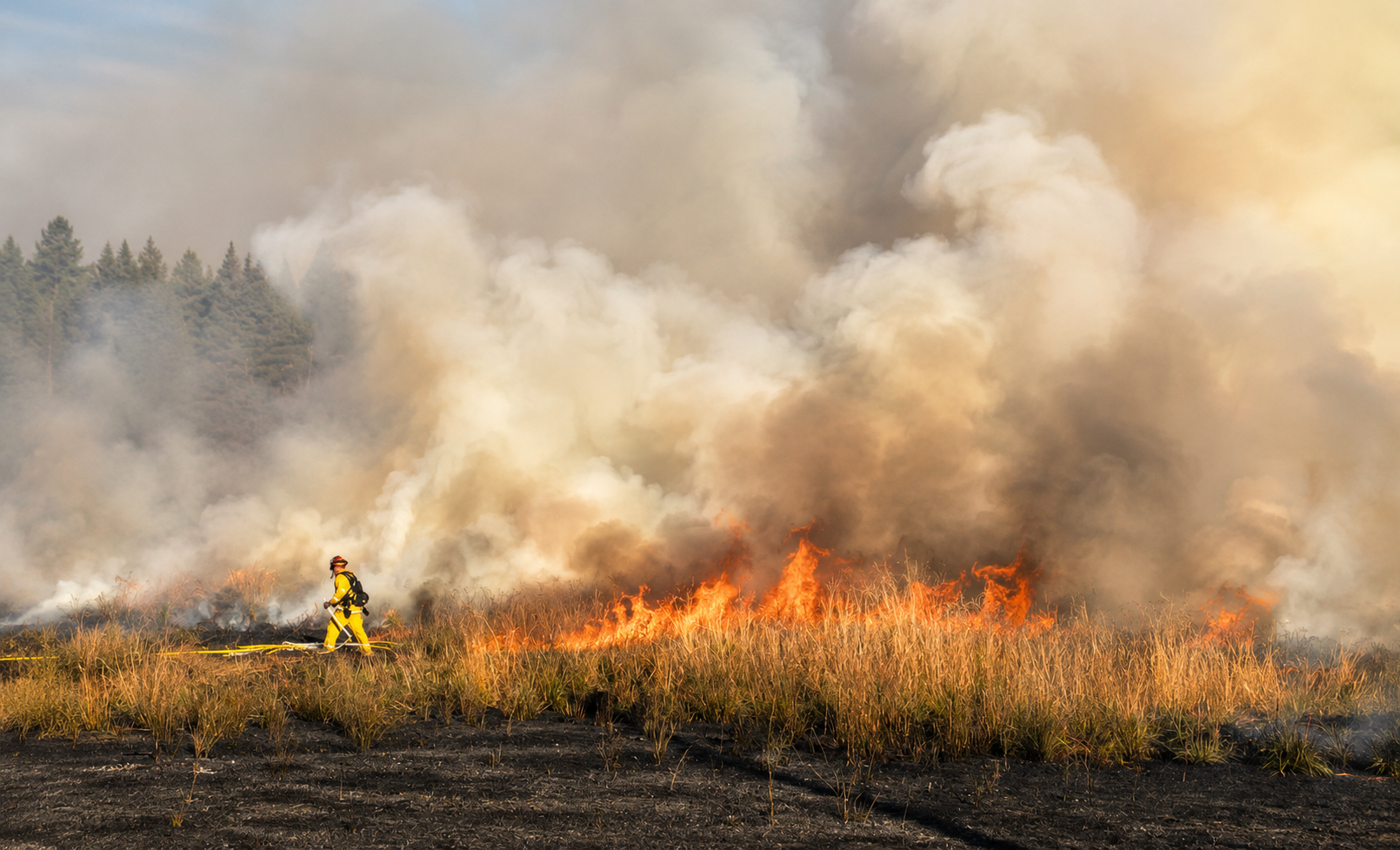
Wildfire season has become an increasingly familiar part of life across Southern Oregon, bringing with it days and sometimes weeks of smoky skies that can affect daily routines, outdoor activities, and public health. While firefighters work to contain active fires across the region, public health officials continue encouraging residents to take steps that reduce exposure to wildfire smoke, particularly when air quality deteriorates.
Unlike the visible ash that often settles on vehicles and sidewalks, the greatest health concern comes from microscopic particles known as PM2.5. These fine particles are produced when vegetation, brush, and timber burn and are small enough to travel deep into the lungs. Health experts report that prolonged exposure can aggravate asthma, chronic obstructive pulmonary disease, heart disease, and other respiratory conditions. Even otherwise healthy individuals may experience coughing, throat irritation, headaches, burning eyes, shortness of breath, or fatigue after spending extended periods outdoors during periods of heavy smoke.
Reducing exposure begins at home. Public health agencies recommend keeping windows and exterior doors closed whenever outdoor air quality reaches unhealthy levels. Homes equipped with central heating and air conditioning systems can often improve indoor air quality by operating the system in recirculation mode rather than drawing smoky air from outside. Installing higher efficiency furnace filters, particularly those rated MERV 13 when compatible with the home’s HVAC system, can significantly improve the removal of fine airborne particles.
For many households, portable air purification systems have become one of the most effective tools for maintaining cleaner indoor air. Air purifiers equipped with True HEPA filtration are specifically designed to capture the microscopic particles commonly found in wildfire smoke. Models that also include activated carbon filtration may further reduce smoke odors and certain airborne gases released during wildfires. Health officials recommend placing air purifiers in rooms where family members spend the greatest amount of time, especially bedrooms, allowing cleaner air to circulate continuously throughout the day and night.
Residents looking for a lower cost alternative are increasingly turning to homemade air filtration systems known as Corsi Rosenthal Boxes. Built using a standard household box fan and multiple MERV 13 furnace filters, these systems have gained widespread recognition for their ability to remove substantial amounts of wildfire smoke particles from indoor air at a fraction of the cost of many commercial air purifiers. Community organizations and emergency preparedness groups across the country have promoted the design as an affordable option during prolonged smoke events.
When leaving home becomes necessary, respiratory protection plays an important role. Public health experts recommend wearing NIOSH approved N95 respirators whenever smoke concentrations become elevated. Unlike cloth face coverings or standard surgical masks, properly fitted N95 respirators are designed to filter the fine particulate matter found in wildfire smoke. Respirators labeled P100 provide even greater filtration efficiency, although some users may find them heavier or less comfortable during extended wear.
Many neighborhood pharmacies and major retailers now stock wildfire preparedness supplies throughout the summer months. In addition to N95 respirators, residents can often find saline nasal sprays to relieve irritated nasal passages, artificial tears for smoke related eye irritation, electrolyte beverages to help maintain hydration during periods of extreme heat, and pulse oximeters that allow individuals to monitor blood oxygen levels if respiratory symptoms develop. Healthcare providers continue advising individuals with chronic lung or heart disease to maintain an adequate supply of prescription medications throughout wildfire season in case travel becomes difficult.
Health officials also encourage families to designate a clean air room within the home during periods of prolonged smoke. By keeping one room closed off, operating a HEPA air purifier continuously, and avoiding activities that generate additional indoor air pollution such as burning candles, smoking indoors, or excessive frying, residents can create a space where cleaner air is maintained throughout the day.
Wildfire smoke does not remain outdoors. Vehicles can also provide temporary protection when properly managed. Drivers are encouraged to keep windows closed, operate vehicle ventilation systems in recirculation mode, and replace cabin air filters according to manufacturer recommendations. These simple adjustments help reduce the amount of smoke entering the passenger compartment during necessary travel.
Monitoring daily air quality has also become an important part of wildfire preparedness. Air Quality Index reports are updated regularly and provide residents with current information about smoke conditions in their communities. As air quality worsens, public health guidance increasingly recommends limiting strenuous outdoor activity, particularly for children, older adults, pregnant women, and individuals living with respiratory or cardiovascular disease.
Preparing before heavy smoke arrives can make a meaningful difference during wildfire season. Keeping respirators readily available, replacing furnace filters before fire activity intensifies, maintaining a reliable air purifier, and assembling basic health supplies can help households respond quickly when smoke conditions develop.
As wildfire seasons continue to challenge communities across Southern Oregon, health officials emphasize that reducing smoke exposure remains one of the most effective ways residents can protect themselves. While no single solution completely eliminates the effects of wildfire smoke, combining indoor air filtration, appropriate respiratory protection, careful monitoring of air quality, and thoughtful household preparation provides families with practical tools to safeguard their health throughout the fire season.