


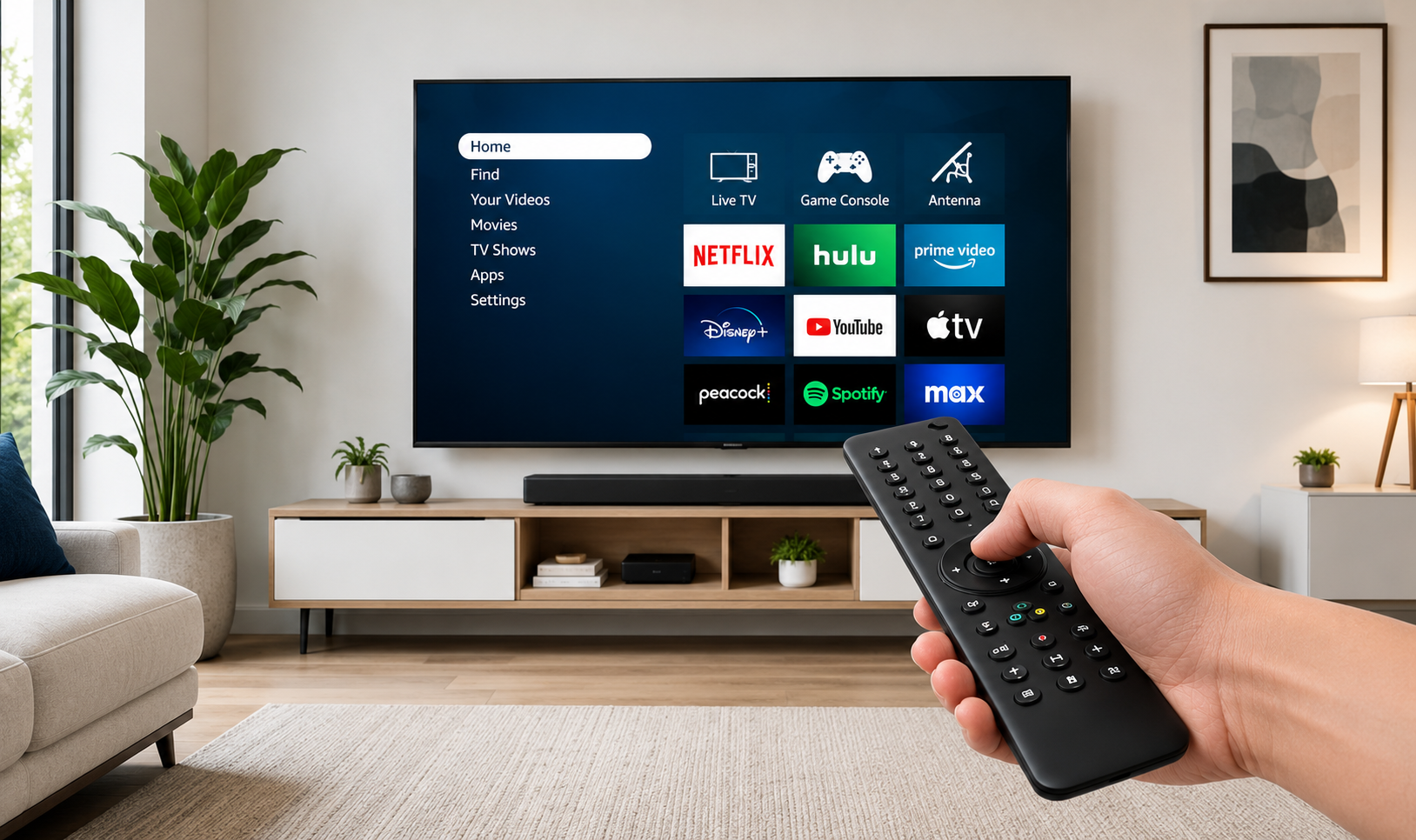
For years, cable television was treated as another household necessity. The monthly bill arrived alongside the mortgage, electricity, water and internet, and most families simply accepted that staying connected to their favorite shows came with a steadily increasing price tag. That assumption is beginning to disappear across Southern Oregon.
As household budgets continue to stretch under the weight of rising grocery prices, insurance premiums, fuel costs and utility bills, many residents are taking a closer look at recurring expenses that once seemed untouchable. Television service has become one of them.
For some families, the decision starts when another Spectrum bill arrives with a price that bears little resemblance to what they originally signed up to pay. Promotional rates eventually expire, equipment rental fees accumulate, regional sports charges appear, broadcast surcharges are added and taxes continue to push monthly costs higher. Before long, a television package can cost well over one hundred dollars every month, even before internet service is factored into the equation.
That reality has prompted a growing number of Southern Oregon residents to ask a straightforward question. If most of the television they watch is already available online, why continue paying cable prices?
The answer increasingly leads to streaming.
Unlike the early days of internet television, today’s streaming services are no longer experimental alternatives. They have matured into complete entertainment platforms capable of replacing much of what traditional cable once offered. Instead of paying for hundreds of channels that rarely make it past the remote control, consumers can now subscribe only to the programming they actually watch.
For households looking to spend as little as possible, Frndly TV has emerged as one of the least expensive paid services available. Starting at roughly the price of a fast-food lunch, it offers Hallmark programming, History, A&E, Lifetime and several family-oriented channels that appeal to viewers who are less interested in sports and more interested in movies, home programming and classic television.
Families wanting a broader lineup without returning to cable prices often land on Philo. At approximately $33 per month, the service delivers dozens of familiar cable networks, including Discovery, HGTV, Food Network, TLC, AMC, Comedy Central, History and Animal Planet. While it does not include local broadcast stations or ESPN, many subscribers fill that gap with a simple digital television antenna that requires only a one-time purchase and no monthly fee.
Sports fans naturally have different priorities, and that has made Sling TV a popular middle ground. Its package options allow subscribers to select programming that includes ESPN, national news and live sporting events while keeping monthly costs well below many traditional cable subscriptions. Rather than paying for an oversized channel lineup, viewers can tailor the service to match their interests.
Those looking for something that feels almost identical to cable television often choose YouTube TV or Hulu + Live TV. Although both services cost more than budget streaming platforms, they still eliminate equipment rental charges and long-term contracts while providing local broadcast stations, live sports, cloud DVR capability and the convenience of watching across televisions, computers, tablets and smartphones.
Many Southern Oregon households are discovering that the biggest savings come from combining services rather than relying on just one. A family might subscribe to Philo for entertainment programming, install an over-the-air antenna for local news and network television, and supplement everything else with free streaming platforms such as Pluto TV, Tubi or The Roku Channel. Together, those services provide thousands of movies, television episodes, documentaries and specialty programming without creating another expensive monthly bill.
The flexibility of streaming has also changed the way many consumers think about entertainment spending. Instead of committing to year-round subscriptions, viewers now subscribe when a favorite series returns, when football season begins or when a particular streaming exclusive is released. Once they finish watching, the subscription can be canceled with just a few clicks. That ability to move between services throughout the year has become another practical way to reduce unnecessary expenses.
For families currently paying between $140 and $180 each month for traditional cable television, the savings can be difficult to ignore. Maintaining internet service while replacing cable with a combination of Philo, Sling TV or Frndly TV, supplemented by free streaming platforms and a digital antenna, can reduce annual television expenses by hundreds or even well over one thousand dollars depending on viewing habits.
The shift reflects more than changing technology. It reflects changing priorities.
Consumers have become increasingly selective about where their money goes, and recurring subscription costs are receiving greater scrutiny than ever before. Entertainment remains important, but the expectation that it must come with a premium cable bill is fading.
Across Josephine and Jackson counties, the conversation is no longer whether streaming can replace cable. For many households, that decision has already been made. The question now is which combination of services delivers the television they actually watch without continuing to pay for the channels they never do.
For families looking to stretch every dollar a little further, cutting the cable cord has become less about giving something up and more about recognizing that television no longer has to be one of the most expensive bills arriving in the mailbox each month.