


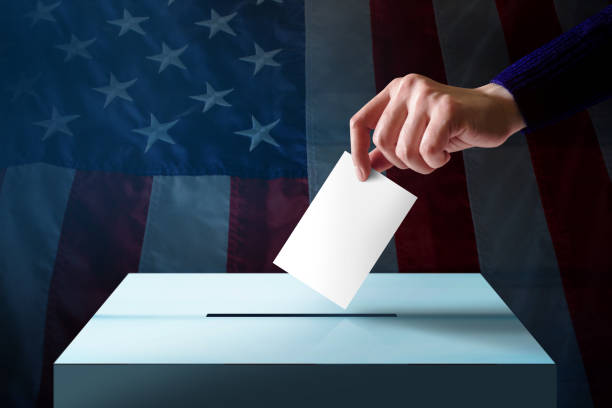
As the 2024 presidential election looms, a growing crisis of confidence in the integrity of the electoral process has emerged, with Americans expressing unprecedented levels of doubt. A Pew Research Center survey recently reported that public trust in the fairness of U.S. elections has reached an all-time low, marking a significant shift from even the skepticism seen over the last two decades. This growing cynicism threatens the very foundations of democracy, yet the issue of election integrity is complex and deeply partisan, adding to the challenge of restoring confidence.
While concern over election integrity is not new, its roots trace back to the 2000 election debacle between George W. Bush and Al Gore. The infamous Florida recount and the role of the Supreme Court in determining the election’s outcome sowed seeds of distrust in many voters. This skepticism deepened further in 2016, when allegations of Russian interference in the presidential race reignited fears of compromised elections, and accusations of foreign meddling polarized public opinion.
By the time of the 2020 election, the rhetoric surrounding voter fraud had reached a fever pitch. Claims of widespread irregularities, particularly concerning mail-in voting and the integrity of vote counting in swing states, exacerbated the situation. Former President Donald Trump’s assertions that the election was “stolen” further fueled this narrative, with millions of his supporters still convinced that fraud determined the outcome. Meanwhile, other voters pointed to systemic efforts at voter suppression as equally threatening to the democratic process, with issues such as gerrymandering and restrictions on voting access taking center stage.
In the current political landscape, perceptions of election integrity often depend on partisan affiliation. Polls consistently show that a large segment of Republicans believe the 2020 election was unfair, with many pointing to potential vulnerabilities in the voting system. On the other hand, Democrats argue that efforts to restrict voting access through laws targeting mail-in ballots, early voting, and voter ID disproportionately affect minority and low-income voters, leading to suppression rather than fraud.
This divide has created two competing narratives, each rooted in a deep mistrust of the opposing side. Conservatives emphasize the need for stricter voter ID laws, robust auditing of election results, and limits on absentee voting to prevent potential fraud. Progressives, in contrast, argue for expanded access to voting, with efforts to remove barriers that they say prevent marginalized communities from participating fully in the electoral process.
The rise of disinformation in the digital age has only exacerbated the problem. Social media platforms, which allow for the rapid spread of unverified information, have become battlegrounds for election narratives. In the lead-up to the 2024 election, misinformation regarding voting procedures, election security, and even the trustworthiness of the vote counting process is expected to ramp up, further deepening public doubt.
Tech companies have made efforts to flag false information and provide accurate resources, but these measures are often criticized as either insufficient or partisan in nature. In this polarized environment, even attempts to curb misinformation can be seen through the lens of bias, with each side accusing the other of attempting to control the narrative.
Restoring faith in the electoral process will not be easy. Experts suggest that significant steps must be taken to address both real and perceived vulnerabilities in the system. One proposal is increased transparency in the election process, including more robust auditing mechanisms to ensure the accuracy of results. Others argue for a renewed focus on civic education, which would help the public better understand how elections work and why certain safeguards are in place.
Election officials are also calling for greater security measures, including the protection of poll workers and more investment in cybersecurity to prevent hacking or foreign interference. However, these measures may not be enough if the underlying partisan divide is not addressed. Without a shared understanding of what constitutes a “fair” election, the cycle of mistrust is likely to continue.
With the 2024 election approaching, the issue of election integrity has become one of the most pressing concerns for the country. If public confidence remains at its current low, the result may be widespread protests, legal challenges, and a continued fracturing of the nation’s political landscape. The challenge, then, is not just about ensuring the technical aspects of election security but about healing the deep mistrust that has taken hold in American society.
The future of American democracy may well depend on how the nation addresses these challenges, and whether voters from both sides of the aisle can once again come to believe in the fairness of the electoral process. The stakes are high, and time is running out to restore trust before the next presidential election determines the country’s future trajectory.