


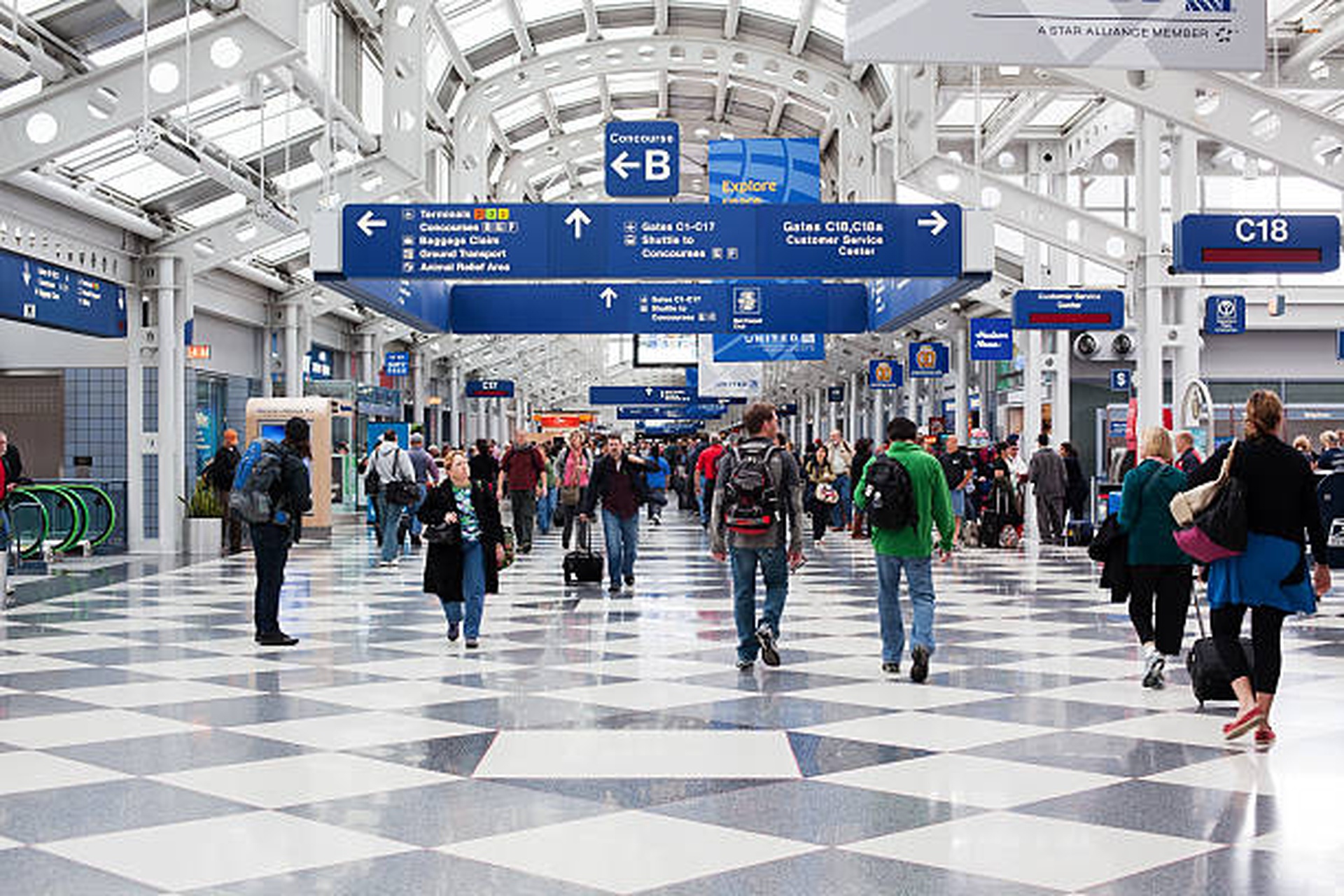
In a rare and forceful move, the Federal Aviation Administration has mandated that airlines cut more than 300 flights per day from O’Hare’s schedule beginning May 17, continuing through the peak travel season into late October. The directive reduces daily operations to roughly 2,700 flights, a step down from the more than 3,000 flights airlines had already lined up for summer.
O’Hare has long been a pressure valve for the entire national air network, a place where coast to coast travel connects, stacks, and often collides. When it runs smoothly, the country barely notices. When it doesn’t, delays echo outward in every direction. Last summer made that clear, with on-time performance slipping into territory that travelers felt in missed connections, overnight delays, and a growing sense that schedules had become more wish than plan.
Airlines, eager to capture surging demand, pushed deeper into O’Hare with expanded schedules that outpaced the physical and operational limits of the airport. At the same time, runway work, air traffic control constraints, and ground congestion tightened the margin for error to almost nothing. The result was predictable. Flights stacked up faster than they could be moved, and the system began to fail in slow motion.
The FAA’s response is built on a blunt premise. If the airport cannot handle the volume, the volume must be reduced.
Under the new cap, airlines are being forced to trim schedules back to something closer to what the airport demonstrated it could handle in prior years. Carriers with the largest presence at O’Hare will absorb the deepest cuts, reshaping not just departure boards in Chicago, but travel patterns across the country. Routes will be consolidated, frequencies reduced, and some flights quietly removed from booking systems altogether.
For passengers, the shift may feel like a squeeze before it feels like relief. Fewer flights mean fewer choices, particularly during peak travel windows. Seats that remain may come at a higher price as demand concentrates into a smaller number of departures. Yet the tradeoff the FAA is banking on is reliability. A smaller, more realistic schedule is expected to move more cleanly, with fewer cascading delays and fewer last minute cancellations.
Airlines have already begun adjusting their timetables in advance of the deadline. Travelers with tickets tied to O’Hare this summer may see changes to departure times, connections, or even entire itineraries. Those changes will not come from regulators directly, but from the carriers themselves as they reshape schedules to comply.
Passengers looking to confirm whether their travel plans have been affected should go straight to the source. Airlines remain the primary point of contact for rebooking, schedule verification, and refund policies, accessible through their official websites, mobile apps, or customer service lines. For broader concerns, including understanding delays or filing travel related complaints, the FAA maintains public resources at its official website, where travelers can track updates and submit inquiries.
Air travel demand has rebounded faster than the infrastructure designed to support it. Airports, staffing levels, and air traffic systems are all under pressure, and O’Hare is simply where that pressure became impossible to ignore. By stepping in, the FAA has effectively acknowledged that left unchecked, the market will overschedule itself into dysfunction.
The coming months will test whether fewer flights can deliver a better experience. If the strategy holds, travelers may find something that has been increasingly rare in modern air travel: a schedule that actually means what it says.